We were praised for our modernity.
But modern for whom, and modern to do what?

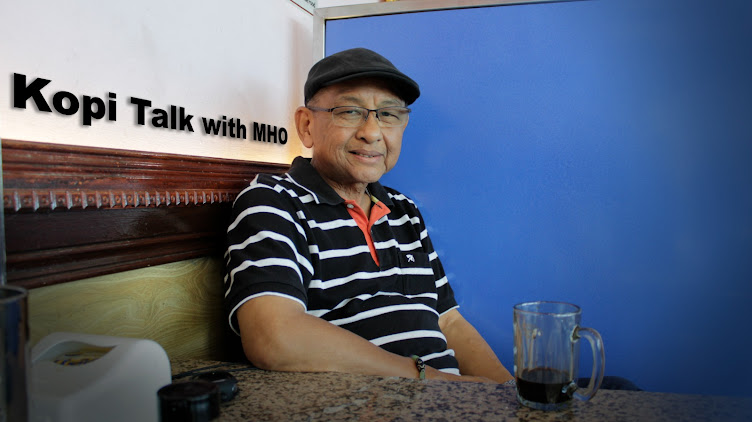
KopiTalk with MHO
At the recent Consumer Fair, a remark by Gita Wirjawan, one of Indonesia's most respected businessmen and thinkers, resonated with many Bruneians.
He highlighted Brunei's modernity, particularly our reliable electricity supply. He noted that, compared to many of our Asian neighbours, Brunei enjoys a level of stability and ease that is far from common in the region.
The statement was well-intentioned, and understandably, it made many of us feel proud.
After all, in much of Asia, power cuts still disrupt daily life; businesses plan around outages, and factories pause when the grid fails. In Brunei Darussalam, the lights almost always stay on. Homes are cool. Offices are bright. The switch works without anxiety.
That is an achievement — and it deserves recognition.
But pride, like kopi, should be sipped slowly.
Because once the applause fades, a more profound
question remains:
What exactly does our electricity power?
Electricity can signal modernity in two very different ways: comfort — a society that lives well, safely, and predictably — or transformation — a society that uses energy to create, compete, and push beyond its comfort zone.
Much of Brunei's electricity story falls firmly into the first category.
Our power keeps life pleasant. It sustains households, government buildings, malls, and offices. It preserves stability and supports a calm rhythm of life that many countries envy.
Late one evening, a young graduate sits alone in a brightly lit office, the air-conditioner humming steadily. His laptop is open, CV tabs neatly arranged. Outside, the building glows against the night. Inside, he waits — for replies, for openings, for a signal that the system is ready for him. The electricity never falters, but opportunity does.
However, when we look closer, we see that electricity here is used far less as an engine of production, innovation, and industrial depth.
In countries like Singapore, electricity is expensive, almost unforgiving. Yet it is channelled into data centres, advanced manufacturing, AI, and global services. Every kilowatt is squeezed for competitiveness. Power there does not just light rooms — it drives ambition.
In Vietnam, electricity demand strains the system, and outages still happen. But power feeds factories, export zones, and millions of jobs. Electricity there is restless, pressured, and productive.
Even Malaysia uses energy as an industrial ladder, supporting SMEs, electronics, logistics, and digital services.
Herein lies the uncomfortable contrast.
Brunei's electricity is abundant and reliable, but its conversion into jobs, industries, and future pathways remains limited. The lights are on everywhere, yet too few workshops, labs, and digital engines are running behind those lights.
This is where the human story begins.
For many Bruneians, life is physically comfortable but emotionally suspended. Degrees are earned, skills are acquired, and expectations are nurtured, yet opportunity arrives slowly. People wait — for vacancies, for approvals, for direction.
Electricity flows smoothly, but momentum does not.
So when praise comes from respected outsiders, we should accept it with grace, but also with honesty. Yes, our stable electricity supply reflects good governance and infrastructure. But modernity today is not measured by how brightly a country is lit at night.
It is measured by how boldly it uses energy to create value, empower its people, and shape its future.
The danger is not that the compliment was wrong.
The danger is mistaking comfort for completion.
If electricity continues mainly to preserve a calm present, modernity in Brunei will remain something we display. But if we begin to treat energy as leverage — for youth enterprise, digital production, and serious economic experimentation — then modernity becomes something we live and build.
So yes, the lights are on, and we can be proud of that.
But a nation truly becomes modern not when its lights never go out, but when its people no longer have to wait in the glow of certainty for a future that should already be in motion. (MHO/02/2026)
— KopiTalk with MHO
No comments:
Post a Comment
Post your comment here