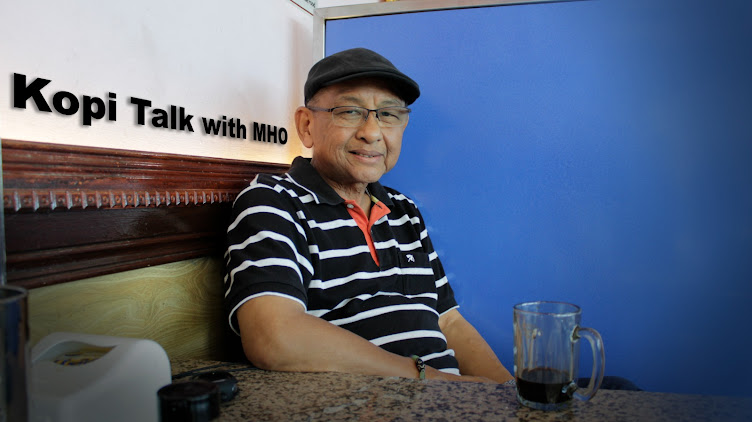

We began with a simple question about minimum wage.
Along the way, the conversation shifted — from
survival, to dignity… and finally to meaning.
Perhaps the real issue was never only about pay,
but about how we experience work itself.

☕ KopiTalk with MHO
Minimum Pay, Meaningful Work — Part Three
When Work Becomes Meaningful
In the days after Parts One and Two were shared, several readers reached out — each offering a different perspective. One reminded me of a verse describing how human beings can feel restless in hardship and guarded in comfort, suggesting that dissatisfaction may sometimes stem from within. Another pointed to Maslow's hierarchy of needs, framing our struggle as a journey from survival toward purpose. Yet another sent a detailed pay-structure proposal, reflecting a deep desire for systems that feel predictable and fair. Taken together, these voices reveal something larger than a debate about minimum wage. They show that beneath our conversations about numbers lies a more fundamental question: how do we balance structure, expectation, and meaning in the work we do — and in the lives we are trying to build?
It made me pause and reflect on something we rarely say openly. Perhaps our national conversation about wages has never really been about a single number. Some look for formulas because they promise certainty. Others search for spiritual meaning because they sense an emptiness beyond material gain. And many simply want a structure that feels fair — a pathway where effort, skill, and experience translate into progress that people can understand. When these expectations collide, frustration grows. The debate then stops being about minimum wage alone and begins to reveal a deeper unease about how we define success, security, and dignity in a changing Brunei.
If Part One asked whether minimum pay represents survival or dignity, and Part Two explored the uncomfortable gap between policy and lived reality, then Part Three must confront a more subtle question: what makes work meaningful in the first place?
For some, meaningful work begins with stability — a predictable income, reasonable hours, and the confidence that tomorrow will not suddenly erase today's effort. For others, it lies in recognition — the sense that skills and education are valued rather than underutilized. And for many younger workers navigating a shifting job market, meaning is often tied to growth: the belief that work is not only a means to survive but a pathway toward personal development.
Another reader introduced a perspective that deserves careful reflection: meaningful work does not grow from wages alone but from the strength of leadership surrounding it. Economists sometimes refer to this as managerial capital — the ability of managers and mentors to translate talent into progress.
Many organizations today have capable people and clear policies, yet struggle when leadership development does not keep pace with workforce expectations.
This may also explain why some graduates feel underutilized — not because opportunity is absent, but because guidance and developmental mentorship do not always keep pace with education itself.
The difference between a job that feels stagnant and one that feels purposeful often lies in whether employees are guided, trusted, and developed by those entrusted to lead them. When managerial capital deepens, even ordinary roles can become meaningful journeys; when it is lacking, even structured systems can quietly lose their meaning.
A reader's reference to Maslow's hierarchy offered a useful reminder: human motivation often moves in layers. Survival may come first, but people rarely stop there. Once stability is within reach, the search quietly shifts toward belonging, respect, and purpose. Policies can secure the foundation, but meaning emerges only when individuals feel safe enough to invest themselves fully in what they do.
Another perspective introduced a more introspective lens — the reminder that human beings can be anxious in hardship and guarded in comfort. It invites a humbling question: are some of our frustrations shaped not only by external structures but also by internal expectations? In a society where aspiration grows alongside opportunity, the line between need and desire can become blurred. Recognizing this does not dismiss structural concerns; rather, it enriches the conversation. Meaningful work may require both fair systems and self-awareness — a balance between what society provides and how individuals respond to it.
At the same time, the suggestion that wage structures should feel more proportionate and transparent reflects a longing for clarity. People do not only seek higher pay; they seek pathways that make sense. When progression appears uncertain or disconnected from effort, work can begin to feel transactional rather than purposeful. Perhaps this is where many modern systems struggle — they measure performance efficiently, yet sometimes fail to communicate meaning clearly. This is not simply an economic issue; it is a question of trust. Systems that feel predictable encourage patience, while those that appear arbitrary can quietly erode morale.
Perhaps this is where the trilogy finds its most honest tension. Minimum wage debates often begin with numbers, but they rarely end there. Beneath the discussions about inflation, productivity, or grading structures lies a deeper search for dignity — not only in how much people earn but in how they are seen, supported, and allowed to grow.
In many ways, Brunei stands at a crossroads familiar to societies navigating change. Economic diversification, evolving expectations among younger generations, and the realities of a globalised workforce all shape how people understand work today. The question is no longer simply whether jobs exist but whether those jobs create a sense of purpose strong enough to sustain both individual aspiration and collective stability.
Meaningful work, then, may not be a fixed destination. It is a relationship between survival and aspiration, structure and flexibility, material reality and inner contentment. Policies can set baselines, institutions can design pathways, and communities can nurture values. But meaning itself often emerges quietly, at the intersection of all three.
As this reflection comes to a close, I return to the original conversation that sparked the trilogy — a simple question about minimum wage that slowly unfolded into something far more human. Perhaps the real measure of progress is not whether we agree on a number but whether we continue to ask honest questions about how people live, grow, and find dignity through their work. Because in the end, the debate about minimum pay was never only about wages; it was about the quiet hope that work might offer more than survival — that it can become a space where dignity takes root, purpose deepens, and the meaning we seek is built together, one thoughtful conversation at a time. (MHO/02/2026)
No comments:
Post a Comment
Post your comment here