Adl and Ihsan are often spoken of together.
But what happens when fairness is applied without compassion, and policies are correct, yet heavy to live with?
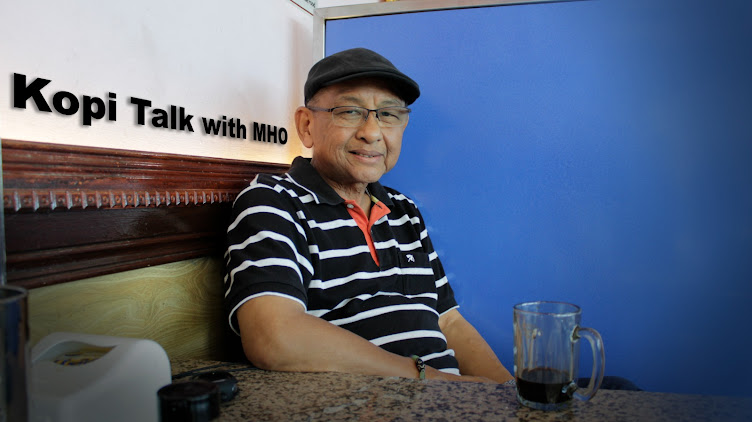
In Episode 8 of MIB Management 101, I reflect on Adl & Ihsan — and why justice, in a Negara Zikir, must always remember the people beneath the policy.

☕ KopiTalk with MHO | MIB Management 101
“Ad-dāʾimūna al-muḥsinūna bi-l-hudā — Always render service with God’s guidance.”
When Decisions Are Announced Calmly but Land Heavily
Some arrive quietly — through a circular, through an email,
through a calmly and professionally explained policy update.
The language is polite.
The tone is measured.
The justification sounds reasonable.
And yet, when it reaches those affected, it lands heavily.
Not because the decision is cruel, but because it arrives without transition.
Without pause.
Without room for human reality.
Everyone is told they are being treated “fairly.”
But fairness, I have learned, can still hurt when it forgets context.

When Fairness Is Reduced to Arithmetic
“We are applying the policy equally.”
On paper, that sounds just.
In spreadsheets, it looks neat.
But lived reality is rarely symmetrical.
Some households rely on a single income.
Some commitments were made based on previous assurances.
Some families built their lives around what was promised, not what might change.
When fairness becomes uniformity,
When equality becomes indifference, Adl quietly slips away.
Justice is not merely about treating everyone the same.
Justice is about not burdening some more heavily than others simply because it is convenient.
Over time, I have noticed that some decisions are made far removed from the ground.
They are carefully calculated, financially sound, and aligned with organisational goals.
Yet the further a decision is made from lived reality, the easier it becomes to forget how it feels when it finally reaches those affected.
The Difference Between Adl and Ihsan
This is where Adl and Ihsan part ways — and where leadership is tested.
Adl asks:
Is this decision defensible?
Ihsan asks:
Who will carry the weight of this decision?
I have sat in rooms where leaders spoke sincerely about the difficulty of a policy.
They acknowledged its impact.
They expressed empathy.
But the outcome did not change.
The policy moved forward.
And the burden settled where it always does — on those least able to absorb it.
That was when I realised something uncomfortable:
Ihsan is not what we feel.
It is what we are willing to protect.
When Sabar Is Expected Only From Below
In many organisations, patience is praised — but only when it is practised by those with the least power.
Employees are told to be understanding.
To manage emotions.
To be professional.
Leaders speak of constraints.
Of procedures.
Of instructions from above.
And so sabar is demanded, but ihsan is postponed.
Yet patience, when demanded without fairness, becomes exhaustion.
And endurance, when unsupported, slowly turns into quiet withdrawal.
People do not rebel.
They do not protest.
They simply stop hoping.
Adl Without Ihsan Creates Cold Systems
Islam does not teach justice without mercy.
The Qur’an commands justice, but it also elevates excellence.
Not just doing what is required — but doing what is right, even when it costs something.
A system may be legally correct, procedurally sound, and administratively efficient — yet still fail the test of ihsan.
Because ihsan lives in the spaces that policies do not cover:
transition periods,
special circumstances,
unexpected consequences,
and quiet human vulnerability.
A Negara Zikir Is Measured by How Power Is Felt Below
In a Negara Zikir, values are not measured by slogans or documents.
They are measured by how ordinary people experience decisions.
When justice is felt as protection
When leadership feels present rather than distant,
When power bends gently instead of pressing downward — that is when Adl and Ihsan come alive.
Not as ideals.
But as lived reality.
Closing Reflection: Justice That Remembers People
Over the years, I have come to believe this:
Most harm in organisations is not caused by bad people.
It is caused by good people choosing convenience over conscience.
Adl keeps us fair.
Ihsan keeps us human.
And a Negara Zikir is sustained not by perfect systems, but by leaders who remember that behind every policy is a life already in motion.
Perhaps the real question is not:
“Is this fair on paper?”
But rather:
“Will this still feel just to those who must live with it?”
Because when fairness remembers people, justice softens power, and ihsan becomes the quiet guardian of our institutions.
KopiTalk with MHO — reflections brewed gently, with honesty and heart.

.jpeg)
No comments:
Post a Comment