Wednesday, February 4, 2026

When Praise Makes Us Proud — and Why We Should Pause

 We were praised for our modernity.

But modern for whom, and modern to do what?


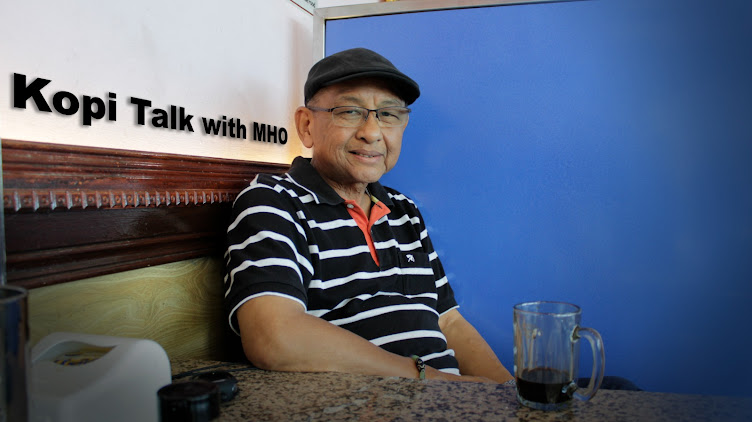
KopiTalk with MHO


At the recent Consumer Fair, a remark by Gita Wirjawan, one of Indonesia's most respected businessmen and thinkers, resonated with many Bruneians.


He highlighted Brunei's modernity, particularly our reliable electricity supply. He noted that, compared to many of our Asian neighbours, Brunei enjoys a level of stability and ease that is far from common in the region.


The statement was well-intentioned, and understandably, it made many of us feel proud.


After all, in much of Asia, power cuts still disrupt daily life; businesses plan around outages, and factories pause when the grid fails. In Brunei Darussalam, the lights almost always stay on. Homes are cool. Offices are bright. The switch works without anxiety.


That is an achievement — and it deserves recognition.


But pride, like kopi, should be sipped slowly.


Because once the applause fades, a more profound question remains:
What exactly does our electricity power?


Electricity can signal modernity in two very different ways: comfort — a society that lives well, safely, and predictably — or transformation — a society that uses energy to create, compete, and push beyond its comfort zone.


Much of Brunei's electricity story falls firmly into the first category.


Our power keeps life pleasant. It sustains households, government buildings, malls, and offices. It preserves stability and supports a calm rhythm of life that many countries envy.


Late one evening, a young graduate sits alone in a brightly lit office, the air-conditioner humming steadily. His laptop is open, CV tabs neatly arranged. Outside, the building glows against the night. Inside, he waits — for replies, for openings, for a signal that the system is ready for him. The electricity never falters, but opportunity does.


However, when we look closer, we see that electricity here is used far less as an engine of production, innovation, and industrial depth.


In countries like Singapore, electricity is expensive, almost unforgiving. Yet it is channelled into data centres, advanced manufacturing, AI, and global services. Every kilowatt is squeezed for competitiveness. Power there does not just light rooms — it drives ambition.


In Vietnam, electricity demand strains the system, and outages still happen. But power feeds factories, export zones, and millions of jobs. Electricity there is restless, pressured, and productive.


Even Malaysia uses energy as an industrial ladder, supporting SMEs, electronics, logistics, and digital services.


Herein lies the uncomfortable contrast.


Brunei's electricity is abundant and reliable, but its conversion into jobs, industries, and future pathways remains limited. The lights are on everywhere, yet too few workshops, labs, and digital engines are running behind those lights.


This is where the human story begins.


For many Bruneians, life is physically comfortable but emotionally suspended. Degrees are earned, skills are acquired, and expectations are nurtured, yet opportunity arrives slowly. People wait — for vacancies, for approvals, for direction.


Electricity flows smoothly, but momentum does not.


So when praise comes from respected outsiders, we should accept it with grace, but also with honesty. Yes, our stable electricity supply reflects good governance and infrastructure. But modernity today is not measured by how brightly a country is lit at night.


It is measured by how boldly it uses energy to create value, empower its people, and shape its future.


The danger is not that the compliment was wrong.


The danger is mistaking comfort for completion.


If electricity continues mainly to preserve a calm present, modernity in Brunei will remain something we display. But if we begin to treat energy as leverage — for youth enterprise, digital production, and serious economic experimentation — then modernity becomes something we live and build.


So yes, the lights are on, and we can be proud of that.


But a nation truly becomes modern not when its lights never go out, but when its people no longer have to wait in the glow of certainty for a future that should already be in motion. (MHO/02/2026)


— KopiTalk with MHO


Monday, February 2, 2026

A Landslide Broke the Pipes. What Broke the System?

We thank those who worked tirelessly to restore our water supply. But gratitude should not stop us from asking a simple question: Why did one landslide disrupt an entire district?

Heroic recovery tells one story. Infrastructure resilience is the more important one.

BY Malai Hassan Othman | KopiTalk with MHO


The massive landslide at Kampong Batang Mitus that damaged 16 major water supply pipes left much of Brunei-Muara without water for days. Daily routines came to a halt. Businesses struggled to operate. Health services were stretched. For many households, the absence of something as basic as running water became a slow and wearing hardship, felt hour by hour.


As water gradually returned to taps, the public conversation began to shift. The dominant tone turned to praise — of tireless effort, heroic work, and a job well done.

There is no denying that those on the ground deserve recognition. Engineers, technicians, contractors, and labourers worked under harsh conditions, through rain, mud, and unstable slopes. Many laboured late into the night, away from their families, doing difficult and sometimes dangerous work. Their commitment was real. 


Their sacrifices were not small.


They deserve thanks.


But appreciation must not become forgetfulness.


The risk now is that the story ends too neatly. When applause becomes the conclusion, the harder question quietly slips away: why was the system so vulnerable that a single landslide in a rural area could disrupt water supply to the country’s most populated district?


The landslide was triggered by heavy and prolonged rainfall. That is not disputed. 


Nature played its part. But nature alone rarely explains the scale of a disaster. 


Damage usually occurs when natural stress meets human design choices. The central issue is not simply that a slope failed, but that one failure point was enough to bring the entire system down.


For a capital district to depend so heavily on a single transmission corridor is a risk that should have been recognised long before this incident. When 16 large pipes can be severed in one event, it exposes a system with little redundancy and limited tolerance for failure. These are not abstract concerns. Redundancy and contingency planning are basic principles in modern infrastructure management.


Residents have begun asking straightforward questions. Why was there no backup main pipeline. Why was there no temporary bypass ready to divert supply while repairs were underway. Why did emergency measures only intensify after water had already been lost, instead of systems being in place to cushion the impact from the start.


These questions do not diminish the work of those repairing the damage. They ask why such extreme efforts were required in the first place.


The impact of the disruption went far beyond inconvenience. Clinics adjusted medical schedules. Dialysis services had to be carefully managed. Restaurants closed or reduced operations. Schools faced practical difficulties. Families queued patiently with containers, waiting under the sun. Hotels in unaffected areas filled quickly as residents sought access to basic facilities.


All of this points to a system without sufficient buffers.


Public praise for emergency response is understandable. But praise must never replace reflection. When official messaging focuses almost entirely on how quickly repairs were carried out, it risks sounding reassuring without being reassuring. It comforts in the moment, but it does little to strengthen the system for the next crisis.


Accountability here does not mean blaming individuals. It means institutional responsibility. It means asking whether known landslide-prone areas were properly assessed. It means examining whether slope protection, drainage, and monitoring were adequate. It means questioning whether critical infrastructure corridors were given the level of protection their importance demands.


It also means asking whether lessons from earlier disruptions were truly learned, or quietly archived.


Some observers note that the affected area has long been environmentally sensitive. If that is so, continued reliance on a single exposed corridor becomes difficult to defend. If it is not, then the risk assessment process itself deserves scrutiny.


What remains missing is a clear and honest public explanation of lessons learned. Not statements of reassurance, but a sober account of what failed, what could have been mitigated, and what will change. Without that, confidence rests on hope rather than preparation.


Water security is not only about treatment plants and pipelines. It is about planning for failure before failure happens. It is about recognising that extreme weather is no longer rare. It is about building systems that bend without breaking, so that recovery does not depend solely on exhaustion and sacrifice.


There is nothing ungrateful about asking these questions. On the contrary, it shows respect for the very workers who are repeatedly called upon to fix what might have been prevented. They deserve systems that do not collapse so easily.


The public can hold two truths at once. We can be thankful for those who worked tirelessly to restore the water supply. And we can expect institutions to ensure that such widespread disruption does not become familiar, predictable, or quietly accepted.


If this incident is remembered only as a story of successful emergency repair, its most important lesson will be lost. But if it becomes a turning point — towards honest assessment and preventive investment — then the hardship endured by many may yet lead to a stronger and more resilient system.


In the end, leadership is not measured by how well a crisis is fixed, but by how rarely the same crisis is allowed to happen again. (MHO/02/2026)


Sunday, February 1, 2026

FINAL EPISODE — Authority, Conscience, and the Moral State

   After all the debates about politics, power, and participation, perhaps the final question is simpler than we think:

What kind of conscience sustains a nation?

This final KopiTalk reflection looks beyond politics — toward amanah, moral restraint, and the quiet ethics that have long anchored Brunei’s political culture.


By Malai Hassan Othman | KopiTalk with MHO

As this series draws to a close, it is worth returning to a question that has quietly underscored every episode, whether explicitly stated or not: What is politics really for?

Throughout this series, we have discussed fear and silence, participation and caution, opposition and conscience, literacy and maturity. We have explored how Brunei's political culture has been shaped by history, faith, monarchy, and an inherited instinct for stability. We have examined both the visible structures of governance and the invisible lines that guide behaviour. Yet beneath all these discussions lies a deeper concern — not about power, but about order, and not about contestation, but about trust.

Classical Islamic political thought, particularly within the Shāfiʿī tradition, offers insights profoundly relevant to Brunei's context.

Shāfiʿī political theorists did not conceptualise politics as competition, but rather understood governance as a necessity. For them, authority was not an instrument of ambition, but a safeguard against chaos. Al-Māwardī argued that leadership exists to preserve religion and manage worldly affairs — not as separate tasks, but as intertwined responsibilities. Without authority, society fragments; without order, moral life weakens; and without moral order, neither state nor faith can endure.

This understanding reframes politics entirely, moving us away from the language of rivalry and toward the language of amanah.

Within this tradition, power is never celebrated for its own sake. It is tolerated because human society needs restraint, coordination, and continuity. As one classical maxim reminds us, the restraints imposed by authority often exceed what moral exhortation alone can achieve. This is not a justification for coercion, but a recognition of human nature: people require structure not because they are weak, but because they are social.

For Brunei, this matters deeply. The Malay-Islamic worldview has always understood authority as a moral trust, not a battlefield. Loyalty to the ruler is not blind obedience, but is grounded in sincerity, mutual responsibility, and the preservation of harmony. The ruler, in turn, carries the weight of accountability — before the people, before history, and ultimately before God.

This reciprocal moral order lies at the heart of MIB.

Yet throughout this series, we have also encountered a quiet tension: a society deeply committed to stability can, over time, confuse silence with loyalty and caution with virtue. When fear replaces understanding, participation narrows. When restraint becomes habit rather than choice, conscience slowly retreats inward.

The Shāfiʿī scholars were keenly aware of this danger. Al-Juwaynī warned that authority cannot be sustained merely through delegation and distance. Leadership requires engagement, listening, supervision, and correction. Al-Ghazālī went further, reminding us that religion and governance are twins: one guards the other, and both weaken when separated from ethical responsibility.

In other words, authority without conscience decays, and conscience without authority fragments.

This insight resolves many of the anxieties that have surfaced throughout this series: the fear of "opposition," the discomfort with disagreement, and the hesitation around participation. These are not signs of a weak system, but signs of a system that has prioritized order so successfully that it now fears disruption, even when that disruption takes the form of sincerity.

However, sincerity, in Islamic political ethics, is not disruption; it is duty.

Nasihat — advice offered with adab — is not rebellion. Counsel is not confrontation. A moral reminder is not disloyalty. These are the mechanisms through which authority remains legitimate and governance remains humane.

This is why the classical tradition does not frame obedience as silence. Obedience is alignment with purpose, not the absence of thought. A ruler is honoured not by the absence of voices, but by the presence of principled ones. And a society is not strengthened by fear, but by trust.

What emerges, then, is a political culture very different from the adversarial models often associated with politics today. It is a culture where stability is protected not by suppression, but by moral clarity; where participation is expressed not through protest, but through responsibility; and where critique is delivered not through hostility, but through conscience.

This is, in essence, what MIB was always meant to cultivate.

The series began by asking whether Brunei's political system allows participation. It ends by recognising that participation has always existed — but in a form that requires maturity to understand. Not everyone will speak, and not everyone must, but everyone must care. And caring, in this tradition, means understanding the system well enough to support it honestly.

A society that understands its political foundations does not become restless, but resilient. People who recognise authority as amanah do not become rebellious, but responsible. And a nation grounded in faith does not fear thought, but disciplines it.

This final reflection is not a defence of silence, nor is it an invitation to noise. It is a reminder that Brunei's political culture was never designed to mirror others, but to protect harmony without extinguishing conscience, and to preserve authority without abandoning ethics.

If there is one lesson to carry forward from this series, it is this:
Politics, at its best, is not about power, but about order with meaning.

And when order is guided by faith, conscience, and trust, a nation does not need louder voices, but a deeper understanding.

KopiTalk ends this series not with answers, but with reassurance:
That MIB, when understood in its fullest moral sense, is not fragile.
That authority, when anchored in
 amanah, does not fear sincerity.
And that a politically mature society does not resist order, but upholds it with wisdom.

The conversation ends here.
The responsibility does not.


Epilogue

 
This series began with questions many were hesitant to ask and ends with an understanding many quietly carry: that Brunei’s political culture is not empty, weak, or absent — it is restrained, moral, and deeply shaped by history, faith, and responsibility. 

Under MIB, politics was never meant to be loud, adversarial, or transactional; it was meant to be guided by adab, strengthened by conscience, and sustained by trust between ruler and rakyat. Yet restraint must never become silence, and loyalty must never erase thought. 

As Brunei moves forward in a world of soft power, quiet influence, and shifting narratives, the true measure of maturity will not be how little we speak, but how wisely we participate. 

If fikir sharpens our awareness and zikir anchors our intention, then civic engagement becomes not a threat to stability but its strongest safeguard. 

KopiTalk closes this journey with a simple hope: that Bruneians grow not more political in posture, but more mature in understanding — confident enough to care, brave enough to reflect, and faithful enough to serve. (MHO/02/2026)

Wednesday, January 28, 2026

PART 11 — The Invisible Line


Most of us don’t know where the line of free speech in Brunei is.

Not because it’s hidden.
But because it was never drawn.

Over time, we learned to stay quiet.
Not because we were told to — but because it felt safer.

In this week’s KopiTalk, I write about the invisible line — how caution becomes habit, how silence becomes culture, and why a nation needs not just stability… but confidence.

This is not about being loud.
It is about remembering how to speak
 with wisdom and courage.


Over the years, I have often been asked a simple, yet unsettling question: "Where is the limit of free speech in Brunei?"


I never quite know how to answer it.

Not because the question is difficult, but because the line itself does not exist in any visible form. There is no clear marker on the ground, no sign that says, "You may speak up to here, but not beyond."

The boundary is not drawn on paper; it lives in the air.

As journalists, we were trained early in our careers to practise self-censorship. Not because anyone sat us down and listed forbidden topics one by one, but because we learned—slowly, carefully—that in the absence of a visible line, everyone must develop their own internal one.

And when everyone draws that line differently, a gap opens:

A gap between ordinary citizens and journalists on the ground.

A gap between practitioners and those in authority.

A gap between what is truly dangerous and what merely feels sensitive.

Over time, this gap subtly affects society.

It makes us careful—not only about what we say, but about what we even think of saying.

We learn to avoid certain topics, to soften certain sentences, to leave some questions unasked. Not necessarily because they are wrong, but because they might be misunderstood or might be seen as crossing an invisible line.

And so we become cautious—not dramatically afraid, just... conditioned.

Careful to the point that we would rather stay silent than risk being seen as "sensitive," and cautious to the point that we sometimes protect not only stability, but also stagnation.

This is not fear in its loud form; it is habit.


And when habit becomes culture, the boundary no longer needs to be 

enforced—it enforces itself.

You can see this quiet psychology at work even in well-intentioned civic spaces. 


Take the Sua Muka programme—the quarterly "meet-the-people" sessions organised to bridge the government and the grassroots. Officials come, briefings are given, issues are recorded, and dialogue is encouraged. On paper, it is exactly what participatory governance should look like.


Yet anyone who has attended knows the pattern: The hall is full, the questions are polite, the concerns are safe, and everyone is respectful. Everyone, instinctively, knows which questions not to ask.


No one says this out loud; no one needs to.


The line is already in the room.


This is perhaps one of the most distinctive features of Brunei's political and social environment. Much of what governs speech, discussion, and public expression is not written in black and white. It is carried in tone, in memory, and in inherited caution.


We grow up learning not only what is polite, but what is safer not to say.


And over time, safety becomes confused with silence.


In earlier episodes of this series, we spoke about political phobia, political literacy, soft influence, and the myth of opposition. All of those threads meet here. The invisible line is not just about speech; it is about confidence—whether a society believes it can think aloud without tearing itself apart.


Brunei's system is not built on confrontation; it never was. It is built on adab, hierarchy, respect, and harmony. These are virtues, not weaknesses. But harmony does not mean the absence of thought. Respect does not require the absence of questions. Loyalty does not demand the absence of conscience.


In Malay-Islamic political ethics, nasihat has always been part of governance. 


Advice is not rebellion, and reminder is not betrayal. Even silence, in the classical tradition, is supposed to be a form of wisdom—not a substitute for it.

Yet when the line is invisible, people do not know how to approach 

it, so they stay far away from it.

The result is not only careful speech, but careful citizenship.

We see this everywhere: People speak freely in private, but cautiously in public. 


Discussions happen in WhatsApp groups, not in open forums. Concerns are shared in whispers, not refined in daylight. Everyone has opinions, but few are confident about where, when, and how to express them.


This creates a strange condition: a society that is not oppressed, but not fully expressive either; not silenced, but not fully voiced.


And this is where self-censorship becomes more powerful than any 

regulation, because it does not come from authority—it comes from inside.


Of course, there are good reasons for caution. Brunei values stability, order, and social harmony. Nobody wants reckless speech, provocation, or imported political chaos. But there is a difference between discipline and nervousness, between responsibility and timidity.


A mature society is not one that says everything; it is one that knows how to say what needs to be said.


This brings us back to the deeper question: what is freedom of expression in a system like Brunei's supposed to look like?


It was never meant to be Western-style confrontation. It was never meant to be street politics or adversarial shouting. It was meant to be something more civilised, more ethical: participation through adab, correction through wisdom, contribution through loyalty.


But for that to work, the rakyat must not only be loyal; they must also be confident.


Confident that asking a sincere question is not defiance.
 

Confident that offering constructive criticism is not disloyalty.
 

Confident that loving a country includes wanting it to improve.


When confidence is missing, the system still functions, but it functions 

quietly—too quietly.


And quiet systems do not always hear early warnings.


This is not a call for noise, protest culture, or imported political habits. It is a call for civic maturity—for a society that understands where its line is, not because it fears crossing it, but because it understands why it exists.


Right now, many of us do not know where that line truly is, so we stand far behind it.


And when a whole society stands far behind its own line, the space between thought and action grows wide.


In the end, the most dangerous boundary is not the one drawn by law, but the one drawn by uncertainty.


KopiTalk ends this episode with a quiet reflection: a nation does not become unstable because its people speak; it becomes fragile when its people no longer know how.


The line we need is not the one that scares us; it is the one that guides us. (MHO/01/2026)


Episode 11 — Itqan: Doing Things Properly, Even When Nobody Is Watching


 ☕ KopiTalk with MHO | MIB Management 101


There's a phrase we often hear in the office: "Yang penting siap."


As long as it's done.


Not necessarily done well.

Not necessarily done properly.

Just... done.


I used to think this was harmless—a practical attitude, a way to survive deadlines, pressure, and conflicting instructions. Over time, however, I began to realise something uncomfortable: this mindset quietly shapes our character.


It trains us to aim not for excellence, but for escape.


We don't ask, "Is this the best I can do?"

We ask, "Is this enough to get me through?"


And slowly, subtly, standards begin to sink.


In the previous episode, we talked about tatfīf—giving less than what is due, cheating not only with money but also with time, effort, and sincerity. Today, I want to talk about its opposite:


Itqan.


Itqan means doing something properly, carefully, with quality, and with responsibility—with a quiet sense of pride that doesn't need applause.


The Prophet ﷺ said:

"Verily, Allah loves that when any of you does a job, he does it with itqan (excellence and thoroughness)."


Not for show.

Not for KPI.

Not because the boss is watching.


But because Allah is.


Looking back at my younger working years, I can now see how often we lived in the space between "enough" and "proper". We cut corners not because we were malicious, but because we were tired, unmotivated, or quietly cynical.


Sometimes the system itself trains you to be that way.


You submit a careful report; nobody reads it.

You do extra; nobody notices.

You rush something; nobody questions it.


After a while, you learn the wrong lesson:


Why bother?


And that is how a culture of "janji siap" slowly replaces a culture of itqan.


We don't collapse, and we don't fail spectacularly.

We just became... mediocre.


Everything still works, but nothing shines.


Files are processed, but care is missing.

Meetings are held, but thinking is shallow.

Projects are completed, but pride is absent.

People come to work, but their hearts are not fully there.


It is not corruption.

It is not a scandal.

It is something more dangerous because it looks normal.


It is the quiet death of standards.


In a Negara Zikir, this should worry us.


Because Islam doesn't teach us to work only until we are safe from punishment, it teaches us to work until our conscience is satisfied.


Itqan is not perfectionism; it's sincerity meeting competence.


It's the difference between:

"I've done my part" and "I've done it properly."


It's the difference between:

"Not my problem anymore" and "Let me make sure this is right."


It's the difference between:

"This will pass inspection" and "This will stand before Allah."


When you work with itqan, you don't need to be supervised all the time. You don't need to be threatened or constantly reminded.


Your work is guided by something stronger than policy:

Your amanah.


And this is where everything in this series quietly connects.


Without amanah, itqan feels unnecessary.

Without ihsan, itqan feels exhausting.

Without 'adl, itqan feels pointless.

Without tawadhu', itqan turns into arrogance.


But when these values coexist, something changes.


Work becomes ibadah.

Duty becomes dignity.

Responsibility becomes honour.


We stop asking, "Can I get away with this?"

And start asking, "Is this worthy of trust?"


Sometimes people say, "Why should I do extra? My pay is the same."


That question itself tells us how far we have drifted.


Because itqan is not about extra.


It's about doing what is already yours—properly.


The tragedy of many organisations isn't a lack of talent. We have talented people everywhere. The tragedy is that, over time, good people learn to shrink.


They learn to stop caring too much, stop thinking too deeply, stop checking twice,
stop asking if something can be better.


Not because they are lazy, but because they are tired of being disappointed.


And so the organisation survives, but it never becomes great.


When itqan disappears, quality disappears quietly.

When quality disappears, trust disappears slowly.

When trust disappears, everything else becomes paperwork.


We end up managing forms instead of serving people.


In the end, perhaps the real question is a simple one:


If nobody checks your work, if nobody praises your effort, if nobody knows what you did...


Would you still do it properly?


That is where itqan lives.


Not in inspection, not in KPI, not in fear, but in the quiet space between you and Allah.


And maybe that is what MIB management is really trying to protect:


A civilisation where people do the right thing, not because they are watched, but because they are guided.


KopiTalk with MHO — reflections brewed gently, with honesty and heart.


Tuesday, January 20, 2026

From Vision to Delivery: Reading the 2026 Titah Through Wawasan 2035 and RKN 12

We have visions. We have plans. We have KPIs. But do we have velocity? The 2026 Titah reads less like encouragement and more like a polite performance review of a system that has learned to manage indicators better than outcomes. This is a reflection on why delivery, not direction, is now Brunei’s real test.


By Malai Hassan Othman — KopiTalk with MHO

In my earlier essay, Between Stability and Stagnation, I suggested that the New Year 2026 Titah should be read less as a celebration and more as a quiet reminder: stability is not the same as momentum. The more difficult question, I argued, is whether we are moving with the seriousness our promises require.

Once that question is asked honestly, another follows almost immediately.

If we are not moving fast enough, where are we in our national journey?

I don't mean in speeches, slides, or beautifully formatted progress reports, but in the real, sometimes untidy, architecture of delivery.

Brunei does not lack plans. We have Wawasan 2035, our long-term national vision, and RKN 12, the current development plan meant to translate that vision into outcomes. Now, we have a Titah that, while calm in tone, is unusually explicit in its signals about execution, speed, and reform.

Read together, these three form a quiet but serious national conversation.

And like most serious conversations, it is not entirely comfortable.

Wawasan 2035 promises three great things: a high quality of life, a dynamic and sustainable economy, and well-educated, highly skilled people. 

RKN 12 is supposed to be one of the main vehicles to carry us there, through diversification, private sector growth, productivity, digital transformation, and institutional reform.

In other words, we are long past defining what we want. We are now in the far more demanding stage of proving that our systems can actually produce it.

That is why the 2026 Titah should be read not merely as a New Year message, but as a mid-course signal.

Consider the economic picture it paints. It is honest and carefully balanced. Growth has slowed. Buffers remain. We are not in crisis.

But neither are we in lift-off.

This is, in many ways, the most dangerous position a system can be in. When things are clearly broken, urgency is unavoidable. When things are comfortable, urgency has to compete with habits, routines, and well-practised explanations.

The Titah's repeated call to "double efforts", to strengthen competitiveness, and to accelerate across sectors, is not the language of panic, but of impatience with slow machinery.

We hear again about investment, jobs, exports, Halal, and the business environment—exactly as Wawasan 2035 and RKN 12 require. Yet the fact that we are still speaking about these with such insistence suggests something quietly sobering: diversification is still more a project than a condition.

If it were already an engine, we would be discussing its momentum. Instead, we are still discussing how to make it start.

This does not mean nothing has been done, but that, in scale and speed, what remains to be done still outweighs what has already been achieved.

The same pattern appears in governance and service delivery.

The announcement of Brunei-ID and the corporatisation of the Postal Department into PosBru are not just technical updates, but structural signals, suggesting that the state itself is being asked to change how it works, not merely what it does.

The use of the term customer-centric is especially revealing. This is not the natural language of a procedure-driven system, but of an organisation that has begun to realise that compliance is not the same as impact.

Read in the context of Wawasan 2035, this implies something serious: delivery is no longer a back-office matter, but a strategic constraint.

In plain terms, how the system moves is now as important as what the system intends.

Many citizens and businesses already know this from experience. The greatest friction today is rarely about whether something is allowed, but about how long it takes, how many desks it visits, how many times it is "not rejected but not approved", and how much quiet energy is lost along the way.


A small contractor once described how a straightforward payment, already certified and completed, traveled for months from desk to desk "for checking". By the time it arrived, bank limits were stretched, workers had to be juggled, and the next job had quietly slipped away. Nobody had rejected the work. Nobody had made a mistake. 


The system had simply taken longer than the business could afford.


And here we touch a sensitive, but unavoidable, nerve.


Somewhere along the way, parts of the system became very good at managing indicators, surviving audits, and producing slides—but far less good at producing visible change at speed.


Activity is abundant, but outcomes are more selective.


This is what "inertia masked as activity" looks like in real life.


It is not refusal, but ritual.


If we place this against RKN 12, a gentle but firm question arises. We are already well into the life of this plan. At this stage, progress should not require so much explanation; it should be increasingly difficult not to notice.


At some point, a development plan must be judged not by how carefully it is written, but by how stubbornly it insists on being felt in daily life.


The Titah's repeated emphasis on speed, responsiveness, and transformation suggests that this threshold has not yet been crossed.


That does not mean the direction is wrong, but that traction remains the central problem.


The Titah's attention to youth, entrepreneurs, farmers, and breeders points to something deeper. These are not ceremonial mentions, but reflect an understanding that future resilience and growth cannot be delivered by administration alone, and require mobilization.


Food security, in particular, is no longer framed merely as efficiency, but clearly about resilience and sovereignty.


This marks a quiet but important shift in national thinking—from optimization to robustness.


But again, understanding is not the bottleneck. Translation is.


Notice, too, what the Titah does not say.


There is no mention of slow approvals, overlapping mandates, siloed institutions, or duplicated processes.


And yet, the repeated emphasis on transformation, responsiveness, and customer-centricity only makes sense if these are precisely the areas where the system still struggles.


In this sense, the Titah reads less like a celebration and more like a performance review.


Not a scolding,


But certainly not an endorsement of "business as usual".


This is where a crucial distinction must be made—one that insiders will recognize immediately.


A Titah can be used in two ways: as a compass for decisions yet to be made, or as a citation to decorate decisions already taken.


When it becomes mainly the latter, its authority is honored in form, but not in function.


And when procedures are followed more faithfully than purposes, the system becomes very safe, very polite—and very slow.


To be fair, no system chooses this deliberately. It evolves this way because it is rewarded for avoiding mistakes more than for producing breakthroughs, and for protecting equilibrium more than for testing limits.


But Wawasan 2035 is not a promise of equilibrium, but of transformation.


If Between Stability and Stagnation argued that comfort is the enemy of momentum, then reading the 2026 Titah through Wawasan 2035 and RKN 12 suggests something even more precise: the risk is not that we are going in the wrong direction, but that we are moving too slowly in the right one.


In development, that can be just as expensive.


To leaders and decision-makers, the implication is quiet but firm. The era in which elegant policy language was enough is ending. Legitimacy will increasingly be measured by how quickly real life changes, not by how neatly plans are defended.


To the public service, the implication is even more direct. In a system that aspires to be customer-centric, every queue, every delay, every "please wait" becomes part of the national story—not an administrative footnote.


And to the rest of us—businesses, youth, citizens—the message is equally demanding. Space is being opened, but space does not create motion. Capability, judgment, and persistence do.


Ultimately, Wawasan 2035 will not succeed or fail in a single dramatic moment, but quietly, cumulatively, and almost invisibly—in how many small frictions we remove, how many small decisions we accelerate, and how many small excuses we finally retire.


The 2026 Titah, read carefully, sounds less like a New Year greeting and more like a progress check.


Not a warning,


Not a threat,


But a reminder that the clock is no longer generous.


We are no longer in the phase of defining ambition, but in the phase of proving systems.


And history is rarely unkind to those who tried and failed — but it is unforgiving to those who were simply very good at explaining why tomorrow had to wait. (MHO/01/2026)