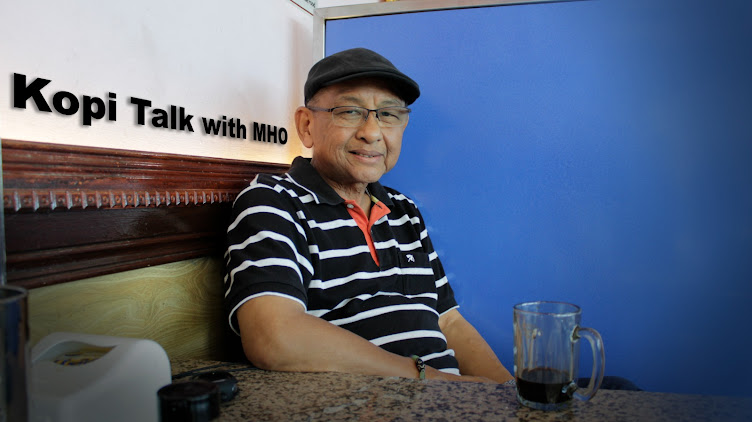
KOPITALK WITH MHO | Reader Response & Commentary
When the Answer Is Not Enough:
A Reader Asks the Question Nobody Wants to Answer.
By Malai Hassan Othman | KopiTalk with MHO | March 2026 | In response to DMAO: 'Day Six of LegCo — Everything Was Answered… But There Is No Continuity, No Follow-Up, No Follow-Through'

|
DMAO read the Day Six report and asked one simple question: the answer was given — but then what? Who is still responsible after the session ends? KopiTalk with MHO responds. |
DMAO wrote back again. And this time, his message is even simpler.
He said: Day Six showed that the system is listening. Ministers answered. Data was given. Issues were acknowledged. All of that is true — and fair. But here is the part that keeps him up at night.
After the session ends, after the Hansard is filed, after everyone goes home — what actually changes?
Because if you look at LegCo over the years, you will notice a familiar pattern. An issue is raised. An answer is given. A programme is announced. And then, slowly, quietly — the follow-up stops. Nobody checks. Nobody reports back. Nobody asks: did it work? And in the next session, the same issue comes up again. Different words. Same problem.
The question is no longer: was the answer good? The question is: who is still responsible after the answer is given?
DMAO puts it plainly: we do not lack plans. We do not lack policies. What we lack is the discipline to follow through — to stay with the problem until it is actually solved, not just until it has been answered.
I think about the woman in the Day Six report. Working in the private sector. No written contract. Over time, nobody pays her for. She did not come to LegCo. But her situation was in the room — in the questions raised, in the data presented, in the gaps the Hansard quietly recorded. The answer acknowledged her reality. But the answer did not change it.
And her father — still waiting for a care system that has not yet reached his front door. The minister said it honestly: we cannot do this alone. Families will need to carry part of this. He is right that it takes a whole nation. But that whole nation includes her, the same person that the employment system is not fully protecting.
So I want to add one thing to what DMAO said. It is not just that nobody follows through. It is that the system was never really built to make anyone follow through. There is no one whose job it is to come back six months later and ask: Did the worker get her contract? Is the elderly care plan off the drawing board yet? Has that BND59.8 million housing arrears figure finally moved?
Good intentions do not close gaps. Accountability does. And accountability needs to be built into the system — not hoped for from individuals.
Good intentions do not close gaps. Accountability does.
DMAO ends with an image that stays with you. A son is still at home. After all the answers. After all the sessions. Still waiting.
That is the real test of every LegCo debate. Not how well the questions were answered in the chamber. But whether anything is different for that family when the next session comes around.
DMAO named the problem. Clearly. Fairly. Without fuss. And KopiTalk is glad he did — because this is exactly the kind of civic conversation that makes public life more honest.
Editor's Note
This is KopiTalk's second response to DMAO, who has now written two commentaries in response to the KopiTalk 22nd LegCo Tracker series. His first paper asked whether Brunei is confusing budget administration with nation-building. His second question asks who stays responsible after the answer is given. Both are worth reading. KopiTalk with MHO welcomes this kind of public engagement — it is the civic conversation Brunei needs more of.
KopiTalk with MHO | Public interest. Plain language. Honest conversation.
What was said, what mattered, and what the public is still waiting for.

.jpeg)
No comments:
Post a Comment