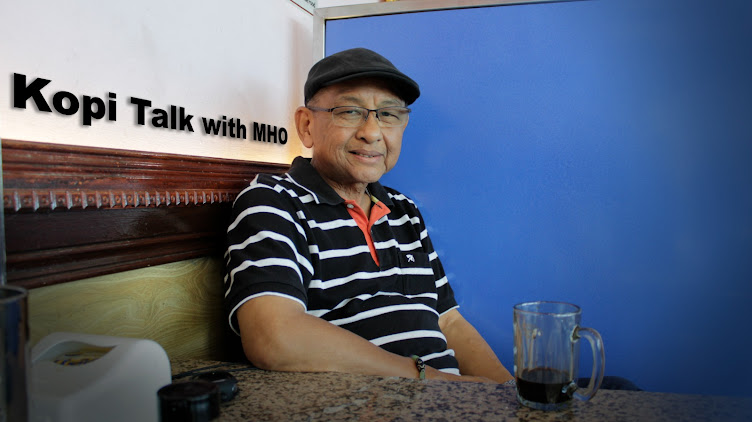
KOPITALK LEGCO TRACKER | 22nd Legislative Council Session — Closing Synthesis
Facts and Figures Count.
But Truth Matters.
The 22nd LegCo Session: A Closing Account.
“The Session Has Ended. The Questions Have Not.”
KopiTalk with MHO • 22nd Legislative Council, First Meeting • 11–28 March 2026 • Days 1 to 11

On paper, the 22nd Legislative Council session of Brunei Darussalam was a success. The calendar was met. The business was completed. The Supply Bill and the Development Fund Resolution were gazetted in time for the new financial year beginning 1 April 2026.
But a session is not measured by its paperwork. It is measured by what it reveals about the country it is supposed to serve. And this session — followed from the first day to the last, question by question, answer by answer — revealed something the official record alone cannot fully capture.
It revealed a country of genuine capability, genuine care, and genuine commitment — held back, again and again, by a governance system that too often moves at the pace of its own comfort rather than at the pace of the people who need it.
Facts and figures count.
But truth matters.
And the truth of this session is not in the budget lines. It is in the gap between what was planned and what was built. Between what was said and what was changed. Between what the system knows and what it has done with what it knows.
This closing report is not a summary.
It is a reckoning.
Because the real measure of a legislative session is not what was debated.
It is what changed for the people who needed it to.
I. The Pattern
By the fourth day of this session, a pattern had emerged. By the seventh, it was unmistakable. By the eleventh, it had become the defining story of the entire sitting.
The pattern is this: the government of Brunei knows what needs to be done. It has the data, the plans, the policy frameworks, and — in many cases — the budget.
What it struggles with, consistently and across almost every sector this session examined, is the step between knowing and doing.
This is governance inertia.
Not incompetence.
Not indifference.
A structural tendency to wait rather than anticipate, to respond rather than prevent, to move when pushed rather than when warned.
The evidence assembled across eleven days is not circumstantial.
It is cumulative, specific, and documented in the official Hansard of the 22nd Legislative Council.
Day 4 — Tuesday, 12 March 2026
The session opened with a budget debate framing Brunei’s fiscal reality: a structural deficit running for over a decade, oil revenue dependency at over 80 per cent of government income, and a Wawasan 2035 diversification agenda that is real in ambition but uneven in delivery.
DMAO raised the first accountability question of the session — who is responsible after the answer is given? — and it became the question this series never stopped asking.
Days 5 and 6 — Wednesday and Thursday, 13–14 March 2026
The policy debate entered its depth. Youth unemployment stands at 18.3 per cent — the highest in the ASEAN region. A labour market where the public sector still absorbs graduates, and the private sector has not yet created enough space for them.
Welfare assistance was still being calculated using data from 2015. Civil servants remained on half pay for years under suspension rules written in 1998. The KMKA poverty framework was outdated, under-resourced, and producing numbers that did not reflect what families were actually experiencing.
Day 7 — Wednesday, 18 March 2026
The session entered its first Committee Stage, and the human faces behind the statistics became visible.
A family in Belait — three generations in oil and gas — and a son who no longer knows where his future lies. Government officers suspended on half pay for years, their families managing on reduced income while the system could not reach a conclusion.
And the number that connected everything: over 13,000 individuals in mental health treatment in 2023–2024, a 17 per cent increase in one year, with the largest affected group being young adults in their early twenties.
Day 8 — Thursday, 19 March 2026
The pre-Raya sitting produced two images that stayed with the series all the way to Day Eleven.
A mother at a photocopier, making copies of her visually impaired son’s school materials because the system had not yet provided what he needed.
And the KMKA update — a poverty measurement framework still running on 2015 data, with a new assessment only now coming this year. Eleven years of policy decisions built on numbers that no longer reflect the current reality.
The budget was passed.
The waiting was not.
Day 9 — Wednesday, 25 March 2026
The session returned from Hari Raya and found the same questions still waiting.
A rice farmer dialogue produced the line that became the Day Nine headline: “Feedback is a gift.”
Dayang Hajah Rosmawatty had visited rice farmers across three districts and brought their words into the chamber — not as statistics, but as specific, practical requests:
— more certified seed suppliers — only three in the entire country
— more field visits from ministry officials
— better grassroots coordination
Meanwhile, the tourism budget nearly doubled. A team was sent to Singapore within two weeks.
The contrast was not subtle.
Day 10 — Thursday, 26 March 2026
The cycling ban.
Two cyclists died on the Muara-Tutong Highway on 17 February 2026 — the first day of Chinese New Year. Both were wearing helmets. Both were following the law.
The accident went viral. It was referenced in the opening address at LegCo on 12 March. On Day Ten — 38 days after the deaths — the Transport Minister announced a comprehensive response: a cycling ban on named highways, dedicated routes per district, Road Safety Action 2030 targets, and amendments to the Road Traffic Act.
The response was serious and well-structured.
Road accidents had been rising for three consecutive years. The concern had been raised before. The capacity to act was always there.
What was missing was the trigger.
Day 11 — Saturday, 28 March 2026
The final day. Question Time only.
And the questions, taken together, told the story of a family institution under quiet, structural pressure.
Marriage verification is carefully handled at the front door. Divorce cases are up 26 per cent in nine years. Elder abandonment is rising. An OKU Complex was planned in 2011, a project team was formed in 2024, and there is still no building.
The sandwich generation is carrying what it was never sufficiently equipped to carry alone.
And the Speaker of the Legislative Council — in his closing address — asked that ministerial responses be published publicly on ministry websites, so the people the chamber serves can follow what happens after the session ends.
That may yet prove to be one of the most important things said in the entire sitting.
The capacity to act was always there. What was missing was the trigger. And in Brunei, the trigger is almost always the same.
II. The Truths the Session Built
Facts can be selected. Numbers can be framed. A session can be described in terms of its achievements or in terms of its gaps — and both descriptions can be technically accurate.
This series has tried to hold both at the same time.
Because the truth of this session is not in either column alone.
Here is what the evidence, taken whole, actually shows.
The system is not failing because it does not care.
The ministers who spoke across eleven days were, for the most part, engaged, honest, and at times unusually candid.
The Health Minister said plainly that doctors are leaving because other countries pay more, and the government cannot yet offer flexible working hours. The Development Minister acknowledged the enforcement gap between RPN housing and private land openly, without defensiveness. The Religious Affairs Minister presented eight years of data on out-of-wedlock births and corrected a widely held public assumption — the trend is declining, not rising, from 378 cases in 2019 to 202 in 2024.
These are not the answers of a government hiding from reality.
They are the answers of a government that knows what reality is.
The system is failing because it is not structured to move fast enough.
The OKU Complex: planned in 2011, project team formed in 2024.
The KMKA poverty framework: running on 2015 data in 2026.
The civil servant suspension rules: written in 1998, review promised in 2026.
The childcare age gap: parents solving informally what regulation was designed to solve formally, but in practice pushed them away from protection rather than toward it.
The EV charging station in Temburong: one station, one brand, one resort, in a district the government is actively developing as an eco-tourism destination connected by a BND1.6 billion bridge.
The halal certification backlog: tens of thousands of applications pending in a global halal market worth USD2.3 to USD2.8 trillion.
In each case, the knowledge was present.
The planning had occurred.
The delivery was late.
The people most affected are the ones least able to wait.
The family in Belait is waiting for the new industries to arrive.
The civil servant has been on half pay since 2020.
The mother is photocopying textbooks.
The OKU caregiver has been absorbing, at home, what the state itself acknowledged it should help carry.
The young adult is sitting in a mental health waiting room.
The farmer is asking for a fourth certified seed supplier.
These are not exceptional cases.
They are representative ones.
They are what governance inertia looks like when it lands on a person instead of a policy document.
The family institution is under structural pressure, and the system is arriving late.
This is the truth Day Eleven named most clearly — and it may be the one that carries the greatest weight for Brunei’s long-term resilience, sovereignty, and dignity.
Divorce cases are rising. Elder abandonment is increasing. Young people are delaying family formation because they cannot yet afford the life they are being asked to build. The sandwich generation is stretched between obligations it cannot fully meet without support that is still being planned.
The damage is not moral decay.
Bruneians have not stopped loving their families.
They have not stopped honouring their faith.
The damage is structural — the slow erosion of the conditions under which families can do what they were always meant to do.
MIB places the family as the first institution of moral formation — the place where taqwa, responsibility, and love for community are first learned.
A government that takes MIB seriously as a living philosophy, not just a ceremonial framework, should be measuring its performance against that standard.
There are genuine achievements — and they deserve to be named.
Egg self-sufficiency at 112 per cent, achieved through a deliberately export-oriented strategy.
2,380 zakat backlog cases cleared in ten weeks — a remarkable administrative achievement.
262 former zakat recipients now generating their own income.
The Temburong electricity grid fix 92 per cent complete after years of outages from a 40-year-old power station.
The BKCF grants programme, the UTB-CrAFT research partnership, the digital payments rollout, the Aviation Steering Committee, and the hybrid rice trials with China and Singapore.
Out-of-wedlock births declining 46 per cent over five years.
These are real.
They reflect effort, commitment, and institutional capability when the system is properly directed.
The problem is not that nothing is being done.
The problem is the pace — and the consistent gap between the scale of the need and the scale of the response.
The problem is not that nothing is being done. The problem is the pace — and the consistent gap between the scale of the need and the scale of the response.
III. The Questions This Session Could Not Answer
A legislative council is not expected to solve everything in eleven days.
It is expected to surface what matters, apply accountability to what is not working, and send the government back into the world with clearer direction than it had when it arrived.
On those terms, the 22nd session did its job — imperfectly, unevenly, but genuinely.
But a series that has followed every day of this session would not be doing its job if it did not name what remained unanswered.
These are the questions the chamber built but could not close:
— What happens to the son in Belait while the new industries are still being developed? The oil and gas transition is real. The anxiety it is producing in communities built around a single industry is also real. The timeline for the alternative has not yet been given to the people who most need it.
— When will the OKU Complex be built? Not planned. Not reviewed. Built. The families waiting for it have been waiting since 2011. They deserve a date, not another study.
— When will the KMKA poverty framework produce numbers that reflect 2026 realities in time to shape 2026 policy? The update is coming. But welfare decisions made on 2015 data have real consequences for real families right now.
— When will the childcare gap be resolved by policy rather than by parents finding informal workarounds? Children aged three to five remain caught between systems that were supposed to protect them.
— What is the accountability mechanism for the 215 questions asked across eleven days? The Speaker called for responses to be published publicly on ministry websites. Will they be? And if they are, who will verify that those answers lead to actual change — not just acknowledgement?
— Who is responsible — not in general, but specifically — for the civil servants still on half pay under rules written in 1998? A review was promised. A timeline was not.
— When will elder care infrastructure exist at the scale Brunei’s ageing population will require? The Successful Ageing Action Plan exists. The demographic pressure is already here.
— What is the real plan for food security at field level? Not only at the level of export strategy and ministerial statements, but at the level of the farmer still asking for a fourth certified seed supplier and a more attentive presence from the ministry where it matters most.
DMAO asked throughout this series:
Who is still responsible after the answer is given?
That question does not expire when the session adjourns.
It follows every commitment made in that chamber out into the world, where the people who asked it are still waiting.
Who is still responsible after the answer is given? That question does not expire when the session adjourns. It follows every commitment made in that chamber out into the world.
IV. The Measure
At the beginning of this series, a line was written that has held true across every one of the eleven days that followed:
Facts and figures count.
But truth matters.
The facts of this session are clear.
BND6.3 billion.
215 questions.
11 days.
A budget passed.
A Development Fund approved.
Four motions carried.
Eleven Hansard volumes that will sit in the official record of this country for as long as that record is kept.
The truth is what those facts point to when you follow them honestly all the way to the people they are supposed to serve.
The truth is that Brunei is a country with real wealth, real institutional capacity, and a governing philosophy — MIB — that places the dignity and well-being of its people at the centre of everything the state does.
The truth is also that the gap between that philosophy and the daily experience of the families living it is wider than it should be — and has been widening, quietly, for longer than this session alone can account for.
The cycling ban came 38 days after two people died on a road already known to be dangerous.
The OKU Complex is still being planned fifteen years after the need was acknowledged.
The poverty measurement was still using 2015 data eleven years after the world it was measuring had changed.
The mental health numbers rose 17 per cent in one year, while the economic pressures producing them were being debated in the very same chamber that authorised the budget meant to address them.
None of this is beyond remedy.
That is the important thing.
Governance inertia is not a law of nature.
It is a structural condition — produced by the way decisions are made, reviewed, approved, funded, and followed up — and structural conditions can be changed by structural remedies.
The remedy is not more plans.
It is not more frameworks, more committees, or more ministerial statements that acknowledge the problem before promising a study that will be completed in due course.
The remedy is delivery.
At the pace of human need.
Before the divorce — not after the marriage has already broken under the weight of financial stress and absent support structures.
Before the elder is abandoned — not after the family has already run out of the capacity to care.
Before the cyclist dies — not after the accident that makes inaction politically impossible.
Before the OKU child grows up — not when the building is finally ready, fifteen years after the need was first named.
The Bruneian people are resilient.
They have always been.
They photocopy textbooks when the system does not provide them. They find informal childcare when regulation pushes them away from formal protection. They absorb, at home, the care burden the state itself acknowledged it should share. They wait, year after year, for the building that is always coming.
That resilience is not a justification for slow delivery.
It is a testament to what the people are willing to endure.
And endurance has limits.
A nation that takes care of its families takes care of itself.
A nation that plans for its people a decade too late is spending social capital it is not replenishing.
And a government that is genuinely committed to the resilience, sovereignty, and dignity of its people must eventually answer the question this session kept asking in different forms across eleven days:
Not whether the system knows what needs to be done.
But whether it is structured to do it
before the people who need it run out of time.
The 22nd Legislative Council adjourned on Saturday, 28 March 2026. The Second Meeting will be held later this year.
The questions that mattered are not in adjournment.
They are in the fields where rice farmers are still waiting for a fourth certified seed supplier.
In the home where a caregiver is still managing without the facility that has been planned for fifteen years.
In the Syariah court records, where divorce cases are still being filed by families under financial pressure the welfare system did not update fast enough to relieve.
In the waiting room, where a young adult is still sitting with an anxiety that thirteen thousand other people in this country now share.
Facts and figures count.
But truth matters.
And the truth of the 22nd Legislative Council session is this:
the system has the knowledge, the resources, and the mandate to do what needs to be done. What the people are still waiting for is the will to do it at the pace their lives require.
KopiTalk LegCo Tracker — 22nd Legislative Council Session, First Meeting
Days 1 to 11 | 11–28 March 2026 | Series complete.
KopiTalk with MHO • Public-first coverage of the Brunei Legislative Council.
What was said, what mattered, and what the public is still waiting for.

.jpeg)
No comments:
Post a Comment