Ports move goods.
Data moves economies. Food sustains nations.
In the latest titah, three signals quietly emerged
— maritime logistics, digital infrastructure and food security. With less than
a decade to Vision 2035, the real question is no longer what we plan to build,
but whether these layers will hold when the world tests them.

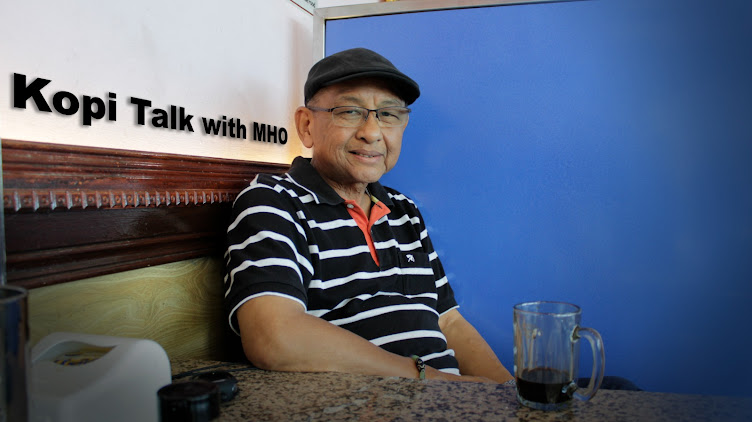
By Malai Hassan Othman | KopiTalk with MHO
In the National Day titah, His Majesty stated:
"Aspek keselamatan makanan negara juga terus diberikan perhatian. Ini merangkumi kerjasama strategik serantau termasuk pembangunan zon makanan bersama antara Negara Brunei Darussalam dan Republik Singapura melalui Brunei-Singapore Agri-Tech Food Zone. Kerjasama ini akan memperkukuhkan lagi rantaian bekalan makanan dan berpotensi menjana peluang pekerjaan dan perniagaan tempatan bagi kedua-dua buah negara."
In English:
"The aspect of national food security continues to receive attention. This includes strategic regional cooperation, including the development of a joint food zone between Brunei Darussalam and the Republic of Singapore through the Brunei-Singapore Agri-Tech Food Zone. This cooperation will further strengthen the food supply chain and has the potential to generate employment and business opportunities for both countries."
The words are measured, but the message is firm.
Food security is not being framed as a farming policy, but as supply-chain strength, regional positioning, and job creation. That is a different conversation altogether.
Because food security, in today's environment, is not theoretical. It manifests in shipping costs, restaurant margins, retail invoices, and the quiet anxiety of price volatility.
Over the past eight years, domestic food production has grown by roughly forty per cent — from about BND 525 million in 2017 to around BND 742 million in 2024. Self-sufficiency has been achieved for poultry and eggs. That is real progress.
But progress does not eliminate exposure.
Rice self-sufficiency remains limited, and beef production still covers only a fraction of demand. Imports remain significant. Agriculture contributes just over one per cent of GDP — modest in economic terms, but strategically sensitive.
The trajectory is upward, but the vulnerability remains visible.
This is where the Brunei–Singapore Agri-Tech Food Zone becomes more than diplomatic language.
Singapore brings technological depth, regulatory sophistication, and global supply-chain networks. Brunei brings land availability, halal positioning, macroeconomic stability, and policy continuity. The collaboration signals that resilience will not be built in isolation, but through complementary capabilities.
If commercially executed — and execution will be key — the initiative could anchor technology-driven agriculture, attract strategic investment, and generate skilled employment. But ambition alone will not close the gap. Land must be productively utilised, yields must be consistent, financing must be disciplined, and technology must be absorbed, not merely showcased.
With fewer than ten years remaining before Vision 2035, timelines matter more than intentions.
Across the first three pillars highlighted in the titah, a pattern emerges:
Maritime logistics strengthens connectivity.
Digital infrastructure strengthens intelligence.
Food security strengthens endurance.
Together, they form layers of economic stability.
Brunei's strengths are clear: stability, fiscal space, policy coordination, and regional credibility. In uncertain times, those are competitive advantages.
Its constraints are equally clear: small domestic scale, uneven sectoral depth, heavy reliance in selected food categories, and a workforce still transitioning toward technology-intensive sectors.
The opportunities lie in integration: agri-tech linked to digital systems, food production supported by efficient maritime logistics, regional cooperation leveraged into domestic enterprise.
The risks are external and real: supply-chain disruption, climate volatility, rising input costs, regional competition, and the narrowing runway toward 2035.
The titah does not dramatize these pressures, but signals readiness.
But readiness must now translate into pace.
The next decade will not reward plans on paper, but execution under pressure.
For investors, the signal is straightforward: resilience is becoming part of the economic strategy, not an afterthought. For local entrepreneurs, the message is equally clear: food security is no longer about subsistence, but about systems. For the public, it reassures them that exposure is being acknowledged and addressed.
If maritime logistics defines how Brunei connects, and digital infrastructure defines how it competes, food security defines how it withstands.
Vision 2035 will ultimately be judged not by announcements, but by whether these layers hold when tested.
And by 2035, the real question will not be what we planned, but what we managed to hold. (MHO/03/2026)

.jpeg)
No comments:
Post a Comment