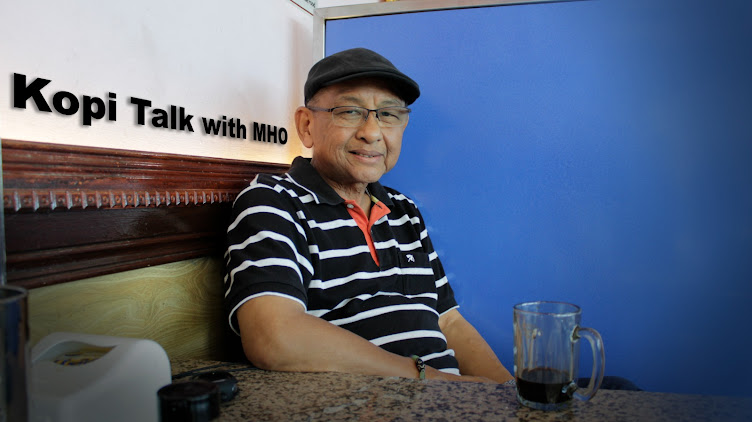
KOPITALK LEGCO TRACKER | 22nd Legislative Council Session
Day Eight: The Budget Was Passed.
But Some Mothers Are Still at the Photocopier.
KopiTalk with MHO • Thursday, 19 March 2026 • 22nd LegCo, Day Eight
|
She has been photocopying her son's textbooks for years — making them bigger so he can see what the system has not yet made visible. On the day a BND6.3 billion budget was passed, a simple question remained: if parents are still filling the gaps, what exactly has been delivered? |

She sits at the photocopier and does what the school has not done. She enlarges her son's textbooks — bigger font, clearer print — so a child with visual impairment can actually read. She has been doing this since primary school. He is now in secondary school. She is still doing it. At her own expense.
Dayang Hajah Safiah binti Sheikh Haji Abd. Salam knows this family. She told the chamber about them on Thursday — the final sitting of the 22nd Legislative Council session before Hari Raya. She saluted parents like this, then asked the question that mattered: what about those who cannot afford even a photocopier?
Over BND576 million has been allocated to the Ministry of Education for 2026/2027. There are programmes, frameworks, and plans. Yet somewhere within that system, a child is still waiting for a textbook he can read.
That is Day Eight in one image. Not the billions. Not the blueprints. A mother at a photocopier — bridging the gap between promise and reality.
Thursday marked the final sitting before Hari Raya Aidilfitri. The moon would be sighted that evening. The Yang Di-Pertua closed the session with Selamat Hari Raya, noting that when they reconvene on 25 March, the mood may be different. He was right. But before that shift, the day had something important to say.
What Was Raised
Day Eight moved through three ministries: Finance and Economy, Home Affairs, and Education. Each had moments that mattered.
The child who needed a bigger font.
The education debate was long and detailed. But one moment cut through everything. Parents are photocopying textbooks in larger print because adapted materials are not provided. This is not about one school. It is a system gap. Education exists. Access to it does not always arrive in the right form.
Other concerns reinforced this pattern. Strong primary results are not translating into O-Levels. Teachers are pulled into administrative work due to clerical shortages. Broken facilities persist longer than they should. Qualified graduates remain unemployed while the system reports shortages.
Individually, these are small issues. Together, they describe a system working hard — but still leaving families to quietly fill the gaps.
The lamb shanks — and what the response reveals.
Foreign vendors, festive crowds, strong sales — and money flowing outward. The minister responded candidly. He contacted the organiser personally, encouraged local sourcing, and secured agreement for future collaboration.
It is a meaningful step. But it remains a response to an event, not yet a structural framework. The issue itself — domestic leakage, declining retail performance, and cross-border spending — continues beyond any single fair.
Two signals many missed.
The first: the KMKA baseline for welfare remains tied to 2015 data. The update is coming this year. For families relying on assistance, this matters.
The second: a national stock exchange targeted for late 2027. It opens new pathways for savings, investment, and capital formation. It is a significant move — though still some distance away from immediate need.
The zakat story that opened the day.
In ten weeks, 2,380 backlog cases were cleared. More recipients are transitioning into contributors. It is a reminder that when systems align, transformation is possible.
From receiving zakat to paying it — that is how a system is meant to work.
What the Answers Revealed
Day Eight was marked by a level of honesty not always seen earlier in the session. Ministers acknowledged gaps, named constraints, and in some cases admitted solutions are still in progress.
The Education Minister addressed a wide range of concerns with candour. The issues are known. But acknowledgement remains the beginning, not the outcome.
On Kampung Ayer redevelopment, careful spending is being prioritised. That is responsible governance. It is also continued waiting for those on the ground.
On workforce structure, existing policies are in place — but the lived patterns suggest gaps between design and outcome.
There were also signs of movement — reviews underway, updates in progress, and a willingness to acknowledge constraints more openly than before. These are not small steps. But they are still steps.
From receiving zakat to paying it — that is how a system is meant to work. When it does, it is worth saying so.
What the Public Is Really Asking
- For the parent at the photocopier: when will support arrive in a form that reaches the child directly?
- For the local trader: when does conversation become commitment?
- For the family on welfare: when the KMKA updates, will assistance follow?
- For the ordinary saver: what bridges the gap before 2027?
- For the unemployed graduate: what is delaying a solution already understood?
The Signal of the Day
Day Eight closes a session that covered eight days and a BND6.3 billion budget. Much was said. Many answers were given. Some were strong. Others remain in progress.
The signal is not that the system does not care. It is that it has become very good at naming problems — and is still working to close the gap between naming and fixing.
The mother at the photocopier knows the problem has a name. Inclusive education. Adapted materials. Policy frameworks. What she needs is not the name. She needs the book.
The trader knows the language too — leakage, domestic demand, support mechanisms. The next fair is already being planned.
The family on welfare knows inflation has a name. They just cannot live on it.
DMAO asked the question that now sits over the entire session: after the answers are given, who remains responsible? That answer does not sit in the chamber. It sits in what happens next.
The moon was sighted on Thursday evening. Ramadan ended. The country moved into Hari Raya.
Eight days. One session. One budget. A country with plans for almost everything — and mothers still at photocopiers, making up the difference between policy and the child in front of them.
The session will resume. The mood will change. The questions will not.
Because in the end, a system is not measured by what it plans — but by what it no longer asks its people to fix on their own.
KopiTalk LegCo Tracker covers the 22nd Legislative Council session from a public-first perspective.
What was said, what mattered, and what the public is still waiting for.

.jpeg)
No comments:
Post a Comment