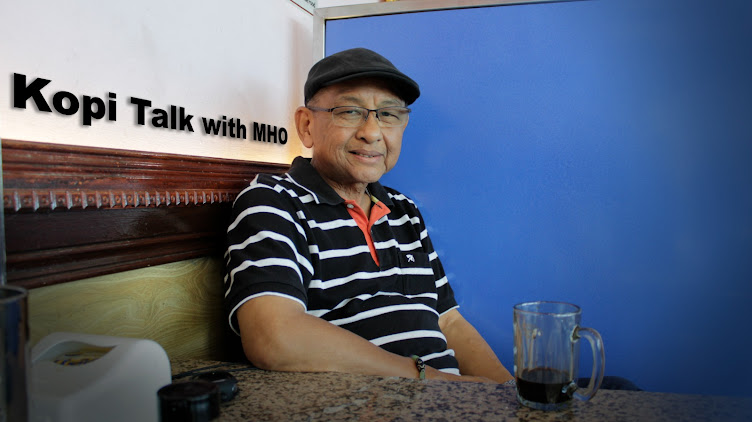
KOPITALK LEGCO TRACKER | 22nd Legislative Council Session

Day Six of LegCo: The Worker Nobody Answered For,
And the Parent Nobody Has Yet Made a Plan For.
KopiTalk with MHO • Tuesday, 17 March 2026 • 22nd LegCo, Day Six
|
She works in the private sector. No written contract. Overtime uncompensated. At home, her father is ageing — and the care system still cannot reach beyond the hospital walls. Day Six raised both realities in the same morning. Neither answer was really for her. KopiTalk LegCo Tracker — Day Six. |
She works in the private sector. She does not have a written employment contract — her employer never provided one. She works overtime regularly and is not compensated for it. She has not complained, because she is not entirely sure who would listen, or whether doing so would cost her the job she needs.
At home, her father is in his late sixties. He had a mild stroke last year. He needs regular monitoring. The family manages — just. But she knows it will not always be manageable.
For many workers, this is not hypothetical.
The Hansard of Day Six of the 22nd Legislative Council session — Tuesday, 17 March 2026 — contains both halves of her reality. The labour rights question raised in Question Time was broad enough to cover her. The elderly care question raised in the same session was honest about the gap that will eventually reach her family. But neither answer was fully framed with her in mind.
On the labour side, the answer focused heavily on foreign worker management — LPA licences, employer compliance, and bilateral MOUs. Of the 529 compounds issued in 2025, 344 were for employing foreign workers without a valid licence or using expired permits.
The second largest category — 100 cases — involved improper placement of foreign labour. The enforcement system described — NLMS, inspections, licensing — remains strongly anchored around regulating foreign labour flows.
The local private sector worker without a written contract, working overtime without pay, having wages cut without authorisation — she appeared only briefly in the answer, through general provisions on employment contracts and complaint channels. The emphasis, however, still sits heavily elsewhere.
On the elderly care side, the Health Minister was commendably frank. By 2050, nearly 29 per cent of Brunei's population will be over 60. Geriatric services remain largely hospital-centred. The Step-Down facility in Tutong is still in planning. The main constraint: shortage of specialised manpower.
And then came the key admission — this cannot be handled by the Ministry of Health alone. It requires a whole-of-nation approach.
In practical terms, that means families will carry a significant part of the burden. The same families where working adults are navigating fragile employment conditions.
Both halves of this reality were present in the Hansard. Day Six did not invent them. It simply placed them side by side.
What Was Raised
Four issues carried genuine public weight on Day Six.
Labour rights — the question was broad, the answer narrower in focus.
Dayang Hajah Safiah and Pehin Orang Kaya Laila Setia Awang Haji Abd. Rahman raised concerns about worker exploitation. The response was data-rich — inspections, compounds, and enforcement actions. But the distribution of violations revealed where enforcement attention is concentrated. The majority relate to foreign labour licensing and placement. Only a smaller portion touches conditions that affect all workers, including locals.
Elderly care — honesty acknowledged, readiness still emerging.
Awang Zainol bin Haji Mohamed asked about long-term care. The response confirmed a system still in transition — hospital-centric, workforce-constrained, with community support structures still developing.
Apprenticeship schemes — real numbers, unanswered protection question.
11,588 participants across schemes. 70 per cent placement. Strong outcomes on paper. But Day Six leaves open a deeper question: what happens after placement?
Fiscal sustainability — signals of realism emerging.
Acknowledgement that revenue does not automatically follow growth. Early-stage study on tax reform. A subtle but important shift in tone.
What the Answers Revealed
Day Six was more candid than most days. That matters.
The Health Ministry outlined real constraints — ageing population, manpower shortages, and the need for integrated care. The Finance side acknowledged structural limits in revenue capture.
But the labour response revealed something more structural.
It told a story of system strength — but not entirely the story the question was asking for.
The emphasis remains on regulating foreign labour systems efficiently. Protection mechanisms for local private sector workers exist in law, but the lived experience of enforcement and access remains less visible in the exchange.
The labour answer told a story of system strength — but not entirely the story the question was asking for.
The gap was not meaningfully pursued further within the exchange.
A Balancing Signal — Where the System Is Improving
Day Six also showed where the system is moving forward — and this should not be ignored.
Efforts to streamline labour and immigration processes, digital systems like NLMS, and broader ease-of-doing-business reforms are improving efficiency and investor confidence. These are real gains. They matter for economic growth, job creation, and long-term competitiveness.
But efficiency on the business side and protection on the worker side do not always move at the same speed. Day Six suggests that this gap is where the next phase of reform will need to focus.
What the Public Is Really Asking
- If enforcement is structured around foreign labour management, what is the lived pathway for a local worker facing unfair conditions?
- If elderly care will depend on families, what support systems will reach those families before capacity expands?
- If apprenticeship leads to placement, what ensures protection after entry into the workforce?
- If fiscal reform is under study, when does it translate into tangible relief?
The Signal of the Day
Day Six produced a structural signal.
At the beginning of working life, protections exist — but do not always reach the ground with equal clarity.
At the later stage of life, care systems exist — but are not yet fully extended into the community.
These are not separate issues. They sit within the same household.
Day Six was substantive. The candour was real. The data was meaningful.
But the person at the centre of both discussions — the worker balancing fragile employment and family responsibility — was still only partially visible in the answers.
A budget debate that has now run six days has begun to reveal something deeper.
Not a lack of plans.
But the harder question is how those plans meet real lives.
KopiTalk LegCo Tracker covers the 22nd Legislative Council session from a public-first perspective.
What was said, what mattered, and what the public is still waiting for.

.jpeg)
No comments:
Post a Comment