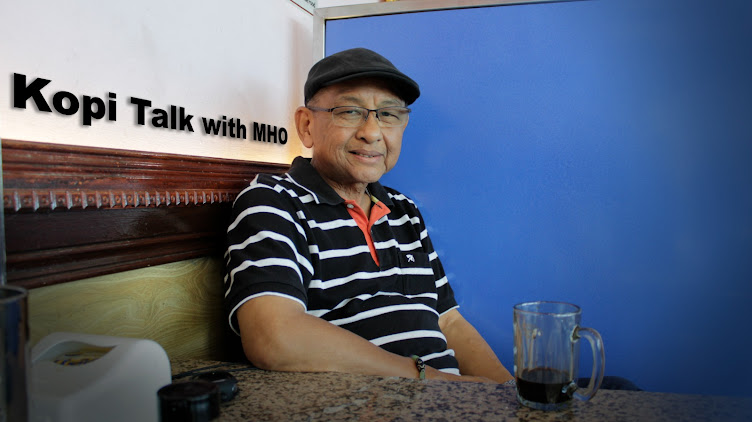
What was said, what mattered, and what the public is still waiting for.
Behind the broad support for a BND6.3 billion budget, one uncomfortable truth kept surfacing: Brunei does not have a shortage of plans. It has a shortage of delivery.

KopiTalk with MHO • Sunday, 15 March 2026 • 22nd LegCo, Day Four
Picture a young Bruneian woman. She has a Master’s degree. She has been applying for jobs for two years. She runs small deliveries on the side to help her parents pay the bills, but no bank will give her a loan to grow that small business because what she does is still not treated as formal employment. She is not lazy. She is not choosy. She is simply living in a system that has not fully caught up with how people actually work — or how desperately they need to.
She was not in the chamber on Sunday. But she was the reason the chamber’s best moments mattered.
Day Four of the 22nd Legislative Council session opened with Question Time and moved into the policy debate on the Supply Bill and Development Fund for 2026/2027. Every member who spoke supported the BND6.3 billion budget. But the support came with conditions — and those conditions said more about where Brunei really stands in the final stretch towards Wawasan 2035.
WHAT WAS RAISED
Four issues carried genuine public weight on Day Four.
Youth unemployment and the gig economy.
The youth unemployment rate climbed to 18.3 per cent in 2024, up from 16.8 per
cent the year before. Haji Salleh Bostaman noted something more telling than
the statistic itself: births registered in Brunei fell from 6,500 in 2020 to
5,360 in 2024 — a drop of more than 1,100 children in four years. Young couples
are not just struggling to find work. Many are postponing family plans because
they do not feel secure enough about the future.
Project delivery under RKN12.
Of 305 development projects under the 12th National Development Plan, 91 remain
in the design phase. Dayang Hajah Rosmawatty pushed for quarterly
national-level monitoring, early warning systems for delays, and the
willingness to reprioritise projects that are no longer earning their
allocation. The development fund, she argued, is not merely government
expenditure. It is a national investment. The standard should be higher.
Civil service transformation.
The Public Service Transformation Committee, JTPA, is still gathering data on
current-state gaps before moving to actual intervention. The framework sounds
right. But gathering data is not the same as moving. With eight years left
before 2035, the pace of institutional reform is itself a public-interest
issue.
Food and energy resilience.
Haji Salleh Bostaman raised geopolitical supply-chain disruption and a recent
water supply failure caused by a landslide as reminders that Brunei remains
exposed. In a country that imports more than 90 per cent of its food, the
question of strategic stockpiles is not academic. It is about what happens to
ordinary families when the next disruption arrives.
WHAT THE ANSWERS REVEALED
The government’s responses on Day Four were, for the most part, detailed and professionally delivered. The Minister of Transport and Info communications gave a thorough account of Muara Port’s expansion — capacity set to double to 500,000 TEUs by Q3 2027, new shipping lines established, and the Navigating 2030 strategic plan launched. The Minister of Finance and Economy II defended the currency arrangement with confidence and cited inflation below one per cent annually across four decades as evidence of monetary stability.
But on the questions that cut closest to daily life, the answers were thinner.
On gig workers and bank access, the reply was polite but thin. Encouragement, subject to employers, is not yet a real policy answer. For many young people already working on the margins, the system still asks them to be entrepreneurial without fully recognising them as economic actors. Nothing said on Sunday clearly changed that.
On civil service transformation, the message was even clearer: the machinery is still diagnosing itself. But with 2035 drawing closer, diagnosis alone no longer feels like progress.
On the 3,000 new jobs expected from 18 incoming FDI projects, the announcement was welcomed by every speaker. But welcomed with a harder question: what is being done right now to prepare local workers not only for entry-level roles, but for supervisory, mid-management, and eventually board-level positions? One member raised that concern directly. The Hansard records no clear answer.
WHAT THE PUBLIC IS REALLY ASKING
On the budget deficit: the Fiscal Consolidation Programme is now in its second iteration. When does consolidation produce something the public can actually feel — not another plan to reduce the deficit, but a visible reduction?
On youth unemployment: an 18.3 per cent youth unemployment rate is not just a trend to monitor. It is someone’s son or daughter, educated and willing, still waiting. When does the system absorb them?
On gig work and financing: why is a young Bruneian who works every day, pays for his or her own equipment, and contributes to the economy still half-visible to the banking system? How long will the country ask its young people to be entrepreneurial while refusing to treat too many of them as entrepreneurs?
On RKN12 projects: 91 projects are still in the design phase. Who is watching the clock? And if a project is running late, who is accountable — not just responsible, but accountable?
On the birth rate: when young couples decide not to have children because they are unsure they can afford to, that is not merely a demographic statistic. It is a quiet verdict on the economy.
THE SIGNAL OF THE DAY
The word that defined Day Four was bersama — together. The budget theme is Bersama Menjayakan Wawasan Brunei 2035. It is a good word. It carries the right spirit.
But bersama only works when every part of the system is actually moving and not drafting, and not studying and not gathering data. Moving.
The speeches in the chamber were, on balance, the best kind: honest, measured, constructive, and grounded in what people outside the chamber are actually experiencing. Members did not silence the budget with flattery. They asked it to prove itself.
That is healthy. That is what a legislative council is for.
What comes next — in project approvals, in gig-worker financing, in job placement, in the confidence of young couples deciding whether they can afford a future here — will determine whether Day Four’s questions were truly heard, or merely recorded.
The public does not live in the Hansard. It lives in the outcome.
And that is where Wawasan 2035 will ultimately be judged — not in this chamber, but in the lives of people still waiting for the system to move at the speed their situation demands.
KopiTalk LegCo Tracker covers the 22nd Legislative Council session from a public-first perspective: what was said, what mattered, and what the public is still waiting for. (MHO/03/2026)

.jpeg)
No comments:
Post a Comment