Power can command armies. Wisdom can understand the language of birds. But only a grateful heart can carry a kingdom without losing its soul. In Surah An-Naml, Allah reveals that Prophet Sulaiman's greatest miracle was not his power—it was his humility before the One who bestowed it.

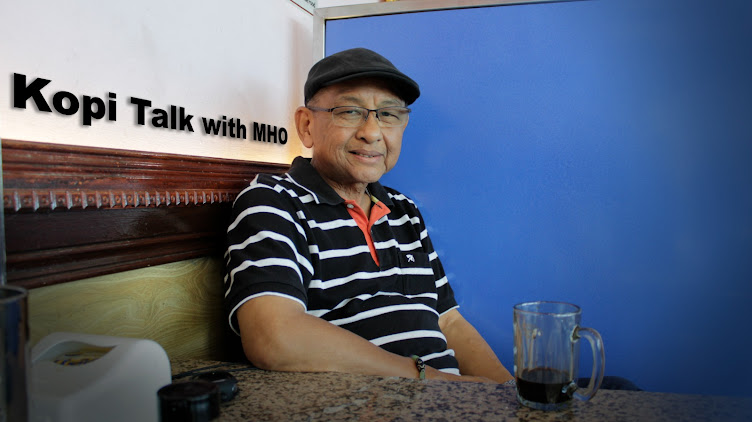
By Malai Hassan Othman
“My Lord, inspire me to remain grateful for Your blessings which You have bestowed upon me…”
— Surah An-Naml, Verse 19
There are verses in the Qur'an that we read.
Then there are verses that quietly begin reading us.
As I continued my journey of taddabur after Subuh prayers, I arrived at Surah An-Naml, verses 17 to 19. I had read these verses many times before, but on this particular morning they seemed to reveal something I had never truly seen.
This time, I was not captivated by the miracle.
I was captivated by the heart behind the miracle.
Allah introduces us to Prophet Sulaiman (a.s.), a ruler unlike any the world has ever known. His army was not made up of human soldiers alone. It consisted of humans, jinn and birds, all gathered together in perfect order under Allah's command. Allah also bestowed upon him an extraordinary gift—the ability to understand the language of birds and other creatures and, by His permission, to communicate with the unseen world of the jinn.
It was power beyond imagination.
Authority beyond comparison.
A kingdom unlike any before or after.
Most readers, including myself, are naturally drawn to the grandeur of that kingdom.
But as I lingered over these verses, I realised the Qur'an was inviting me to admire something else.
Not the kingdom.
Not the army.
Not even the miracles.
It was inviting me to look at the heart of the man entrusted with all of it.
That thought remained with me long after I had finished reading.
Throughout my years as a journalist and later in public life, I have observed something rather unsettling. Sometimes, even a little authority is enough to change a person. A small office becomes a throne. A designation becomes a crown. Simple courtesy gives way to distance, while humility quietly surrenders to pride.
Years ago, I wrote about what I called the “little Napoleons”—individuals entrusted with only a small measure of authority, yet behaving as though they owned the institution rather than served it. The phrase was never intended to ridicule anyone. It was a reminder to myself of how easily power, even in its smallest measure, can expose the ego hidden within us.
That reflection led me to an even more uncomfortable question.
There have been moments when I quietly wondered why Allah never destined me to become a wealthy businessman, a celebrated corporate leader or someone occupying one of society's highest offices.
Like many people, I wondered how different life might have been had my path taken another direction.
Then another thought gently entered my heart.
Perhaps Allah knows me better than I know myself.
Perhaps He knew that if such success had come my way, my heart might not have carried it well. Titles could have become more important than service. Recognition might have slowly replaced gratitude. I might even have mistaken Allah's blessings for my own achievements.
I cannot know whether that would have happened. Only Allah knows what lies hidden within every heart.
Yet the thought itself leaves me not with disappointment, but with gratitude—gratitude that Allah gives not only according to our ambitions, but according to what our hearts are able to bear.
Then I returned to Prophet Sulaiman (a.s.).
Here was a prophet entrusted with everything the world admires.
Power.
Influence.
Knowledge.
Authority.
Wealth.
A kingdom unlike any before or after.
Yet Allah does something remarkable.
He does not ask us to admire the splendour of Sulaiman's palace.
Instead, He directs our attention to a tiny ant.
As the magnificent army marched through a valley, a lone ant cried out to the others:
“Wahai semut-semut! Masuklah ke dalam sarang-sarangmu, agar kamu tidak diinjak oleh Sulaiman dan bala tenteranya, sedangkan mereka tidak menyedari.”
The commander of an army of humans, jinn and birds heard the voice of one tiny creature. He could have ignored it. He could have dismissed it as insignificant.
Instead, the Qur'an tells us something beautifully simple:
“Maka dia (Sulaiman) tersenyum lalu tertawa kerana (mendengar) perkataan semut itu.”
Then came the prayer that completely transformed my understanding of these verses.
He did not ask Allah for a greater kingdom.
He did not ask for stronger armies.
He did not ask for more wealth.
He asked Allah for something infinitely more precious.
“Ya Tuhanku, anugerahkanlah aku ilham untuk tetap mensyukuri nikmat-Mu yang telah Engkau anugerahkan kepadaku dan kepada kedua orang tuaku dan agar aku mengerjakan kebajikan yang Engkau redhai; dan masukkanlah aku dengan rahmat-Mu ke dalam golongan hamba-hamba-Mu yang soleh.”
One phrase touched me more deeply than any other.
“Anugerahkanlah aku ilham untuk tetap mensyukuri nikmat-Mu.”
He did not merely thank Allah.
He asked Allah to help him remain grateful.
How profound.
The prophet who possessed perhaps the greatest kingdom in human history understood that gratitude itself is a gift from Allah. He knew that without Allah's guidance, success could quietly replace gratitude with pride. Without Allah's protection, blessings could slowly become reasons for arrogance rather than worship.
Perhaps that is why the Qur'an records this prayer instead of describing the splendour of his palace.
The palace is not the lesson.
The prayer is.
There is another beautiful sequence hidden in these verses.
Allah first shows us Sulaiman's power.
Then He shows us his compassion towards the smallest of His creatures.
Finally, He reveals his gratitude before his Lord.
Power.
Compassion.
Gratitude.
That is the order the Qur'an chooses.
Perhaps it is also the order every leader should strive to follow.
As I closed my Qur'an that morning, another thought settled gently within me.
Perhaps Allah's greatest gift is not wealth.
Nor influence.
Nor position.
Perhaps His greatest gift is a heart capable of carrying wealth without becoming greedy.
Power without becoming arrogant.
Success without forgetting the One who granted it.
Perhaps Allah does not measure us by how much He places in our hands.
He already knows that.
Perhaps He looks instead at what our hearts will do with what He places there.
That thought has changed the way I look at life.
Instead of asking,
“Why wasn't I given more?”
Perhaps the better question is,
“Has Allah already given me exactly what my heart is able to carry?”
If the answer is yes, then perhaps I have already received more than I ever realised.
For the journey of the heart is never measured by the size of our possessions.
Nor by the height of our position.
Nor by the number of people who salute us.
It is measured by whether every blessing brings us one step closer to Allah…
or one step closer to ourselves.
That, I believe, is why Allah preserved Sulaiman's prayer instead of describing the splendour of his palace.
Kingdoms fade.
Palaces become ruins.
Titles disappear into history.
Yet a grateful heart continues to illuminate every generation.
Perhaps the greatest miracle in the story of Prophet Sulaiman (a.s.) was never the kingdom he ruled.
Perhaps it was the heart that could carry a kingdom… and still kneel before Allah.

.jpeg)


