Brunei has launched Nakhoda to steer tourism into a digital future. But a platform cannot sail on promise alone. Will Visit Brunei Year 2027 create bookings, livelihoods and lasting jobs—or become another polished launch remembered mainly through photographs? The captain has cast off. Where are we really heading next?

Somewhere between the flag-hoisting for His Majesty's 80th birthday, the parade along Jalan Tutong and the fireworks that lit up July, another launch passed with less public attention.
It may end up telling us more about Brunei's economic direction than any of the pageantry did.
On 20 June, the government held the pre-launch of Visit Brunei Year 2027 at Jerudong Park Garden — logo, mascots and campaign identity duly unveiled, canapés duly served.
Just over a week later, on 30 June, Nakhoda was launched.
Developed by Dynamik Technologies in partnership with the Tourism Development Department, Nakhoda is a digital marketplace where travellers can discover, plan and book Brunei experiences.
Local operators can list tours, accommodation and other services, accept cashless payments and reach customers through one platform. An artificial intelligence-powered trip planner can also prepare itineraries based on a traveller's interests and budget.
The name is well chosen. A nakhoda, a Dynamik Technologies representative explained at the launch, "was the captain who guided our vessels across the seas" — and the platform, in that same spirit, is built "to guide and connect our tourism ecosystem." It is the person trusted to know the destination, read the conditions and keep the vessel moving.
For years, Brunei's tourism sector has looked less like one coordinated voyage and more like a flotilla of rowing boats, each paddling hard in its own direction, mostly out of sight of the others.
Nakhoda could, in theory, help change that.
It is a genuinely good idea. It arrives at the right time, with Visit Brunei Year 2027 approaching and tourism expected to play a larger role in economic diversification.
But a platform, logo and pair of mascots do not constitute a tourism strategy on their own, however nicely they photograph.
Once the launch photographs have done the rounds and the speeches are filed away, one simple question remains.
So what happens next?
Credit should first be given where it is due. Something is genuinely moving, and it would be churlish to pretend otherwise.
Royal Brunei Airlines restored its twice-weekly Beijing service in April 2025, while its direct Chennai route began in November 2024. Both connections widen Brunei's reach into important Asian markets.
Nakhoda, meanwhile, addresses a problem familiar to many small tourism operators. They may have a worthwhile product, but travellers cannot easily find, compare or book it.
That is especially true for smaller operators outside the hotel and travel-agency network: homestays, river guides, community attractions, food businesses, craftspeople and independent tour providers.
The wider tourism message is also, at least on paper, becoming more inclusive.
Tourism is no longer being presented simply as something that happens in hotels. Farmers, fishers, artisans, transport providers and young entrepreneurs are being encouraged to participate in the same visitor economy.
That is the right instinct. The harder test, as it usually is in Brunei, is whether a good intention survives contact with a spreadsheet — whether it turns into bookings, income and jobs, not just applause.
Brunei recorded 678,037 visitor arrivals by air, land and sea in 2024. Of these, 268,282 arrived by air, almost double the 133,630 recorded in 2023.
The recovery is encouraging. But overall border arrivals and air arrivals do not, by themselves, tell us how many people came for holidays, how long they stayed or how much they spent.
The distinction matters.
Sabah recorded 3.79 million domestic and international visitor arrivals in 2025, generating RM8.74 billion in tourism receipts. It is targeting four million arrivals in 2026.
Brunei should not try to copy Sabah or Sarawak. Their scale, domestic markets, geography and tourism infrastructure are different.
But their experience carries a lesson: tourism growth requires sustained investment, reliable access, strong products and consistent promotion. A booking platform, however elegant, cannot carry those responsibilities alone.
Brunei is not short of attractions.
We have rainforest, river communities, Islamic heritage, food, safety and hospitality. We also have a national airline and a location between larger Bornean destinations.
The problem has never been the complete absence of tourism assets.
The problem is turning those assets into experiences that visitors can find, buy and recommend.
Price competitiveness also matters. The Brunei dollar's parity with the Singapore dollar means visitors comparing regional destinations may find accommodation, transport and food more affordable elsewhere.
That does not make tourism impossible. It means Brunei must compete through quality, convenience and experiences that cannot simply be duplicated across the border.
Investment remains the more uncomfortable concern.
During the 2024 Legislative Council session, the government said B$7.32 million had been allocated for tourism development projects over five years under the Twelfth National Development Plan.
That allocation must support product development, infrastructure and visitor experiences across the country. Spread over five years and across the whole country, it works out to roughly B$1.46 million a year — modest is a generous word for it, beside the scale of Brunei's tourism ambitions.
Regional comparisons must be treated carefully. Spending on airports, roads, conservation and destination promotion does not come from identical budget headings.
But the wider point remains: Brunei cannot expect regional results without financing the products, people and promotion needed to produce them. Ambition is free. Delivery rarely is.
There is also a deeper question of how government sees tourism.
Brunei still tends to treat it as an industry promoted by one department. In reality, tourism is an ecosystem.
A visitor's experience begins before arrival and continues through airline schedules, immigration counters, transport, accommodation, food, heritage sites, digital payment and the quality of local service.
A weakness in any one of those areas affects the entire journey.
This is why arrival numbers and hotel occupancy are not enough.
We also need to know how much visitor spending reaches ordinary Bruneians: the homestay operator in Temburong, the boat driver in Kampong Ayer, the food vendor near a heritage site or the young guide building a business around local knowledge.
Arrivals may measure movement. Participation measures economic value.
Yet participation is the one figure nobody in this system has ever bothered to publish.
How many active tourism businesses are locally owned? How many young Bruneians work in the sector? How much do community operators earn? How many businesses survive beyond their first year?
These are not secondary questions. They are the ones that tell us whether tourism is becoming part of the real economy, and they are the ones government has been quietest about.
And this is where the story becomes bigger than tourism.
It is also a jobs story.
Brunei's overall unemployment rate was 4.7 per cent in 2024. That sounds manageable, right up until you look at who is being left out of the average: the young.
The World Bank's International Labour Organization-modelled estimate placed unemployment among those aged 15 to 24 at about 17.9 per cent in 2024. The estimate rose to approximately 18.2 per cent in 2025.
Different datasets use different age groups and methodologies, so regional comparisons should be made carefully. But no statistical qualification changes the central concern.
Too many young Bruneians are struggling to move from training into stable employment.
Many complete one programme, attachment or short-term contract only to find themselves searching again a few months later.
It is experience without exit.
Tourism and the wider services economy — hospitality, guiding, transport, food and beverage, retail, crafts and creative services — are labour-intensive sectors.
Developed properly, they can provide entry-level work, practical skills and pathways into small business. They can also create employment outside the civil service and an oil and gas sector that everyone already privately agrees cannot absorb every jobseeker forever.
Seen in this light, Nakhoda and Visit Brunei Year 2027 are not merely tourism campaigns.
They carry an economic obligation.
Their value should eventually be measured by the number of active operators, completed bookings, visitor spending and sustainable jobs they help generate.
None of this is an argument against what has been launched.
It is an argument for taking the launch seriously enough not to let it join the long shelf of Brunei initiatives that photographed beautifully and were never heard from again.
Nakhoda will only be useful if travellers find enough worthwhile products on the platform. That means helping operators prepare those products properly.
A homestay owner or river guide joining Nakhoda may need assistance with photography, pricing, translation, safety standards, digital payments and customer service — not merely a username and password.
The platform should also be connected to existing business-support and training programmes. Small operators should not be sent from one agency to another, collecting forms and photocopies, to assemble the help they need.
Promotion must follow connectivity.
The Beijing and Chennai routes offer access to large markets, but flights alone do not create demand. Packages, partnerships and targeted promotion must give travellers a reason to choose Brunei and stay longer.
Brunei should also play to its strengths rather than chase regional volume.
Eco-tourism, river tourism, Islamic heritage, halal travel and carefully managed community experiences offer more credible opportunities than mass tourism.
Our safety, halal dining and prayer facilities provide a natural foundation for attracting Muslim travellers, including visitors from the Gulf and wider Islamic market.
Most importantly, the results should be published.
The public should be able to see how many operators are listed on Nakhoda, how many remain active, how many bookings are completed and how much business the platform generates.
Over time, the government should also report the employment and community-income effects.
A digital platform designed to collect tourism information should make better measurement possible. There is little reason for that information to remain hidden behind the occasional press release and a well-lit launch photo.
Legislative Council members also have a role. They should ask not only how many visitors arrived, but how tourism spending is distributed and whether local operators are benefiting.
That is how a promising launch becomes accountable public policy.
Brunei has many of the raw ingredients needed to build a tourism sector worth supporting — culturally, economically and as a source of decent work.
Nakhoda and Visit Brunei Year 2027 provide a promising start.
What happens between now and 2027 will depend far less on the mascot than on whether government, industry and communities can turn the campaign into real experiences and lasting livelihoods — not just a very good launch party.
The captain has cast off.
Now we need to know where the vessel is going, who is on board and whether ordinary Bruneians will share in the journey.
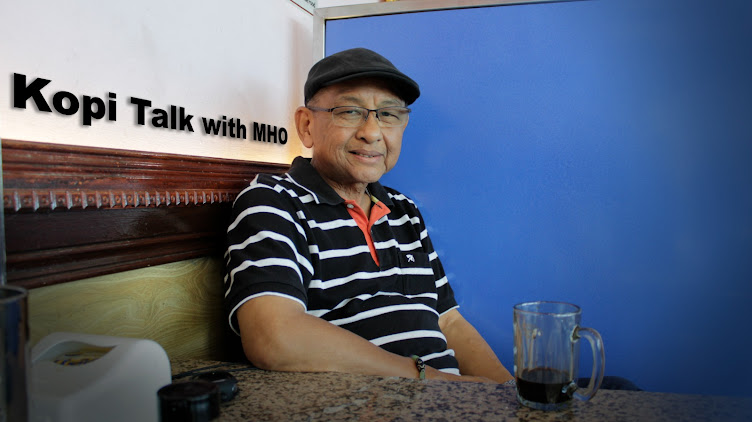
That is worth a proper kopi session — not just another press release. Let's have it.

.jpeg)
No comments:
Post a Comment