Everyone is talking about raising the old age pension to BND 500.
But what if the bigger story is that BND 500 already exists — only it does not reach everyone?
Behind the viral anger lies a quieter and more uncomfortable question: what happens to the petty trader, the home-based seamstress, the odd-job worker, and the informal caregiver who worked all their lives but were never inside the formal retirement system?
This is not just about pension.
It is about the Bruneians who answered the call to be self-reliant — and reached old age only to discover that the safety net was built around a different kind of worker.

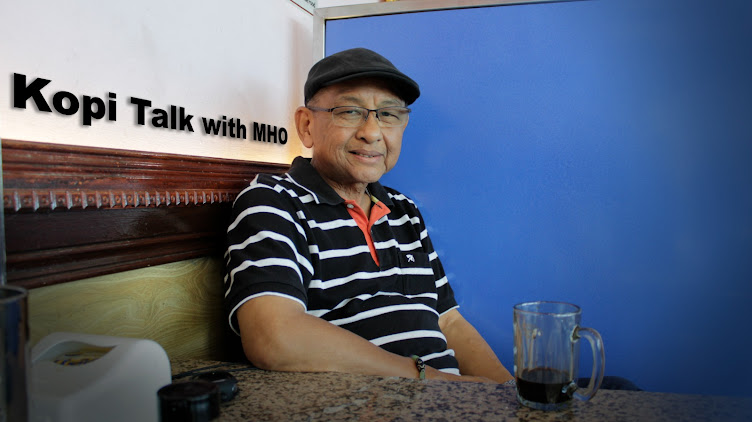
By Malai Hassan Othman | KopiTalk with MHO
You have probably seen it by now.
A post making the rounds — passionate, widely shared, and full of comments from people who feel the same way. The message is simple: the old age pension of BND 250 a month is not enough. Raise it to BND 500. The elderly deserve better.
The heart behind it is genuine. The frustration is understandable. And if you read it quickly, it sounds like a reasonable demand from people who care about their parents and grandparents.
But here is the thing.
BND 500 is already there.
It is just that not everyone is getting it — and the viral post, for all its good intentions, may not be asking the more important question: why not?
Let me explain.
When the government launched SPK — the Skim Persaraan Kebangsaan, or National Retirement Scheme — on 15 July 2023, it introduced a retirement structure with a basic floor in mind. A Bruneian citizen who is formally covered under the scheme and reaches the age of 60 may receive two components: the universal Old Age Pension of BND 250 a month, which has existed since 1955, and an SPK annuity from the member's Retirement Account. Where the Retirement Account balance is insufficient to provide the minimum SPK annuity, the system provides for a government-supported top-up mechanism.
Put together, the intended floor is BND 500 a month — a point reported by the Borneo Bulletin in February 2024 when it stated that SPK members are guaranteed “a minimum retirement income of BND500, including the BND250 monthly old pension wage.”
This was not accidental. The adequacy of the old pension system had already been raised at the 17th Legislative Council session in 2021. TAP listened. SPK became the structural response. The BND 500 floor was the answer built into the new system.
So the person sharing that viral post is asking for something that, for SPK members, already exists. They simply may not know.
And I say this not to embarrass anyone. I say it because it matters — because when we advocate loudly for the wrong solution, we risk drowning out the people who are still waiting for the right one.
Because here is what the viral post completely missed.
The BND 500 floor only works if you are within the SPK system. And SPK membership depends, in most practical cases, on a person having had formal employment — an employer who registered the worker, contributed on their behalf, and helped build up the Retirement Account over the years.
For many working Bruneians, this happens automatically. They go to work, their employer handles the contributions, and by the time they reach 60, there is at least something in that account.
But not everyone worked that way.
Brunei has — and has always had — many people who built their lives outside formal employment. The petty trader who ran a small stall for thirty years. The woman who took in sewing from home while raising her children. The man who did odd jobs, small contracts, seasonal work — never on a permanent payroll, never formally registered. The informal caregiver who looked after elderly relatives for years without a contract or a salary slip to show for it.
For these people, there may be no SPK Retirement Account. The government subsidy that tops up the account to ensure the minimum SPK annuity cannot operate in the same way if the account does not exist in the first place.
They reach 60 and receive one thing: the universal Old Age Pension.
BND 250 a month. That is all.
The same BND 250 that the viral post, quite rightly, calls inadequate.
So the real injustice is not simply that the pension is too low. The deeper injustice is that two Bruneians can reach the age of 60 after working their entire lives — and end up with very different retirements, not necessarily because of how hard they worked, but because of whether they were part of the formal employment system.
And when the state’s safety net does not fully reach a retiree, someone else fills the gap.
In Brunei, that someone is almost always a child. A son or daughter in their thirties or forties, already carrying their own household, their own children, their own bills — now quietly adding their parents’ shortfall to the monthly calculation. This is the sandwich generation that this column has written about before. Not an abstract sociological label, but a real family sitting at a real kitchen table, working out how to make the numbers add up.
The cost of this structural gap is not only carried by the system.
It is carried by families.
There is something else worth saying here, because it goes to the heart of a contradiction Brunei has been carrying for years.
For as long as most of us can remember, Brunei has been telling its people to become entrepreneurs. Go into business. Be self-reliant. Do not wait for a government job. Trade, build, create. The message has come from every direction — policy speeches, training programmes, grant schemes, MSME initiatives launched with great fanfare and good intentions. Entrepreneurship has often been presented as one of the answers to economic diversification.
And yet.
A study on whether Brunei’s economy is genuinely inclusive — whether the people encouraged to work outside formal employment actually have a real place in the economic chain — was launched just this month. It took a joint initiative involving UNESCAP, the United Nations Economic and Social Commission for Asia and the Pacific, to help bring that conversation into sharper focus.
One might reasonably ask: should this not have been a conversation Brunei was already leading from the inside, years ago?
The answer is uncomfortable.
Because some of the same people Brunei has spent decades encouraging to become entrepreneurs — to trade informally, to build livelihoods outside the formal payroll system, to survive through self-employment — are also the very people whose old age protection may not have been fully secured by a retirement system still largely built around formal employment records.
You cannot spend a generation encouraging Bruneians to be self-employed and then leave old age security to depend mainly on formal employment history.
That is more than a policy gap. It is a policy contradiction that deserves honest attention.
The petty trader answered Brunei’s call. She went into business. She did not wait for a government job. She contributed to the economy for thirty years in ways that may never have appeared in a payroll register. And she arrives at 60 to find that the retirement floor everyone is arguing about on social media may not have been built with her in mind.
That is not her failure.
That is a national delivery question.
So what is the right conversation to be having?
Not simply “raise the pension to BND 500” — because for SPK members, that work has already been addressed. The right conversation is: how many Bruneians aged 60 and above are currently receiving only BND 250 because they were never enrolled in TAP, SCP or SPK? What is being done — actively, not just on paper — to reach the informally employed before they arrive at retirement age with nothing in their account? And is the LegCo prepared to ask the harder question: not whether the number is right, but whether the system is reaching the people it was meant to protect?
SPK does allow self-employed persons to register voluntarily. The door is open. But a door that many people never knew existed is not fully open in any practical sense. Voluntary registration without active outreach, without simplified processes, and without realistic contribution options for those with irregular incomes, risks becoming a policy that looks good on paper but disappears in practice.
Good intentions without accurate information push pressure in the wrong direction.
The person who wrote that viral post means well. The people who shared it mean well. The anger they are channelling is real, and it comes from the right place.
But Brunei does not need louder advocacy for something that already exists for those inside the system. It needs clearer advocacy for the people still outside it.
People who were told to be entrepreneurs.
People who listened.
People who are now reaching 60 and discovering what that advice was actually worth.
The question is not whether it is BND 500 or not.
The question is BND 500 for whom — and what are we genuinely prepared to do for those still standing on the wrong side of that door.
KopiTalk with MHO | kopitalkmho.blogspot.com
#Brunei #SPK #RetirementSecurity #OldAgePension #SandwichGeneration #KopiTalkWithMHO #BruneiPolicy #WawasanBrunei2035 #Entrepreneurship #InclusiveEconomy

.jpeg)
No comments:
Post a Comment