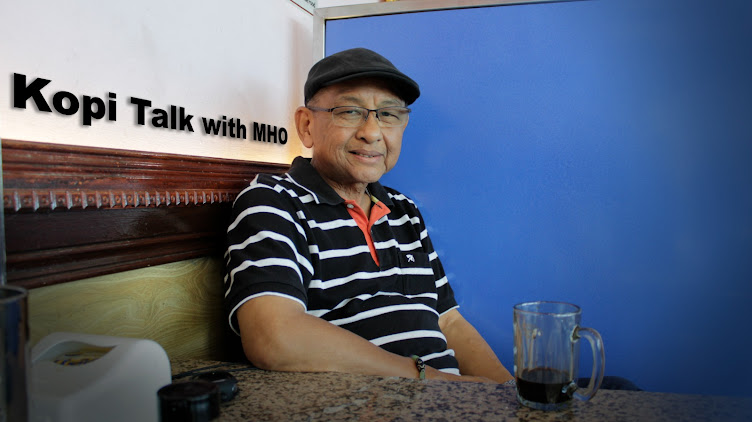
We have visions. We have plans. We have KPIs. But do we have velocity? The 2026 Titah reads less like encouragement and more like a polite performance review of a system that has learned to manage indicators better than outcomes. This is a reflection on why delivery, not direction, is now Brunei’s real test.

By Malai Hassan Othman —
KopiTalk with MHO
In my earlier essay, Between Stability and
Stagnation, I suggested that the New Year 2026 Titah should be read less as
a celebration and more as a quiet reminder: stability is not the same as
momentum. The more difficult question, I argued, is whether we are moving with
the seriousness our promises require.
Once that question is asked honestly, another follows almost immediately.
If we are not moving fast enough, where are we in
our national journey?
I don't mean in speeches, slides, or beautifully
formatted progress reports, but in the real, sometimes untidy, architecture of
delivery.
Brunei does not lack plans. We have Wawasan 2035,
our long-term national vision, and RKN 12, the current development plan meant
to translate that vision into outcomes. Now, we have a Titah that, while calm
in tone, is unusually explicit in its signals about execution, speed, and
reform.
Read together, these three form a quiet but serious national conversation.
And like most serious conversations, it is not
entirely comfortable.
Wawasan 2035 promises three great things: a high
quality of life, a dynamic and sustainable economy, and well-educated, highly
skilled people.
RKN 12 is supposed to be one of the main vehicles to carry us
there, through diversification, private sector growth, productivity, digital
transformation, and institutional reform.
In other words, we are long past defining what
we want. We are now in the far more demanding stage of proving that our
systems can actually produce it.
That is why the 2026 Titah should be read not
merely as a New Year message, but as a mid-course signal.
Consider the economic picture it paints. It is
honest and carefully balanced. Growth has slowed. Buffers remain. We are not in
crisis.
But neither are we in lift-off.
This is, in many ways, the most dangerous position
a system can be in. When things are clearly broken, urgency is unavoidable.
When things are comfortable, urgency has to compete with habits, routines, and
well-practised explanations.
The Titah's repeated call to "double
efforts", to strengthen competitiveness, and to accelerate across sectors,
is not the language of panic, but of impatience with slow machinery.
We hear again about investment, jobs, exports,
Halal, and the business environment—exactly as Wawasan 2035 and RKN 12 require.
Yet the fact that we are still speaking about these with such insistence
suggests something quietly sobering: diversification is still more a
project than a condition.
If it were already an engine, we would be
discussing its momentum. Instead, we are still discussing how to make it start.
This does not mean nothing has been done, but that,
in scale and speed, what remains to be done still outweighs what has already
been achieved.
The same pattern appears in governance and service
delivery.
The announcement of Brunei-ID and the corporatisation
of the Postal Department into PosBru are not just technical updates, but
structural signals, suggesting that the state itself is being asked to
change how it works, not merely what it does.
The use of the term customer-centric is
especially revealing. This is not the natural language of a procedure-driven
system, but of an organisation that has begun to realise that compliance
is not the same as impact.
Read in the context of Wawasan 2035, this implies
something serious: delivery is no longer a back-office matter, but a strategic constraint.
In plain terms, how the system moves is now as
important as what the system intends.
Many citizens and businesses already know this from experience. The greatest friction today is rarely about whether something is allowed, but about how long it takes, how many desks it visits, how many times it is "not rejected but not approved", and how much quiet energy is lost along the way.
A small contractor once described how a straightforward payment, already certified and completed, traveled for months from desk to desk "for checking". By the time it arrived, bank limits were stretched, workers had to be juggled, and the next job had quietly slipped away. Nobody had rejected the work. Nobody had made a mistake.
The system had simply taken longer than the business could afford.
And here we touch a sensitive, but unavoidable, nerve.
Somewhere along the way, parts of the system became very good at managing indicators, surviving audits, and producing slides—but far less good at producing visible change at speed.
Activity is abundant, but outcomes are more selective.
This is what "inertia masked as activity" looks like in real life.
It is not refusal, but ritual.
If we place this against RKN 12, a gentle but firm question arises. We are already well into the life of this plan. At this stage, progress should not require so much explanation; it should be increasingly difficult not to notice.
At some point, a development plan must be judged not by how carefully it is written, but by how stubbornly it insists on being felt in daily life.
The Titah's repeated emphasis on speed, responsiveness, and transformation suggests that this threshold has not yet been crossed.
That does not mean the direction is wrong, but that traction remains the central problem.
The Titah's attention to youth, entrepreneurs, farmers, and breeders points to something deeper. These are not ceremonial mentions, but reflect an understanding that future resilience and growth cannot be delivered by administration alone, and require mobilization.
Food security, in particular, is no longer framed merely as efficiency, but clearly about resilience and sovereignty.
This marks a quiet but important shift in national thinking—from optimization to robustness.
But again, understanding is not the bottleneck. Translation is.
Notice, too, what the Titah does not say.
There is no mention of slow approvals, overlapping mandates, siloed institutions, or duplicated processes.
And yet, the repeated emphasis on transformation, responsiveness, and customer-centricity only makes sense if these are precisely the areas where the system still struggles.
In this sense, the Titah reads less like a celebration and more like a performance review.
Not a scolding,
But certainly not an endorsement of "business as usual".
This is where a crucial distinction must be made—one that insiders will recognize immediately.
A Titah can be used in two ways: as a compass for decisions yet to be made, or as a citation to decorate decisions already taken.
When it becomes mainly the latter, its authority is honored in form, but not in function.
And when procedures are followed more faithfully than purposes, the system becomes very safe, very polite—and very slow.
To be fair, no system chooses this deliberately. It evolves this way because it is rewarded for avoiding mistakes more than for producing breakthroughs, and for protecting equilibrium more than for testing limits.
But Wawasan 2035 is not a promise of equilibrium, but of transformation.
If Between Stability and Stagnation argued that comfort is the enemy of momentum, then reading the 2026 Titah through Wawasan 2035 and RKN 12 suggests something even more precise: the risk is not that we are going in the wrong direction, but that we are moving too slowly in the right one.
In development, that can be just as expensive.
To leaders and decision-makers, the implication is quiet but firm. The era in which elegant policy language was enough is ending. Legitimacy will increasingly be measured by how quickly real life changes, not by how neatly plans are defended.
To the public service, the implication is even more direct. In a system that aspires to be customer-centric, every queue, every delay, every "please wait" becomes part of the national story—not an administrative footnote.
And to the rest of us—businesses, youth, citizens—the message is equally demanding. Space is being opened, but space does not create motion. Capability, judgment, and persistence do.
Ultimately, Wawasan 2035 will not succeed or fail in a single dramatic moment, but quietly, cumulatively, and almost invisibly—in how many small frictions we remove, how many small decisions we accelerate, and how many small excuses we finally retire.
The 2026 Titah, read carefully, sounds less like a New Year greeting and more like a progress check.
Not a warning,
Not a threat,
But a reminder that the clock is no longer generous.
We are no longer in the phase of defining ambition, but in the phase of proving systems.
And history is rarely unkind to those who tried and failed — but it is unforgiving to those who were simply very good at explaining why tomorrow had to wait. (MHO/01/2026)

.jpeg)
No comments:
Post a Comment