
Some days, work is not just busy.
It feels heavy.
Not because we are weak — but because we are carrying amanah.
Episode 12 — When Work Feels Heavy: Lessons from Surah Al-Insyirah
A reflection on burnout, meaning, and how Allah teaches us to carry responsibility with an expanded heart.

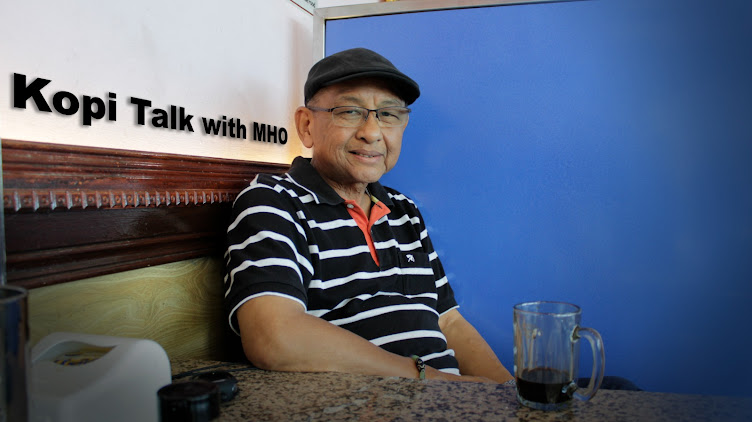
☕ KopiTalk with MHO | MIB Management 101
There are days when work does not just feel busy.
It feels heavy.
Not because of the tasks alone, but because of the people, the systems, the expectations, the politics, the pressure to perform, and the quiet fear of making mistakes.
Some mornings, you sit in your car a few seconds longer before stepping out.
Some evenings you go home tired — not in your body, but in your heart.
And sometimes you ask yourself a question you never say out loud:
"Why does this feel so heavy?"
I used to think this feeling meant something was wrong with me.
Until I encountered Surah Al-Insyirah in a different way.
"Did We not expand for you your chest? And remove from you your burden which had weighed upon your back?"
The Qur'an does not pretend that responsibility is light.
It acknowledges something very human:
Work, duty, and amanah can feel heavy.
Even the Prophet ﷺ carried a burden. Even he felt the weight of responsibility.
So when we feel tired, overwhelmed, or stretched, it is not weakness.
It is a sign that we are carrying something that matters.
Then comes the verse many of us know by heart:
"For indeed, with hardship comes ease. Indeed, with hardship comes ease."
Notice something gentle here.
Allah does not say hardship will disappear.
He says ease comes with it — side by side.
Not later. Not after everything is over.
With it.
In the workplace, this matters more than we realise.
We often tell ourselves, "Once this project is over, I will breathe."
"Once this audit is done, I will rest."
"Once this crisis passes, life will be easier."
But work does not end.
One file finishes, another arrives.
One problem is solved, another appears.
And the surah prepares us for that reality:
"So when you have finished, then strive again."
This is not cruelty.
This is real life.
But notice what comes next:
"And to your Lord, direct your longing."
This is the balance.
Islam does not promise a life without workload.
It promises a heart that knows where to rest.
And this is something we desperately need in modern management.
Because many of us are not tired of working.
We are tired of working without meaning.
Tired of KPIs that do not touch the soul.
Tired of meetings that solve nothing.
Tired of systems that feel blind to human weight.
Tired of carrying responsibilities without feeling supported.
Surah Al-Insyirah teaches something quiet yet powerful:
The chest must be expanded before the burden can be carried well.
If the heart is narrow, every task feels unbearable.
If the heart is open, even heavy work can be carried with dignity.
This is where MIB Management becomes more than administration.
It becomes care for the human interior.
A good organisation does not only manage output.
It notices the weight people carry.
A good leader not only distributes tasks.
He senses who is carrying too much.
A good system does not only ask for results.
It quietly asks whether the people inside it are still breathing.
When leaders forget this, we do not just get inefficiency.
We get burnout.
People still come to work, but their hearts are no longer there.
They do what is required — and nothing more.
Not because they are lazy, but because they are exhausted in places nobody sees.
Surah Al-Insyirah is also a gentle reminder against despair.
The burden you carry today is not meaningless.
The pressure you feel is not unseen.
The tiredness in your chest is not ignored.
Allah knows.
And more importantly, He reminds us:
Hardship and ease walk together.
Sometimes ease is not fewer tasks.
Sometimes it is a stronger heart.
And then comes that gentle instruction again:
When you finish one responsibility, stand up again.
Not with bitterness.
Not with resignation.
But with niyyah.
With amanah.
With itqan.
With the quiet knowledge that your work, however small, is seen.
Perhaps this is the most important management lesson from this surah:
We are not meant to live without burden.
We are meant to live with a heart big enough to carry it.
In a Negara Zikir, this matters deeply.
Because we are not only building institutions.
We are building human beings inside institutions.
No KPI can measure a broken spirit.
No policy can heal a tired soul.
Only meaning can.
Only purpose can.
Only remembering who we are ultimately working for can.
Perhaps the real question Surah Al-Insyirah is asking us in our working lives is simple:
When work feels heavy...
Do we only look for escape?
Or do we also look for expansion of the heart?
Because files will never stop coming.
But a heart connected to Allah will never collapse under them.
KopiTalk with MHO — reflections brewed gently, with honesty and heart.

.jpeg)
No comments:
Post a Comment