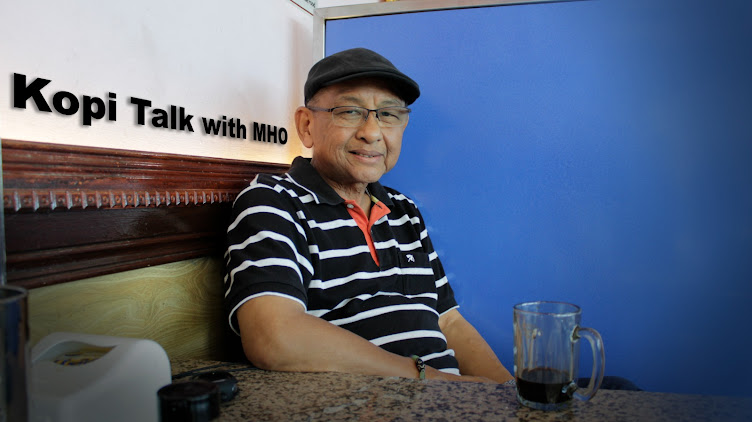
After Subuh, in the quiet before the world begins its noise, an old ayat returned with a new weight.
Alhamdulillahi Rabbil ‘Alamin.
A phrase we say so often, yet perhaps do not always hear.
This is not a lesson about knowing more.
It is a reflection on forgetting too much.
On blessings we treat as ordinary.
On complaints that rise faster than gratitude.
On amal that may look good outside, while the heart still needs teaching
inside.
Sometimes, the deepest reminder is not something new.
Sometimes, it is an old ayat touching an old weakness — and asking the heart to see again.

After Subuh, when the morning was still quiet and the world had not yet gathered its noise, I sat in a small taddabur class listening to a reflection on Surah Al-Fatihah.
It was a familiar surah.
Too familiar, perhaps.
That was the first thing that touched me.
Sometimes, the words we recite most often are the words we may have stopped hearing deeply.
Alhamdulillahi Rabbil ‘Alamin.
All praise is due to Allah, Lord of all the worlds.
I have read this ayat countless times. I have said Alhamdulillah after meals, after finishing work, after receiving good news, after being asked how I am. Like many others, I say it almost automatically.
But that morning, I felt quietly exposed.
Not by anyone in the class. Not by the teacher. Not by a harsh reminder.
But by the ayat itself.
Because I began to ask myself: how many times have I said Alhamdulillah with my tongue, while my heart was still busy complaining?
How many times have I thanked Allah for one blessing, while quietly feeling dissatisfied over another thing I had not received?
How many times have I looked at my own effort, my own tiredness, my own planning, my own struggle — and forgotten that even the strength to work was never mine to begin with?
That morning’s reflection was not only about the meaning of an ayat. It was about the nature of the human heart.
And perhaps that is why it stayed with me.
Human beings are strange. We remember pain quickly, but forget mercy easily. We count our difficulties with detail, but often treat our blessings as normal. We complain when something is delayed, but rarely pause long enough to recognise how much has already arrived without us asking.
A body that still carries us through another morning.
A family that remains. A little peace that holds, even when much else does not.
These things are not small. They only become small when the heart has become too used to receiving.
That, perhaps, is my weakness.
I do not always see.
I do not always pause.
I do not always return the praise to where it belongs.
I may say Alhamdulillah, but sometimes my mind is already moving to the next worry, the next frustration, the next thing I feel is still missing.
And that is where Surah Al-Fatihah gently corrects the heart.
It does not begin by asking.
It begins by praising.
Before we ask Allah to guide us to the straight path, we are first taught to say Alhamdulillah.
Before we speak of what we need, we are reminded of who Allah is.
Before we think of our own journey, we are brought back to the One who owns and sustains all journeys.
Rabbil ‘Alamin.
Lord of all the worlds.
This part of the ayat widened the reflection for me.
Allah is not only the One who gives us what we notice. He is also the One who gives us what we do not notice.
He gives before we ask.
He protects before we realise we were in danger.
He withholds what we may not be ready to receive.
He opens doors we did not know existed.
He closes doors we may one day thank Him for closing.
Yet, so often, the human heart wants to understand everything immediately. We want our plans to move according to our own timing. We want our efforts to produce visible results. We want our prayers to be answered in the form we imagined.
When that does not happen, we become restless.
I know that feeling.
I know how easily the heart can become impatient. I know how quickly gratitude can become thin when life does not go the way we planned. I know how often a person can still be surrounded by blessings, yet feel deprived because one particular wish has not been fulfilled.
That is why Alhamdulillah is not only a word of gratitude.
It is a discipline.
It trains the heart to look again.
It tells the restless heart: do not only look at what is missing. Look also at what has remained.
It tells the proud heart: do not claim too much. Even your effort was carried by Allah’s permission.
It tells the tired heart: do not despair. The One who sustained you yesterday has not abandoned you today.
It tells the forgetful heart: return.
Return the praise.
Return the credit.
Return the heart.
The discussion after Subuh also made me think about amal.
We often think of amal as something outward — prayer, charity, work, service, kindness, helping others, fulfilling duties, doing good.
But perhaps amal also depends on what is happening quietly inside the heart.
A person may work hard, but the heart may be full of self-importance.
A person may help others, but the heart may secretly want to be noticed.
A person may speak of good things, but the heart may enjoy being seen as wise.
A person may worship, but the heart may still be distracted, proud, careless or forgetful.
That thought made me uncomfortable.
Because it is easier to look at what we do than to look at why we do it.
It is easier to count our actions than to examine our intentions.
It is easier to appear good before people than to be honest before Allah.
And maybe that is why Al-Fatihah begins with Alhamdulillah.
It brings the self down before the amal rises.
It reminds us that no act of goodness should make us feel superior. If we are able to pray, that too is a gift. If we are able to give, that too is a gift. If we are able to learn, serve, forgive, endure, work and remember Allah, that too is a gift.
Even the ability to say Alhamdulillah is itself a mercy from Allah.
When seen this way, amal becomes softer.
It becomes less about proving ourselves and more about returning to Allah.
Work is no longer merely work when it begins with Bismillah and ends with Alhamdulillah.
A duty is no longer merely a burden when it is carried with sincerity.
A hardship is no longer only a hardship when it teaches humility.
A blessing is no longer ordinary when it makes the heart remember the Giver.
Perhaps this is where many of us struggle.
We do not deny Allah.
We believe.
We pray.
We recite.
We say the right words.
But in daily life, the heart can still become forgetful. It can still become anxious, proud, dissatisfied, easily hurt, easily angered, easily drawn into complaint.
We may recite Al-Fatihah in prayer, but outside prayer we sometimes return to the same old habits of the heart.
That is not a judgment on others.
It is a confession about the self.
I have often treated blessings as routine, and delays as personal disappointments. I have remembered my own effort far more readily than I have remembered Allah’s mercy. I have said Alhamdulillah without allowing the word to slow me down, soften me, or correct me.
But perhaps this is also the mercy of Surah Al-Fatihah.
It keeps coming back.
In every prayer, it returns.
Again and again, it places Alhamdulillah on our tongue, hoping perhaps that one day it will reach deeper into the heart.
Again and again, it reminds us that Allah is Rabbil ‘Alamin — not only Lord of the large and unseen worlds, but also Lord of our small and private worlds: our worries, our homes, our tiredness, our hopes, our hidden fears, our unfinished struggles.
That morning after Subuh, I did not walk away feeling that I had understood everything.
I walked away feeling the opposite.
I realised how much I had recited without truly listening.
How much I had received without truly noticing.
How much I had done without fully purifying the heart behind the action.
And maybe that is a good beginning.
Not to feel better than others.
Not to preach.
Not to sound as if one has mastered the lesson.
But to admit, quietly, that the heart still needs to be taught.
The heart still needs to learn how to see.
To see mercy in ordinary things.
To see Allah’s kindness in what remains.
To see one’s own weakness without despair.
To see amal not as a badge of goodness, but as a trust that must be carried with humility.
Maybe today, Alhamdulillah can mean more than “thank God” after something good happens.
Maybe it can become a pause.
A small return.
A quiet correction.
A way of saying: Ya Allah, I have received more than I have noticed. Teach this heart to see again.
Because sometimes, the greatest lesson after Subuh is not something new.
It is an old ayat finally touching an old weakness.
Alhamdulillah Rabbil ‘Alamin.
And perhaps, for now, that is enough — to return to the same ayat, with a little more honesty than before.

.jpeg)
No comments:
Post a Comment