Friday, October 24, 2025

Episode 2 - Barakah: The Invisible KPI of MIB Management

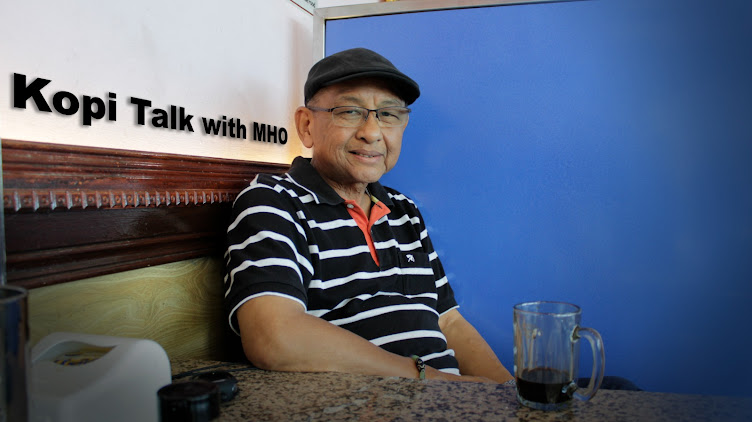
☕ KopiTalk with MHO | MIB Management 101


“Ad-dāʾimūna al-muḥsinūna bi-l-hudā — Always render service with God’s guidance.”


Introduction


In the first episode, we talked about Rediscovering the Spirit of Service, exploring leadership as an amanah — a trust before Allah. But what happens when that trust is upheld sincerely? The answer lies in barakah.


The Search for the “Hidden Multiplier”


In the modern workplace, success is often measured in numbers — KPIs, deadlines, and output charts. However, in the MIB worldview, there is another measure that is unseen yet deeply felt — the measure of barakah (blessing).


Barakah is what makes limited time feel abundant, enables small teams to achieve great results, and transforms simple acts into lasting impacts. It is the invisible multiplier that turns ordinary effort into extraordinary outcomes — both in this world and the next.


As Mohammed Faris beautifully describes in his book The Barakah Effect: More With Less:


“Barakah is a spiritual multiplier effect that brings prosperity, happiness, and continuity to all who encounter it.”


When barakah enters a system, productivity flows with peace. When it departs, chaos rushes in — even if the spreadsheets still look impressive.


Understanding Barakah Beyond Material Gain


In many workplaces, success is defined by quantity: how much we earn, own, or control. But barakah emphasises quality and continuity — goodness that endures, even when the numbers don’t rise.


The Qur’an describes barakah as a force placed by Allah in time, people, actions, and resources. It explains why some meetings conclude with clarity while others breed confusion. It highlights the difference between being busy and being effective.


Faris explains the productivity equation as follows:


Energy × Focus × Time = Outcome,


But when infused with barakah,


β(Energy) × β(Focus) × β(Time) = β(Outcome) —
where “β” represents the Barakah Coefficient that multiplies results without draining the soul.


It’s not about more hours; it’s about more value per hour.


When the Heart Leads, Not the Hustle


Today’s corporate world is driven by what Faris calls “Hustle Culture” — an endless cycle of activity that prioritises speed over serenity. The result? Burnout, anxiety, and spiritual emptiness.


In contrast, Barakah Culture — rooted in Maqasid Syariah and Negara Zikir values — advocates for balance, gratitude, and trust in divine timing. Where Hustle Culture asks, “How much can I get?”, Barakah Culture asks, “How much can I give with sincerity?”


This is where MIB Management finds its essence. It reminds leaders and workers alike that true success is not about chasing more, but about doing good with what we already have — and allowing Allah to add the rest.


Barakah as a Tangible Benefit


Some perceive barakah as purely spiritual, yet its benefits can be deeply tangible when applied in organisations and communities. It manifests in mental health, emotional peace, and social harmony.


Aspect

Without Barakah

With Barakah

Time

Always rushing, little accomplished

Calm focus, meaningful output

Wealth

High income, low satisfaction

Modest means, deep contentment

Workplace

Toxic, political, draining

Cooperative, trusting, balanced

Leadership

Ego-driven, divisive

Humble, servant leadership

Mental Health

Anxiety, burnout

Sakinah — peace and purpose

Community

Competition and envy

Collaboration and compassion


barakah-centred environment is a non-toxic organisation — one that values ethics as much as efficiency, and empathy as much as expertise.


Cultivating Barakah in Leadership and Work


To invite barakah into our management systems, we must shift our focus from policies to purpose. Here are four practices that activate barakah in our professional lives:

  1. Nawaitu (Intention): Begin every task with a clear, sincere intention to serve, not to show.

  2. Ihsan (Excellence): Work with conscience — as if Allah sees us, even when no one else does.

  3. Amanah (Trust): Treat every responsibility, however small, as sacred.

  4. Zikir (Remembrance): Keep the heart awake amid deadlines and data.

When these values anchor our work culture, barakah becomes the natural outcome — not an abstract hope, but a daily experience.

 
From KPI to KBI — Key Barakah Indicators


Perhaps it’s time to expand our corporate vocabulary. Instead of solely tracking Key Performance Indicators (KPI), what if we also measured Key Barakah Indicators (KBI)?


KBI Dimension

Observable Outcome

Mental Well-being

Lower stress, higher morale

Integrity in Processes

Fewer conflicts, higher trust

Employee Retention

People stay out of loyalty, not fear

Social Impact

Ethical profit, fair pay, community good

Spiritual Alignment

Work is seen as ibadah, not a burden


An organisation with barakah may not always be the largest — but it will always be the most beloved.


Closing Reflection


When work is done lillahi ta‘ala, effort transforms into ibadah. When leadership is guided by sincerity, it attracts barakah. And when barakah settles in a team or nation, it brings what no budget or policy can buy — peace, harmony, and joy in service.


Barakah isn’t a mystery. It’s a management principle — divine in origin, human in experience. It is the quiet KPI that measures peace over pressurepurpose over performance, and service over self.


(Next Episode: Leadership as Amanah: The MIB Way


🟢 #MIBManagement101 #KopiTalkWithMHO #NegaraZikir #Leadership #BarakahCulture #Amanah #IhsanAtWork


Thursday, October 23, 2025

When Welfare Goes Digital — and the Poor Get Left Behind

In a small room in Belait, voices rose not in anger, but in quiet exhaustion.
The digital age promised connection — but for the poor, it’s becoming another kind of silence.

 A recent informal dialogue session revealed what many have long suspected — Brunei’s digital welfare system, designed to improve efficiency, is unintentionally leaving some of its most vulnerable citizens behind.

 From elders who have never touched a smartphone to families who wait months for a response they can’t check online — this is a story of progress without inclusion.

 As His Majesty reminded, inefficiency in serving the poor is not just administrative — it is moral.

When compassion loses to convenience, it’s time to ask: who are we really digitising for?

🟤 KopiTalk with MHO — Real Stories for a Better Nation

#Brunei #KopiTalkWithMHO #Wawasan2035 #DigitalInclusion #SocialJustice #Zakat #Welfare #EmpathyInGovernance #NegaraZikir


By Malai Hassan Othman

“If the poor cannot reach the system, then the system must reach them.”

Belait, 18 October 2025: A small private room at a local restaurant in Belait recently became the meeting place for voices rarely heard - the poor, the sick, and the elderly, all gathered for an informal dialogue session to share their experiences in accessing the national welfare system. 

The session, facilitated by the Biro Tindakan Aduan Rakyat (BITAR), provided several families categorised as asnaf fakir miskin the opportunity to express their frustrations and struggles in applying for assistance through the Skim Kebajikan Negara (SKN).

Many participants admitted they did not understand how to apply online. Some had never owned a smartphone or computer, while others were completely unfamiliar with the internet. 

What was designed to simplify welfare delivery has, for many, become an invisible wall. “We don’t know how to fill out the online forms,” said one elderly woman. 

Another participant mentioned that she applied months ago but never received a response. 

Others described being unable to complete applications due to missing documents or unstable internet connections. 

“Sometimes I just wait and pray that someone will come and ask if we have enough to eat,” said one mother quietly, her voice trembling between hope and fatigue.


BITAR volunteers listened attentively and took the opportunity to explain the application process - how the system works, what documents are required, and where help could be sought - so that participants could better understand what to prepare before making their applications.
 

They also acknowledged the challenges faced by participants, including poor connectivity, lack of access to devices, and low digital literacy. For those who were ill or unable to work, BITAR offered to help obtain medical certification to strengthen their future applications. To ease the immediate burden, food supplies - rice, oil, and other necessities - were distributed to provide short-term relief and comfort.

BITAR later noted that the digital application system under SKN remains unfriendly to the poor, the elderly, and rural residents. 

Technology, they said, should be a bridge - not a barrier. The group suggested that authorities consider hybrid assistance models that combine online efficiency with physical support, such as mobile counters, local help desks, and trained facilitators at the grassroots level. 

The message was clear: no one should be left behind due to a lack of digital literacy or access.

These concerns are not isolated. They echo a sentiment repeatedly heard within the halls of the Legislative Council during the August 2025 sessions, where several members voiced similar worries about Brunei’s growing digital divide. 

The Minister of Religious Affairs, Pehin Badaruddin, acknowledged that while the digitalisation of the zakat and SKN systems was intended to improve transparency, many applicants still find the process complicated, particularly the elderly and those without digital access.

He also conceded that manual verifications and administrative overlaps continue to slow down the approval of assistance. 

Members representing rural districts, including Belait and Temburong, pointed out that villagers without internet access often struggle alone and proposed hybrid approaches — a mix of digital convenience and on-the-ground human assistance — to ensure inclusivity. 

Several even called for village heads and penghulus to be trained as community facilitators for online applications.

The Minister of Transport and Infocommunications, Pengiran Shamhary, acknowledged that gaps in digital connectivity remain, especially among low-income and interior communities. 

He assured the Council that while Brunei’s digital strategy under Wawasan 2035 emphasises innovation, it must also embrace inclusivity. “Digital transformation,” he said, “means nothing if people are left behind.”

The situation mirrors concerns raised repeatedly by His Majesty Sultan Haji Hassanal Bolkiah, who has long emphasised the need for welfare and zakat administration that is both efficient and compassionate. 

During a surprise visit to the Ministry of Religious Affairs earlier this year, His Majesty questioned why applicants under the asnaf category had to wait months for verification when officers and village heads could easily assess their conditions on the ground. 

He reminded that inefficiency in managing welfare and zakat is not merely an administrative lapse but a moral one — a failure to uphold trust in serving those most in need.

These royal reminders, now reinforced by parliamentary debate and BITAR’s ground-level findings, point to a deeper challenge in Brunei’s social safety net. 

Digital transformation has improved transparency but has also excluded those least equipped to keep up. Without corrective measures, the gap between the system and the citizen will continue to widen.

As one BITAR representative observed, poverty cannot be solved by statistics or systems alone — it requires empathy, presence, and human understanding. 

The poor do not live on data dashboards; they live in real homes, with real needs, waiting for someone to see them.

If the poor cannot reach the system, then the system must reach them. That, as His Majesty has reminded us, is what true service to the people — and to God — truly means. (MHO/10/2025)


Sunday, October 19, 2025

Leadership Is Not a Privilege, But a Trust

☕ KopiTalk with MHO


Ad-dāʾimūna al-muḥsinūna bi-l-hudā 
Always render service with God’s guidance.

I remembered a time early in my career when I was asked to lead a small team despite feeling unready. That moment taught me what this verse truly meant - leadership is not a right. It’s a trust - an amanah.

Sometimes, the most powerful reminders find us when we least expect them.

I was flipping through the Qur’an one evening — not looking for anything in particular — when my eyes caught a small hadith printed quietly in the footnote. 

A short passage, but one that hit harder than many leadership seminars or best-selling management books I’ve come across.

“Barang siapa yang diamanahkan sebahagian urusan kaum Muslimin oleh Allah, kemudian ia menghindari, tidak mahu berbuat kebaikan untuk mereka, dan menutup diri daripada melayani keperluan mereka, maka Allah pun akan menutup diri darinya dan tidak akan melayani segala keperluannya.”
(Riwayat Abu Daud dan At-Tirmizi)

It stopped me cold.

This was no ordinary reminder — it was a message from Rasulullah ﷺ to every person entrusted with authority, power, or responsibility. 

It cuts straight through time to remind us: leadership is not about privilege; it is about service.

When Power Becomes a Wall

History records that when Muawiyah heard this hadith, he immediately appointed someone to ensure the needs of the people were met. 

That act of humility tells us everything we need to know about genuine leadership.

A true leader listens.

A true leader serves.

A true leader doesn’t build walls — he builds bridges.

Even in Brunei, we see this principle reflected in our national ethos — that power is a trust, not an entitlement. 

Whether in government offices, corporate boards, or community organisations, amanah remains the moral compass that keeps leadership accountable.

Today, some people in positions of authority — whether in government, corporate offices, or even community circles — may unconsciously distance themselves from those they are meant to serve. 

They become unreachable, hidden behind layers of formality or bureaucracy.

But this hadith reminds us that when we close our doors to the people, Allah may close His door to us. That’s not just a spiritual statement — it’s a principle of leadership accountability.

To Lead Is to Serve

In Islam, leadership is not about prestige or control. It’s about amanah — a sacred trust. Every role, every decision, every responsibility we hold is a form of ibadah (worship).

This message applies not only to politicians and executives but also to parents, teachers, entrepreneurs, and community organisers. 

Every one of us is entrusted with something — people, projects, or purpose — and we will be held accountable for how we serve them.

So, if you’ve been given responsibility, don’t ghost your people. Don’t lead from afar. 

Don’t make your position a shield. Leadership is about presence, empathy, and sincerity — not power.

Amanah in the Age of Hashtags

In our hyperconnected world, where “leadership” often looks like influencer culture — polished quotes, motivational reels, and corporate jargon — this hadith brings us back to what truly matters.

True leadership doesn’t need a spotlight. It needs sincerity.

It’s not about the followers you have, but the lives you touch.

It’s not about going viral — it’s about being accountable.

Gen X built the systems we work in.

Gen Y questions how those systems can be better.

Gen Z demands that leadership be human again.

And this hadith, spoken over 1,400 years ago, already gave us the blueprint.

Closing Reflection ☕

Leadership is not about being admired — it’s about being answerable.

It’s not about authority — it’s about responsibility.

When leaders serve sincerely, communities thrive.

When they turn away, society suffers.

May every leader, young and old, remember this:

When you serve the people, you serve Allah.

And when you close your heart to others, you close your path to Him.

🟫 KopiTalk with MHO – Reflections for the Mind and Soul

💬 “Leadership is not about being followed. It’s about being accountable — to the people, and to Allah.”

And when that trust is upheld with sincerity, barakah follows — in peace, in harmony, and in the hearts of those we serve.

☕ KopiTalk with MHO — Reflections on Leadership, Faith, and Service.

Saturday, October 18, 2025

Rediscovering the Spirit of Service


☕ KopiTalk with MHO | MIB Management 101


A new series of reflections on leadership, sincerity, and service through the lens of Melayu Islam Beraja.

Inspired by Brunei’s national motto:
Ad-dāʾimūna al-muḥsinūna bi-l-hudā — “Always render service with God’s guidance.”

Just lessons from life, faith, and experience — shared over a cup of coffee.
Not theories. Not textbooks.

Episode 1 — Rediscovering the Spirit of Service


Ad-dāʾimūna al-muḥsinūna bi-l-hudā - 
Always render service with God’s guidance.

Have you ever reached the top of your to-do list and still felt … empty?  

That was me - early in my career, running fast but not sure where my steps were leading.

I read everything that promised success:  

Edward de Bono’s Lateral Thinking, Peter Drucker’s Managing for Results, Zig Ziglar’s What I Learned on the Way to the Top, and Napoleon Hill’s Think and Grow Rich.  

Each one sharpened my thinking, but none spoke to the heart.

Then I found a local treasure - Professor Dato Dr Haji Mahmud Saedon Awang Othman’s Ciri-Ciri Pentadbiran Islam.

That book didn’t talk about profit or power. 

It talked about amanah - trust, and ihsan - excellence through faith. 

It reminded me that leadership begins with the soul.


Saturday, October 11, 2025

When the Taxman Draws the Line at B$50,000

The Luxury We All Paid For

Someone asked me why the government is tightening tax rules when daily costs are already high.

I looked into it — and found that sometimes, what feels like a burden is actually a correction.

Because fairness isn’t about who drives what — it’s about who does the right thing when nobody’s watching.

A quiet rule in Brunei’s taxation system — the one that caps car deductions at B$50,000 — may sound technical, but it tells a deeper story about fairness, responsibility, and shared sacrifice.

Read my latest KopiTalk reflection on how small policy shifts can reveal big truths about who we are as a nation — and who really pays for comfort.


🔗 Read here: When the Taxman Draws the Line at B$50,000


By Malai Hassan OthmanKopiTalk with MHO
 
“Did you know? All this time, we might have been subsidising someone else’s luxury.”
 
Every time a company writes off the fuel, insurance, and servicing of an expensive car as “business expenses,” part of that cost quietly escapes taxation. 
 
When those taxes aren’t paid, the government collects less revenue. This shortfall, though invisible, contributes to Brunei’s ongoing budget deficit — the widening gap between what the nation earns and what it spends to sustain public services and subsidies. 
 
Over time, such leakages drain millions that could have bolstered our fiscal position. Less tax collected means fewer resources for schools, clinics, infrastructure, and job creation — while ordinary citizens and honest businesses end up subsidising someone else’s luxury.
 
This story didn’t begin in an office or a policy paper. It started with a message from someone I know — frustrated, confused, and a bit angry.
 
“Assalam bos… Apa g ni?!! TDE... Mcm-mcm saja mun bnr. Kawal dulu kenaikkan barang harian… dan gaji penjawat awam... Transport awam pun kurang.”
 
He had come across a copy of the new tax clarification and sent it to me, puzzled that while prices were rising and wages remained stagnant, the government seemed to be tightening deductions instead of subsidies. His friend told him, “Refer to you, boss.”
 
That moment made me pause. If even ordinary, educated Bruneians were struggling to understand why this rule mattered, perhaps it was worth looking deeper — not to defend or attack it, but to explain it. 
 
Because sometimes, behind a policy that seems unpopular, lies a story about fairness that few have taken the time to tell.
 
So I began to dig deeper. What exactly was this “tax rule” everyone was discussing, and why did it stir so much frustration? 
 
Was it truly another burden on the people, or something else altogether? The more I read, the clearer it became that this wasn’t about raising taxes — it was about closing a quiet leak that had been siphoning public revenue for years.
 
That’s when I realised the Ministry of Finance and Economy (MOFE) wasn’t introducing a new tax; it was reaffirming an existing rule under Section 11(1A) of the Income Tax Act (Cap. 35). 
 
If a company’s car costs more than B$50,000, it cannot claim the full running expenses for tax deduction. The deductible amount must be reduced in the same proportion as if the car cost only B$50,000 — the threshold of reasonableness. 
 
Suppose a company buys a B$60,000 car and spends B$1,300 a year on fuel, insurance, and repairs. Under this rule, it can only claim (50,000 ÷ 60,000) × 1,300 = B$1,083.33. The remaining B$216.67 — the “luxury portion” — is no longer tax-deductible. In short, drive what you wish, but don’t expect taxpayers to help pay for it.
 
Some might dismiss this as just another bureaucratic measure, but it’s far more than that. 
 
It’s a small but powerful act of fairness. For years, some companies registered luxury vehicles under their business names to enjoy personal perks disguised as corporate costs. 
 
MOFE’s Public Ruling PR 02/2017 already clarified that all business deductions must be “wholly and exclusively incurred in the production of income.” 
 
That phrase places the burden of proof on the taxpayer — meaning you must demonstrate that the expense is genuinely for business, not for prestige or personal comfort. The new enforcement simply draws a visible line between necessity and indulgence.
 
By capping deductions at B$50,000, the government ensures that honest small businesses using standard vehicles stand on equal footing with larger firms running luxury fleets. It keeps the system fair and accountable. 
 
Honest SMEs still receive their full deduction, while the state protects public revenue and reinforces the discipline of good governance.
 
Even for large corporations, it serves as a timely reminder that corporate social responsibility begins not with CSR campaigns, but with responsible taxation.
 
“I drive a second-hand Hilux and still pay my full tax,” said one small contractor half-jokingly. “Maybe fairness isn’t about who drives what — it’s about who does the right thing when nobody’s watching.”
 
To understand the real impact, consider a simple scenario. If 1,000 businesses each claimed an average of B$30,000 in excessive vehicle expenses, that amounts to B$30 million in unjustified write-offs. 
 
At Brunei’s corporate tax rate of 18.5 per cent, that translates to roughly B$5.5 million in lost revenue every year. 
 
Over a decade, that could reach B$55 million — money that could have built homes, upgraded hospitals, or funded youth development programs. And that’s just from one type of loophole. Add in others — businesses operating under multiple small licenses to avoid corporate registration, under-declared income, and “company assets” that double as personal property — and the total loss to the treasury could be many times higher. 
Every dollar lost through creative accounting widens the deficit, weakens our fiscal resilience, and delays the reforms needed for Brunei’s economic sustainability.
 
But this isn’t just about accounting — it’s about integrity. Good governance doesn’t always come through sweeping reforms or grand policies. It often starts with quiet, sensible corrections like this one. 
 
Drawing a line at B$50,000 sends a message that transparency matters, that luxury shouldn’t hide behind necessity, and that accountability starts with small habits. 
 
When business owners understand that fair play in taxation strengthens the entire economy, they stop viewing compliance as a burden and start seeing it as nation-building.
 
In a just society, success isn’t measured by what one can evade but by what one contributes back. Luxury itself isn’t the problem — it becomes one only when it’s disguised as necessity, and the public ends up footing the bill. 
 
The B$50,000 rule may seem minor, but its spirit is moral: everyone should carry their fair share. And that’s how a nation strengthens its foundation — not by punishing ambition, but by protecting fairness.
 
So what do you think? Should the taxman draw more such lines in other areas to seal the leaks that quietly drain our national budget? Or should businesses be trusted to self-regulate with integrity? 
 
Whichever side you’re on, one thing is clear — fairness begins with honesty, and every small rule that closes a loophole brings us a little closer to the Brunei we all want to see.
 
Because fairness, like faith, must be practised — not preached.
 
And sometimes, all it takes is a simple line on a tax form to remind us that integrity is the truest measure of national wealth. (MHO/10/2025)
 
KopiTalk with MHO
 
Where ordinary rules tell extraordinary stories about who we are, how we earn, and what we owe to each other.


Thursday, October 9, 2025

The MIB Way to Self-Improvement: Finding Peace in a Noisy World


In a world that never stops scrolling, it’s easy to lose ourselves in the noise. 

This reflection explores how Imam al-Ghazali’s timeless steps toward personal growth and Brunei’s own philosophy of MIB and Negara Zikir offer a quiet, powerful antidote for today’s restless hearts.
 

The Story

Let me start by saying that I’m not an expert in Islamic psychology. I never studied it in a classroom. What I’m sharing comes from real life — from reading, reflecting, and navigating experiences that taught me more than any textbook could.
 
Years ago, I had the opportunity to work with PPP Ilmu Alim, a local consultancy that created training programs combining modern management ideas with Islamic principles — all aligned with MIB and Negara Zikir. I joined as a research and media consultant but ended up becoming a lifelong student.
 
That experience changed how I viewed growth. I realised that self-improvement isn’t just about career goals or productivity hacks — it’s about becoming a calmer, wiser, and more grounded version of yourself. It’s learning to breathe amid pressure, to think clearly when things fall apart, and to find meaning in the chaos.
 
Somewhere along the way, I started asking myself a question that has never left me:

"What’s the antidote to all the noise, stress, and restlessness that fills modern life?"
 

A Glimpse of My Process 


A snapshot of my whiteboard while trying to make sense of Imam al-Ghazali’s concept of self-reflection. It reminded me that understanding often begins with honest curiosity.

 Learning from Different Worlds

I searched everywhere for answers.
 
From Japan, I discovered Kaizen, the idea of improving a little bit every day. Tiny steps taken consistently can move mountains. Then I came across Ikigai, the joy of finding purpose — that one reason that gets you out of bed each morning.
 
From the West, I learned about mindfulness, emotional intelligence, and the growth mindset — the art of staying aware, resilient, and open to learning. These concepts made sense, but I still felt something was missing — a depth that could tie everything together.
 
That’s when I encountered the wisdom of Imam al-Ghazali. His teachings opened a window into the soul. 

He wrote about self-improvement long before “self-help” became a buzzword. His six steps toward personal growth didn’t focus on climbing ladders or chasing success — they emphasised purifying the heart, controlling the ego, and finding peace through sincerity.
 
Everything clicked. The Islamic approach to self-development wasn’t just compatible with modern life — it was made for it. 

It speaks directly to who we are as Bruneians, living under the values of Melayu Islam Beraja (MIB) and our national vision of Negara Zikir — a country guided by remembrance and compassion.
 
As His Majesty once said, “Beta memang berazam untuk melihat Brunei Darussalam menjadi Negara Zikir.”

That wasn’t just a slogan; it was a way of life — a reminder that true progress begins within each of us.
 

Making Sense of MIB and Negara Zikir

 
When I first heard about MIB and Negara Zikir, they sounded grand and distant — just words for national speeches. But over time, I realised they’re really about how we live every day.
 
To ourselves — Be honest, humble, and self-aware. Guard your heart as carefully as your phone battery.

 
To our families — Lead with love. Listen more, forgive faster. A peaceful home is the first reflection of a peaceful nation.

 
To our community — Show up, help out, and stay kind. Small good deeds create big ripples.

 
To our nation — Do your part with integrity, even when no one is watching. That’s zikir in action.
 
His Majesty once reminded us, “Inilah Brunei kita, Negara Zikir Melayu Islam Beraja.”

It’s not just identity — it’s a compass for how we live, lead, and serve.
 

The Six Steps of Imam al-Ghazali — A Roadmap for Modern Life

 
Imam al-Ghazali outlined six steps for personal growth. Each one feels surprisingly modern, like ancient wisdom crafted for the TikTok generation — short, clear, and deeply practical.
 

Musyaratah – Set Your Intention

Every good day starts with purpose. Promise yourself to be a little better — to be patient, kind, or disciplined. Intention provides direction.
 

Muraqabah – Stay Aware

Monitor your thoughts, words, and actions. Be mindful of how you spend your time online. Awareness is your first line of defence.


Muhasabah – Reflect Daily


Before bed, ask yourself: What went well today? What didn’t? Reflection helps you grow without guilt.


Muaqabah – Be Accountable

If you miss your goal, own it. Adjust and try again. Discipline isn’t punishment — it’s self-respect.


Mujahadah – Keep Struggling

Improvement takes effort. Every small win builds strength and confidence.


Mu’atabah – Correct and Renew

When you slip, don’t quit. Learn, forgive yourself, and restart. Growth is progress, not perfection.


A Small Example

I remember one evening, after a long day of meetings, I caught myself snapping at someone over a small mistake. 

Later that night, I practised muhasabah — self-reflection. I asked myself, “Was that anger really necessary?”

The next morning, I apologised. It wasn’t easy, but that moment reminded me how muraqabah (awareness) and mujahadah (inner struggle) actually work together. 

Self-improvement begins not in theory — but in those small, uncomfortable moments when we choose humility over ego.


Bridging East, West, and Faith


What’s amazing is how ideas from different cultures mirror each other. Kaizen, mindfulness, and the growth mindset all teach discipline and awareness. Imam al-Ghazali adds what completes them — spiritual alignment.
 
In management, we talk about vision and mission; in Islam, the vision is sincerity, and the mission is remembrance. When both align, life finds balance.
 
At work, it means honesty and gratitude. At home, empathy. In society, compassion. That’s how MIB and Negara Zikir become everyday habits, not distant ideals.


Finding Peace in a Noisy World


We live amidst constant noise — notifications, opinions, comparisons. Everyone’s talking; few are listening. Everyone’s scrolling; few are reflecting.
 
Imam al-Ghazali’s six steps provide a quiet antidote. They teach us to pause, breathe, and reset — to measure success not by followers or fortune but by inner calm and honest effort.
 
The MIB way of self-improvement isn’t about being perfect. It’s about showing up each day, a little stronger and a little kinder than the day before. It’s about learning, failing, forgiving, and growing — with remembrance in your heart.
 
Because in the end, real success isn’t what we own or achieve — it’s who we become.

And perhaps that’s the true meaning of Negara Zikir — a nation at peace because its people remember, reflect, and live with purpose.
 
✍️ Author’s Note
 
This reflection is my personal journey of discovery — meant to inspire thought and conversation, not to serve as a formal religious interpretation.
 
💭 Reflection Prompt for Readers
 
Take a quiet moment today and ask yourself:

👉 What’s one small thing I can improve — for myself, my family, or my community — starting now?

Your journey doesn’t need to be big. It just needs to begin.


SPK Withdrawal: Transparency on Hold

Behind every delayed approval is a family waiting to fix a roof, finish a wall, or move into a long-promised home.


The question isn’t just when — it’s why the silence?


Transparency on Hold, a story about how small delays can erode big trust.


 By Malai Hassan Othman | KopiTalk with MHO
 
When the Special Scheme (Khas) Housing Withdrawal for members aged 40 and above was introduced, it aimed to help contributors use part of their savings to build or improve their homes - a policy based on trust between workers and the fund. Today, that trust is quietly being tested.
 
For months, members who applied for the SPK Housing Withdrawal (ages 40–59) have reported that their completed applications were processed, only to be abruptly placed “on hold until further notice.” There have been no circulars, public notices, or explanations - just silence.
 
“They told us it’s our savings, our right,” one applicant said. “But when our applications were suddenly put on hold, silence became the loudest answer.”
 
According to the stated client charter, applications are expected to be processed within one to two weeks once all documents are complete. However, several applicants who submitted their papers as early as June and August 2025 report waiting for months.
 
“Processing timelines of one to two weeks have dragged into months with no clear indication of when the internal improvement process will be finalised,” another member remarked. “We only learned that all withdrawal applications are on hold until further notice.”
 
The issue is not merely the delay but the lack of transparency. There has been no official announcement, not even a brief statement confirming or denying that a temporary freeze exists. 
 
The scheme’s webpage still lists the withdrawal as active. Eligibility remains unchanged: members aged 40 to 59 may withdraw up to 50 per cent of their savings, payable directly to a licensed contractor, developer, bank, or government agency - never in cash.
 
I have written to a contact seeking clarification and am still awaiting an official reply, possibly pending clearance from an authorised spokesperson.
 
One reader, who wished to remain anonymous, shared that their family had yet to receive a response to their email inquiry. 
 
When they called the hotline, they were informed that “the process remains the same,” and that updates would only appear on the e-Amanah portal once the withdrawal status changed from In Process.
 
However, the reader found the experience confusing. “We submitted our application at the headquarters, and they scanned all the documents for us,” they said. 
 
“Yet, the SPK representative later contacted us requesting the same information again. It felt strange - as if the documents we already submitted weren’t reaching the right hands.”
 
This account reflects a broader sense of uncertainty among applicants who complied fully with the stated procedure but still see no progress on their applications.
 
Some believe the hold is linked to internal reviews and integrity checks. In recent years, there have been reports of contractor abuses, forged invoices, and fraudulent cash-out schemes. 
 
If tighter screening is being enforced, few would object to prudence. But without a statement, honest members are left in the dark. 
 
For many, house renovations have stalled, contractors complain of unpaid work, and some fear losing deposits as prices rise. 
 
“Why was there no official announcement regarding the internal quality process improvement that impacted not just one or two applications, but hundreds more?” asked one frustrated applicant.
 
The fund system was built on confidence: workers contribute every month in faith that the system will safeguard - and release - their savings when the time comes. 
 
When information is withheld, even temporarily, that confidence erodes faster than interest accumulates. 
 
Transparency, not secrecy, is the antidote to rumour. It is fair for institutions to defend the integrity of their schemes, but they owe an equal duty to communicate clearly, promptly, and truthfully. 
 
A brief advisory explaining whether the hold is real, which categories it affects, why verification is required, and when processing will resume would go a long way toward restoring trust.
 
In the end, this is not a dispute over entitlement. It is a question of confidence. The people do not ask for privileges - only clarity over what is theirs by right. 


As one member aptly put it, “If the internal review is genuine, then an open explanation is the best protection against speculation. Silence breeds mistrust; transparency breeds confidence.” (MHO/10/2025)
 
  
DISCLAIMER: This commentary reflects the writer’s personal views and analysis for public understanding and does not represent the position of any organisation or entity.


Tuesday, October 7, 2025

Lautan Tenang, Cabaran Yang Dalam

Walaupun lautan di perairan kita kelihatan tenang, arus di bawahnya kini semakin deras. Perkembangan terkini di Laut China Selatan — termasuk kehadiran kapal-kapal penguat kuasa dari pelbagai negara — memberi isyarat bahawa wilayah maritim kita kini semakin diperhatikan oleh kuasa besar dunia.

Bagi Parti Pembangunan Bangsa (NDP), isu ini bukan sekadar soal geopolitik, tetapi juga soal kedaulatan ekonomi, keselamatan negara, dan masa depan rakyat. Laut bukan hanya sempadan — ia sumber rezeki, tenaga, dan kestabilan negara kita.

Laporan pemantauan maritim antarabangsa baru-baru ini menunjukkan kehadiran kapal-kapal penguat kuasa asing di kawasan Zon Ekonomi Eksklusif (EEZ) beberapa negara ASEAN, termasuk perairan berhampiran Brunei dan Malaysia. 

Baru-baru ini, penganalisis keselamatan maritim antarabangsa @GordianKnotRay. daripada projek SeaLight telah melaporkan melalui X (dahulunya Twitter) bahawa kapal China Coast Guard 5306 telah dikesan beroperasi di kawasan Luconia Shoals — dalam EEZ Malaysia — dan kemudiannya berada selama beberapa hari di dalam EEZ Brunei. 

(x.com) Laporan ini, yang disertakan dengan data pergerakan kapal, telah menarik perhatian pemerhati keselamatan serantau mengenai bagaimana rondaan berterusan seperti ini boleh mengubah norma dalam kawasan laut yang dipertikaikan.

Fenomena ini sering disebut sebagai grey-zone activities — gerakan yang tidak bersifat ketenteraan, namun membawa mesej kuasa dan tuntutan ke atas kawasan tertentu. Ia satu bentuk diplomasi tekanan yang menguji kesediaan dan pendirian negara-negara kecil seperti kita.

Brunei terkenal dengan dasar luar yang berlandaskan hikmah, keamanan, dan hormat-menghormati. 

Kita menikmati hubungan erat dengan negara-negara sahabat, termasuk China — hubungan yang dibina atas asas saling mempercayai dan menghormati. 

Namun, hubungan baik tidak bererti kita mengabaikan prinsip. NDP berpandangan bahawa Brunei perlu terus menegakkan hak-hak maritimnya secara diplomatik, berpandukan Konvensyen Undang-Undang Laut Pertubuhan Bangsa-Bangsa Bersatu (UNCLOS) dan rangka ASEAN Code of Conduct yang sedang dibangunkan.

Brunei harus kekal sebagai negara yang berperanan membina jambatan — bukan tembok — di tengah arus persaingan kuasa besar. Inilah semangat Melayu Islam Beraja yang menuntut kebijaksanaan dalam tindakan.

Bagi NDP, pembangunan negara tidak terpisah daripada keselamatan maritim. Kedaulatan laut bermakna kedaulatan sumber — minyak, gas, perikanan, dan biodiversiti. Menjaga laut bermakna menjaga ekonomi dan peluang kerja rakyat. Parti melihat keperluan untuk:

1.  Meningkatkan kesedaran rakyat tentang kepentingan EEZ dan sumber maritim negara.

2.  Mengukuhkan keupayaan pemantauan maritim melalui kerjasama antara agensi kerajaan dan komuniti nelayan.

3.  Menggalakkan kerjasama serantau ASEAN bagi memastikan Laut China Selatan kekal sebagai kawasan keamanan dan kemakmuran bersama.

NDP percaya bahawa Brunei boleh menjadi “suara kebijaksanaan di tengah gelombang” — mengekalkan hubungan baik dengan semua pihak sambil mempertahankan prinsip kedaulatan dan undang-undang antarabangsa.

Laut China Selatan tidak boleh menjadi gelanggang kuasa, tetapi harus kekal sebagai laluan damai, perdagangan, dan persahabatan.

Ketenangan bukan kelemahan. Ia lambang keyakinan. Dan keyakinan itulah yang menjadi teras falsafah Melayu Islam Beraja — berpijak di bumi nyata, berlayar dengan panduan akal dan iman.

Malai Hassan Othman
Pengerusi Lembaga Penasihat Parti Pembangunan Bangsa (NDP)

Penafian: Rencana ini merupakan pandangan peribadi penulis dalam konteks wacana awam dan tidak mencerminkan pendirian rasmi Parti Pembangunan Bangsa (NDP) atau Kerajaan Brunei Darussalam.