Saturday, December 13, 2025

Episode 7 — Sabar & Istiqamah: Leading When Change Is Slow

Not everyone who gives up is wrong.
Some grow tired of doing the right thing alone.

In Episode 7 of MIB Management 101, I reflect on sabar and istiqamah — what it truly means to remain steadfast when change is slow, resistance is subtle, and integrity feels isolated.


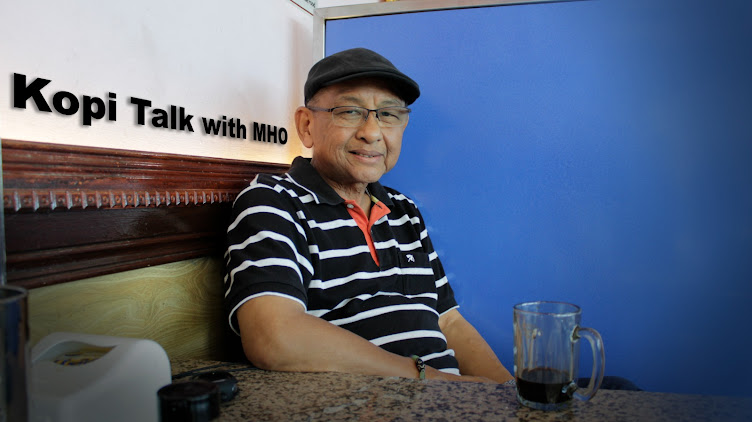
 KopiTalk with MHO | MIB Management 101


“Ad-dāʾimūna al-muḥsinūna bi-l-hudā — Always render service with God’s guidance.”


When Doing the Right Thing Starts to Feel Heavy


I once watched a capable, well-intentioned officer quietly give up.


Not because he was wrong.


Not because he was lazy.


Not because he lacked ideas.


He gave up because doing the right thing took too long.


Looking back, many of these moments only began to make sense later when I started to see work not merely as output, but as a service guided by something higher.


He entered the organisation with energy and hope. He asked questions others avoided. He suggested improvements that others postponed. He tried to solve problems that people had learned to live with.


At first, he was tolerated.


Then he was labelled belabih.

After that, he was slowly ignored.


Eventually, he stopped pushing.


He still came to work.

He still did what was required.

But something had dimmed.


That moment stayed with me because it reminded me of this:


Not all failures come from bad intentions. Some come from patience slowly wearing thin.


The Quiet Struggle of Those Who Want Change


Most people don’t enter the workplace wanting to cut corners.


They want to contribute.

They want to improve things.

They want to believe their efforts matter.


But over time, resistance appears — not always loudly, not always openly.

Sometimes it comes as:

  • endless delays
  • polite deflections
  • reminders to ikut cara lama
  • warnings not to disturb the balance

Change does not always fail through confrontation. More often, it fades through fatigue.


People don’t abandon principles because they stop believing in them. They abandon them because standing alone is tiring.


Over the years, I have come to realise that these quiet struggles are not unknown at the highest level. 


His Majesty has repeatedly reminded leaders that their duty is not merely to hold office, but to care, guide, and show concern for those under their charge. 


Leadership, in this understanding, is not about looking down from above, but about staying close enough to notice when people are struggling.


In a Negara Zikir, patience is not weakness. It is how conscience survives pressure.


Sabar Is Not Silence


Sabar is often misunderstood.


It is not about keeping quiet at all costs.

It is not about accepting everything.

It is not about pretending nothing hurts.


Sabar, to me, is emotional discipline.


It is feeling frustrated — and choosing not to become bitter.


It is feeling disappointment — and choosing not to give up on yourself.


The Qur’an reminds us:


“Indeed, Allah is with those who are patient.” (Al-Baqarah 2:153)


Not those who shut down.

Not those who pretend.

But those who stay steady without losing their values.


Istiqamah Is Not About Being Hard-Headed


Istiqamah, too, is often misunderstood.


It is not about pushing endlessly.

It is not about winning arguments.

And it is not about forcing change.


Istiqamah is about moral consistency.


It means staying upright when shortcuts are tempting.

It means remaining honest when dishonesty seems rewarded.

It means doing what is right even when no one notices.


The Qur’an says:


“So remain steadfast as you have been commanded.” (Hud 11:112)


Not as long as it feels comfortable.

Not as long as applause comes.

But as you have been guided.

 
When ‘Belabih’ Becomes a Label for Integrity


In some workplaces, people who remain consistent are not encouraged.


They are labelled.


Too idealistic.

Too vocal.

Too ambitious.

Too different.


Sometimes, istiqamah is mistaken for defiance.

Sometimes, sincerity makes others uncomfortable.


I have seen capable people sidelined — not because they were wrong, but because they refused to bend quietly.


This is where many start asking themselves:


“Is it worth it?”


This is where sabar and istiqamah begin to need each other.


Sabar keeps the heart steady.

Istiqamah keeps the direction clear.


Knowing When to Pause Without Giving Up


One difficult lesson I have learned is this:


Sabar does not always mean pushing forward.

Sometimes it means slowing down.


Istiqamah does not always mean staying loud.

Sometimes it means staying clean.


There are moments when reform is not about winning today — but about planting seeds quietly.


Not every sincere effort bears fruit in our lifetime.

But every sincere effort still counts.


And sometimes, that has to be enough.

 
Closing Reflection: Staying Upright When the Path Is Crooked


Leadership, especially principled leadership, is not a sprint.


Systems change slowly.

Mindsets change more slowly.

Egos change the slowest of all.


Along the way, many good people grow tired — not because they lack faith, but because they feel alone.


I am reminded of moments when welfare concerns were raised by rank-and-file officers, and His Majesty chose to listen rather than dismiss. 


He did not side with position or rank, but with fairness. That matters because it tells those who try to remain upright that patience is not invisible, and consistency is not pointless.


Sabar reminds us not to abandon ourselves.

Istiqamah reminds us not to abandon what is right.


And perhaps the question is not:


“Why is change taking so long?”


But this:


“Can I remain honest, kind, and principled — even while waiting?”


Perhaps this is what it means to keep rendering service with guidance — not perfectly, but sincerely.


Because sometimes, the real test of leadership is not how much we change the system…


…but how well we remain ourselves while living within it.


📖 KopiTalk with MHO — reflections brewed gently, with honesty and heart.


Friday, December 12, 2025

Brunei’s Future Looks Bright, But the Present Feels Dim

The future looks promising, but many Bruneians are still stuck waiting. Graduates with no jobs, vendors waiting on payments, and plans that feel slow to arrive — what happens when national vision doesn’t match everyday reality?


KopiTalk with MHO

As Brunei advances its long-term economic plan, many citizens are still asking a difficult question: when will things start to improve for the rest of us?

The Ministry of Finance and Economy (MOFE) recently reaffirmed its commitment to fiscal discipline, stating that “every dollar must be used wisely to ensure long-term sustainability.”

Officials have assured the public that current budgetary policies are designed not just for today, but for the next generation.

“We are focusing on growth areas that matter — digital transformation, human capital, and food security,” a MOFE spokesperson told the Borneo Bulletin.


But while ministries plan for the future, the view from the ground is far less optimistic.

Across social media and online forums, many Bruneians have voiced concerns that fiscal discipline — while important — has yet to translate into real improvements in their daily lives.

One user commented that around 5,000 university graduates remain jobless, despite holding degrees. Others pointed to repeated delays in public projects and late payments to vendors as signs that things aren’t moving fast enough.

“We keep hearing about long-term planning, but what about now?” asked one commenter. “It’s been years of promises. Trust needs action.”

These concerns reflect a broader sense of unease — not a rejection of national goals, but growing frustration over slow execution and limited communication.

Some of the strongest reactions are coming from small business owners and unemployed youth.

One vendor said they had waited months to be paid after completing a government contract.

Others shared that they no longer expect major opportunities from government-linked programmes and are instead exploring options outside the country.

Infrastructure development is another common concern. While large-scale projects are underway, citizens say their own towns and districts have seen little change.

Roads are in need of repair. Basic services appear stalled. And job creation, they argue, hasn’t kept up with the needs of a growing youth population.

To be fair, the Ministry has been clear about the reasons for its caution.

With oil revenues no longer as dependable as before, the government is tightening its belt to secure Brunei’s financial future.

The 2024–2025 budget focuses on targeted investments rather than broad-based spending. In principle, this approach is sound — but it offers little comfort to those who feel they’ve been left behind.

MOFE has also indicated its support for public-private partnerships, digital innovation, and entrepreneurship. 

But critics argue that without a clear framework for youth inclusion and transparent updates on progress, the gap between policy and people will only continue to grow.

Public sentiment snapshot:

🗣 “Too much talk, not enough action.”
🗣 “Still waiting for jobs. Still waiting for updates.”
🗣 “We believe in the vision, but we’re struggling to stay hopeful.”

The big picture matters — Brunei’s economy must transform if it is to thrive. But transformation must also be felt by the people who are living with the realities of the present.


As one young graduate quietly put it:


“We’re not against the plan. We just want to be part of it. For real.” (MHO/12/2025)

Sunday, December 7, 2025

Economic Signals Point to a Defining Moment as Brunei Enters 2026

As Brunei stands at a crossroads, the sun sets on an oil-driven past while the horizon hints at a new dawn of innovation and sustainability. But with time slipping fast through the hourglass, the question remains — will the nation act swiftly enough to shape its future before the old foundations crumble?


With global markets shifting and structural challenges mounting, the nation stands at a crucial juncture before Wawasan 2035.
 
By Malai Hassan Othman | KopiTalk with MHO

It all started with a brief comment online immediately after Brunei released its latest economic reports. Someone wrote, “Are we moving fast enough for what’s coming?” It was a quiet, almost shy remark, but it captured a feeling many families have as they watch global uncertainty rise while the local economy seems to be moving to its own beat. It set the stage for a broader reflection that now feels unavoidable.

The Economic Census of Enterprises (ECE) 2024 painted a picture that was both familiar and concerning. While the number of businesses went up, total revenue took a nosedive. Industry revenue dropped by nearly 25%, and the services sector barely grew. Employment grew by 11.5%, but almost half the workforce is still made up of non-locals, mainly in construction, retail, accommodation, and other labour-heavy sectors. For many, this pattern feels all too familiar: activity without resilience, growth without depth, movement without momentum.

AMRO’s 2025 assessment sharpened these worries. It recognised Brunei’s strong macroeconomic stability but pointed out the slow pace of diversification, limited productivity gains, and ongoing reliance on hydrocarbon output and government spending. The report emphasised the need for better competitiveness, improved workforce productivity, and a quicker transformation in the private sector. It didn’t dramatise the situation; it simply suggested that Brunei’s current pace might not match the speed of global changes.

The BEO2025 report by the Centre for Strategic Policy Studies (CSPS) tackled the issue with a clear structure. It highlighted an ageing labour force, a decade-long drop in total factor productivity, and the continued focus of most enterprises on low-value activities. It also noted the dependence on foreign labour, persistent youth unemployment and underemployment, and long-term fiscal pressures that could get worse as global hydrocarbon demand softens. These findings might seem technical on paper, but their implications are very real. They affect whether young people see a future at home, whether families feel secure, and whether the promises of Wawasan 2035 remain attainable.

Yet, amidst the unease, a different perspective came from within the country’s energy and industrial sector. A senior professional pointed out that Brunei is one of the few nations in the world that still has all the strategic tools needed to move beyond hydrocarbons. With monetary sovereignty, minimal external debt, and solid reserves, there’s room for strategic investment instead of just defensive cuts. In many countries, those options are long gone. But in Brunei, they’re still available.

The expert stressed that Brunei’s small population, often seen as a limitation, is actually an advantage for national realignment. Changes can happen quickly when the scale is manageable. The country’s geography and international reputation — built on safety, trust, clean governance, and stability — are valuable in halal markets, Islamic finance, digital security, and green energy supply chains. These aren’t just soft attributes; they’re competitive assets in a region where competition is heating up.

Brunei’s state asset base, built over years of hydrocarbon revenue, was pointed out as another overlooked strength. Much of the essential infrastructure and institutional capacity is already in place. This allows future national capital to be directed not just toward catching up, but toward leapfrogging — acquiring advanced technologies, building new value chains, and nurturing enterprises that can compete regionally. Here, the expert echoed the official reports: the country has the capacity, but it needs to move faster.

Public sentiment, on the other hand, is grounded in daily concerns. Rising living costs, the slow creation of quality jobs, and the pressures of an ageing population weigh heavily on families. One comment summed it up: “We just want to know that our kids will have better opportunities than we did.” It wasn’t a critique. It was a hope — softly stated but widely felt.

Together, the ECE 2024, AMRO 2025, and BEO 2025 findings outline a clear and coherent landscape. The foundation is solid. The stability is real. But the space for hesitation is shrinking. Global oil markets are facing long-term uncertainty, with analysts warning of possible downward price pressure by the end of the decade. The reports don’t predict decline; they describe a transition that will need decisiveness and speed.

That’s why the timeline is crucial.

As 2025 approaches and the nation prepares for 2026, it’s becoming increasingly difficult to ignore the sense that a turning point is near. Wawasan 2035 — once a distant goal — is now only nine years away. The window for meaningful reform is closing. The official data has laid out the challenges clearly, the public has voiced its concerns, and industry observers have pointed out the country’s untapped strengths. The coming year can't just be another year of steady caution. It has to be a year of focus, pace, and determination.

The window is still open. How wide it stays — and for how long — will depend on the choices Brunei makes in 2026 and beyond. (MHO/12/2025)


Tuesday, December 2, 2025

The Numbers Don’t Lie: Brunei’s Economy Is Entering a New Era

The data shows an economy at ease on the surface, but under pressure where it matters most.

By Malai Hassan Othman | KopiTalk with MHO 

The latest Economic Census of Enterprises (ECE) 2024, released by the Department of Economic Planning and Statistics (DEPS), offers a revealing snapshot of Brunei’s private sector. 

Beneath the calm surface of our economy, the data exposes a nation still anchored in small-scale enterprises and foreign labour, yet steadily moving - almost quietly - into new sectors that may define Brunei’s post-hydrocarbon future. 

This year’s findings also align closely with the Brunei Economic Outlook 2025 (BEO2025), reinforcing concerns about structural vulnerabilities, the urgency of diversification, and the narrowing window of opportunity for transition.

Brunei today has 6,952 enterprises, with more than nine in ten classified as micro, small, or medium-sized. Small businesses remain the backbone of the private economy, while large companies account for only 6.7 per cent. 

This structure reflects both the strengths and limitations of the country’s enterprise landscape: a vibrant ecosystem of small operators, but too fragmented to generate the scale needed for high-value growth.

The services sector continues to dominate, accounting for 77.6 per cent of all enterprises. The industrial sector comprises 19.8 per cent, while the primary sector - agriculture, forestry, and fisheries - remains small at 2.5 per cent. 

For a nation that imports over 90 per cent of its food, the limited footprint of agriculture presents a strategic vulnerability. 

According to the BEO2025, while non-oil and gas sectors have grown, they remain fragmented - most targeted diversification subsectors collectively contribute less than 10 per cent to GDP, underscoring the challenges of building a resilient non-oil base.

Employment data adds another layer to the story. The private sector employs 131,065 people, but nearly 45 per cent are foreign workers. 

In Brunei’s shops, cafés, construction sites, and service counters, nearly half of the workforce consists of non-locals. 

Locals make up just 55 per cent of the workforce, a ratio that heightens public anxiety around unemployment, underemployment, and the reality of a labour market that has yet to achieve balance.

Men continue to dominate the workforce at 67.7 per cent, reflecting longstanding patterns in construction, logistics, and other labour-intensive fields. 

However, the BEO2025 highlights that as digitalisation and automation reshape industries, Brunei faces a widening skills gap - an economy moving forward while parts of its workforce remain stagnant.

The most telling signs lie not in familiar patterns but in the shifts beneath them.

Employment in mining and quarrying, the core of the oil and gas sector, declined by 10.8 per cent, while revenue plunged by 26.5 per cent. 

Manufacturing - once seen as a potential pillar - also suffered a sharp revenue drop of 24.2 per cent. 

These are not minor fluctuations; they indicate a structural trend of cooling momentum in the very sectors that have sustained the nation for half a century.

What makes this trend more concerning is the pressure emerging from outside our borders. 

A recent analysis by JPMorgan, published by OilPrice.com, warns that global crude prices could plunge into the US$30-per-barrel range by 2027, driven by oversupply and shifting global demand patterns. 

The BEO2025 reinforces this outlook: global oil demand is weakening due to the rapid rise of electric vehicles, renewable energy expansion, and increasing U.S. oil production. The report explicitly warns that 2025 and 2026 are expected to see softer global energy prices.

If these forecasts materialise, the financial pressure on Brunei’s hydrocarbon-dependent economy could intensify dramatically. 

With more than 70 per cent of national revenue still tied to oil and gas, a collapse in global prices would tighten fiscal space, weaken export earnings, and amplify the vulnerabilities already highlighted by the ECE 2024. 

It would mean Brunei confronting both an internal decline in sectoral activity and an external collapse in market prices - a dual impact that could reshape the country’s economic trajectory for years to come.

A prolonged downturn in global oil prices would not only strain government revenue but also risk slowing development projects, delaying public spending, and heightening the socio-economic pressures felt by households facing stagnant wages and rising costs. 

The BEO2025 notes that while short-term relief from lower prices may help cushion adjustments, it simultaneously signals shrinking margins for sustainable transition. 

For Brunei, the JPMorgan warning is global in context but deeply personal in impact. It indicates that the window for a smooth transition away from hydrocarbons is narrowing.

Yet even as traditional pillars weaken, other sectors are quietly gaining momentum.

Employment in construction rose by 21.4 per cent, driven by ongoing public and private projects. 

Human health and social activities grew by 21.6 per cent, reflecting rising demand for healthcare services as the population ages. 

Real estate employment surged by 60.5 per cent, likely tied to development cycles rather than broad structural expansion.

The strongest surge came from professional, technical, administrative, and support services, which recorded a 23.7 per cent growth in employment and a 35.5 per cent increase in revenue. 

These numbers suggest that Brunei is slowly cultivating a more knowledge-based economy, with rising demand for consultants, specialists, and technical service providers across sectors. 

The BEO2025 reinforces this trajectory, highlighting the potential for data centres and digital industries due to Brunei’s low disaster risk and reliable power infrastructure.

Wholesale and retail trade continued to climb, with revenue rising by 22 per cent and employment increasing by 9.5 per cent, bringing total employment in this sector to nearly 30,000 workers. 

This refinement is based directly on the ECE 2024 figures (27,211 → 29,792), strengthening the authenticity of the narrative without altering its storyline.

Agriculture, forestry, and fisheries saw encouraging gains—38.4 per cent rise in employment and a 28.6 per cent increase in revenue—but from a small base, meaning it will take sustained effort before the sector can meaningfully reduce import dependency.

Accommodation and food services also recovered, benefiting from renewed activity in the domestic hospitality ecosystem. 

Similarly, finance, insurance, utilities, and other service segments posted healthy revenue growth, signalling broader economic adjustments and a degree of diversification - though still modest in scale.

One additional refinement for accuracy concerns the education sector. While revenue saw a small increase of 0.9 per cent, employment in education actually declined by 2.4 per cent. 

This reflects adjustments in staffing levels rather than expansion and reinforces the need for targeted workforce strategies in key human capital sectors.

The BEO2025 further warns that Brunei’s long-term baseline growth remains around 1.4 per cent - far below what is needed to achieve economic transformation under Wawasan 2035. 

Growth in 2024, while strong at 4.2 per cent, is likely to normalise back to 1.5–2.0 per cent in 2025, underscoring the temporary nature of the rebound and the urgency of sustained structural reform.

At the same time, Brunei’s commitment to Net Zero by 2050 and its pledge to reduce emissions by 20 per cent by 2030 add another dimension to the transformation challenge. 

The shift toward cleaner energy and global climate obligations will reshape the economy, whether Brunei is prepared or not. 

The BEO2025 emphasises that renewable energy targets and sustainability commitments will increasingly drive investment decisions.

Nonetheless, the report outlines a possible upside scenario. If the private sector accelerates investment and key projects reach completion, Brunei could see growth rebound to around 3 per cent by 2026 - an achievable but demanding trajectory that requires clarity, coordination, and consistent policy execution.

Taken together, the census and the economic outlook reveal an economy at a crossroads. 

Brunei remains a nation of small businesses, reliant on foreign labour and navigating a gradual decline in oil and gas. 

But beneath these realities lie emerging sectors that are beginning to carry more weight, offering pathways into a more diversified future - if they are supported with urgency and clarity.

The message behind the data is quiet but unmistakable:
Brunei’s next decade will determine whether the nation accelerates toward the vision of Wawasan 2035 or drifts into an era of stagnation shaped by shrinking hydrocarbons and slow structural reform.

The choices made today - on skills, labour policy, SME development, investment attraction, and economic governance - will define not only the country’s economic resilience but also the opportunities available to its youth.

The window is still open,
But it is narrowing.

Brunei has the stability, resources, and social cohesion to transform its economy. What it needs now is momentum - real, urgent, sustained momentum - to ensure that the story of the next ten years is one of renewal, not regret.

If there is a moment to act, it is now.

— KopiTalk with MHO


Refleksi Ringkas: Bila Kita Tahu Tapi Belum Sedia


Baru-baru ini saya berkesempatan menghadiri satu kuliah subuh. Ustaz yang mengajar menyentuh Surah Al-Bayyinah. Saya bukan ahli tafsir atau guru agama, tetapi ada beberapa perkara yang saya rasa elok saya tulis untuk mengingatkan diri sendiri. Kalau ada manfaat untuk orang lain, itu semata-mata ihsan Allah.

Ayat pertama surah ini menyebut bahawa manusia jarang berubah sehingga datang keterangan yang jelas. Ketika ustaz menjelaskan maksud ayat itu, saya terfikir betapa benarnya hakikat ini. 

Banyak perkara dalam hidup yang saya tahu sepatutnya saya lakukan, tetapi saya tangguh. Kita selalu mencari alasan yang kelihatan wajar, padahal di dalam hati kita tahu itu hanyalah helah kecil untuk melambatkan perubahan. Bila datang peringatan atau nasihat yang tepat pada waktunya, barulah hati terasa disentuh.

Ustaz kemudian membaca ayat tentang lembaran wahyu yang suci dan lurus. Pada ketika itu saya terasa seolah-olah diingatkan bahawa kadang-kadang hidup menjadi berat bukan kerana cabaran besar, tetapi kerana hati yang berserabut. 

Al-Qur’an sebenarnya penenang yang paling dekat, tetapi kita jarang memberi ruang untuk ia “meluruskan” kembali apa yang simpang siur dalam diri kita.

Apabila ustaz menerangkan bagaimana manusia berpecah setelah datang kebenaran, saya berfikir panjang. Penjelasan itu terasa sangat sesuai dengan realiti manusia - kadang-kadang masalah bukan kerana kita tidak tahu, tetapi kerana hati kita sendiri belum bersedia menerima apa yang benar walaupun kita sedar ia betul. 

Saya melihat hal ini bukan pada orang lain, tetapi pada diri saya sendiri. Itulah antara bahagian kuliah yang paling melekat dalam fikiran saya.

Ustaz juga mengingatkan bahawa agama ini sebenarnya ringkas pada asasnya: ikhlas kepada Allah, kembali kepada fitrah, solat dan zakat. Saya terfikir betapa mudahnya Allah menyusun agama, tetapi betapa mudah pula kita mempersulitkannya. 

Kita memberi perhatian kepada perkara sampingan, sedangkan perkara paling asas - niat yang bersih, solat yang terjaga, dan keprihatinan kepada orang susah - itulah yang sebenarnya membentuk diri kita.

Bahagian yang paling menyentuh saya ialah waktu ustaz menyentuh tentang bagaimana Allah membezakan antara mereka yang menolak kebenaran dan mereka yang beriman serta berusaha berbuat baik. 

Ada satu perkara yang benar-benar menghiburkan hati saya: kita tidak diminta menjadi sempurna. Kita hanya diminta untuk jujur dan terus berusaha. Itu sudah memadai.

Akhir surah ini menyebut tentang Allah reda kepada hamba-Nya, dan hamba itu juga reda dengan Allah. 

Ketika ustaz membaca ayat ini, saya terasa satu ketenangan yang sukar diterangkan. 

Rupa-rupanya reda itu bukan bermaksud menyerah kalah; reda itu adalah percaya kepada Allah walaupun kita tidak nampak seluruh perjalanan di depan. Ayat itu memberi saya sedikit kekuatan dan kelegaan.

Saya tulis semua ini kerana saya takut lupa apa yang saya pelajari tadi. Ini hanyalah catatan seorang pelajar yang masih jauh daripada sempurna. Jika ada baiknya, itu daripada Allah. Jika ada kurangnya, itu kelemahan diri saya sendiri. Semoga sedikit catatan ini menjadi peringatan kepada diri saya, dan mungkin juga kepada sesiapa yang membaca. (MHO/12/2025)