Australia's Prime Minister just made history — his country's first-ever official visit to Brunei. It took a Middle East war to make it happen. But the friendship that made it possible? That was already eighty years in the making.

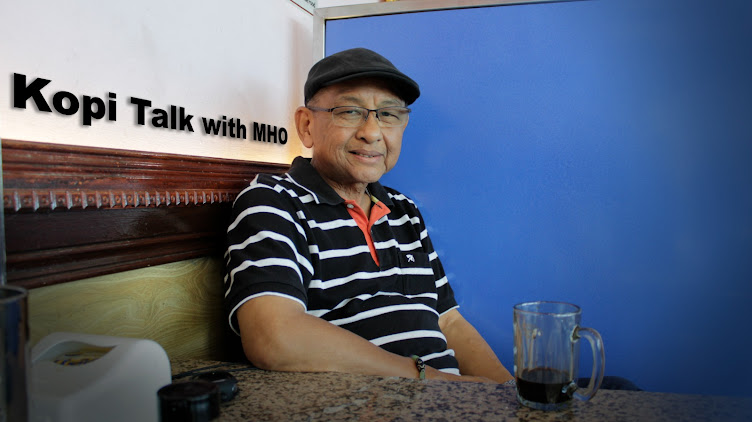
KOPITALK WITH MHO
How a crisis in the Middle East revealed the true depth of the Brunei-Australia partnership
By Malai Hassan Othman
There is something quietly revealing about who turns up at your door when the world is in trouble.
Last week, Australian Prime Minister Anthony Albanese flew into Bandar Seri Begawan. Not on a tourism jaunt. Not for a fleeting photo opportunity on the sidelines of a regional summit. He came specifically, deliberately, to Brunei — and the visit was historic in a way that deserves to be stated plainly: this was the first official visit to the Sultanate by a sitting Australian Prime Minister.
Eighty years of shared history. Forty years of formal diplomatic relations. And it took a crisis in the Middle East to produce this first.
Perhaps that should not surprise us. Crisis has a way of revealing what ordinary times allow us to overlook.
— — —
Before any agreement was discussed, before any document was signed, Albanese did something that said more about the relationship than any formal communiqué could. He went to Muara Beach. He laid a wreath at the Brunei-Australia Memorial — a tribute to the Australian soldiers who lost their lives during the liberation of Borneo from Japanese occupation in the Second World War.
That was the real beginning of the visit.
It was a reminder that the friendship between Brunei and Australia did not begin in 1986, or even 1984. It began in 1945, on this soil, where young Australians fought and died in the jungles and on the beaches of Borneo. This year marks four decades of formal diplomatic relations. But the relationship itself runs deeper than that, rooted in a debt of history neither side has forgotten. Albanese understood this. He chose to honour it first, before the business began.
— — —
And there was serious business to attend to.
The conflict in the Middle East, together with the disruption to the Strait of Hormuz, sent shockwaves through global energy and food supply chains. Australia felt it directly. And when Canberra examined its supply map — who it could trust, where relationships were already in place, who could deliver under pressure — Brunei was near the top of the list.
Brunei supplies nine per cent of Australia's diesel imports, and eleven per cent of its fertiliser-grade urea. Albanese did not merely accept those figures from a briefing note. He flew to Sungai Liang and toured the Brunei Fertilizer Industries plant. He stood inside the facility and saw where that urea is produced. That is not what a leader does when a relationship is merely transactional. It is what a leader does when he wants to understand the source of resilience, and to signal that understanding.
It is worth spelling out what that urea actually means. It does not remain in Australia as a chemical input. It becomes fertiliser. Fertiliser goes into farmland. Farmland produces food. In a country the size of Australia — one of the world's major agricultural producers — Brunei's urea forms part of the chain that helps put food on dinner tables from Perth to Brisbane.
— — —
The headline outcome of the visit was the signing of the Brunei Darussalam-Australia Joint Statement on Energy and Food Security — a formal commitment to ensure the continued flow of critical goods between the two countries, including diesel, crude oil and fertiliser.
But the most concrete result was this: Australia secured one hundred million litres of diesel to strengthen its national reserves during the current period of supply risk — fifty million litres from Brunei, and fifty million from South Korea. In a time of genuine global uncertainty, that is not a minor detail. It can be the difference between managing a crisis and being managed by one.
Brunei delivered its half. Quietly, reliably, as trusted partners do.
— — —
The bilateral meeting at Cheradi Laila Kenchana covered far more than energy. Discussions between His Majesty Sultan Haji Hassanal Bolkiah and Prime Minister Albanese ranged across the situation in the South China Sea, the ongoing crisis in Myanmar, and the wider implications of the Middle East conflict for the region.
These are not small matters. They are the concerns of leaders who read the neighbourhood in broadly similar ways and who share a stake in its stability.
Foreign Minister Penny Wong, who accompanied Albanese, met separately with Dato Erywan Pehin Yusof, Brunei's Minister of Foreign Affairs II. At the press conference following the visit, she noted that this was her seventh engagement with His Majesty the Sultan. Seven engagements. That is not a relationship improvised in a moment of crisis. It is one that has been steadily and patiently maintained over years — across different governments, different crises, and shifting seasons of regional uncertainty.
The Comprehensive Partnership that Australia and Brunei formalised in 2023 was not just diplomatic paperwork. Looking back now, it looks very much like preparation.
— — —
There is a broader point here that Bruneians should pause to consider.
Most of us probably do not realise that Australia is, in fact, our largest trading partner. The relationship does not announce itself noisily. It has simply been there — steady, practical, and quietly deepening over the decades. Nor do most of us think much about the fact that Australia is, in turn, an important supplier of food and agricultural products to Brunei. The trade runs both ways. We send them energy; they send us food. It is an interdependence deeper than either side usually acknowledges in public.
That is what this visit brought into sharper focus. Not the spectacle of a new alliance being forged, but the quiet strength of an old one being tested and affirmed under pressure.
Small states do not always get to choose how the world treats them. But they can choose, over years and decades, to build the kind of relationships that make them useful, credible and dependable when events turn uncertain. Brunei has done that. Not through noise. Not through grandstanding. But through steady engagement and quiet reliability — by being exactly the sort of partner people call when things become difficult.
When the Strait of Hormuz was disrupted and Australia faced a genuine supply concern, Canberra did not turn to a country it had only recently befriended. It turned to one with which it had been doing business for decades. A country whose fertiliser plant an Australian Prime Minister felt confident enough to walk through. A country whose memorial to fallen Australian soldiers still stands at Muara Beach, tended and remembered.
That is the return on patient diplomacy. Not dramatic. Not loud. But real — and worth more than the modest headlines it received at home.
— — —
The Strait of Hormuz has since reopened under a fragile ceasefire. Oil prices fell sharply on the news. The immediate pressure eased. But the structural lesson of these past weeks will not disappear with the crisis. Energy security in our part of the world is a shared challenge. No country manages it alone. And the countries best placed to navigate the next disruption will be those that have already done the quieter work of building relationships that hold when pressure comes.
Brunei has done that work. The visit of Anthony Albanese — the first sitting Australian Prime Minister to visit this country in an official capacity — is proof enough.
When Canberra came calling, Brunei was ready.
It had been ready all along.
Malai Hassan Othman is a political analyst and columnist. Follow KopiTalk with MHO at kopitalkmho.blogspot.com and on LinkedIn.

.jpeg)
No comments:
Post a Comment