Sunday, March 8, 2026

Bintang Yang Mengetuk Dalam Gelap

Pagi 18 Ramadhan itu suasananya tenang.

Langit masih gelap, dan hanya satu bintang kelihatan di atas.

Dalam kelas taddabur subuh, Surah At-Tariq membuka satu renungan yang sangat sederhana tetapi sangat mendalam:

Kadang-kadang manusia hanya melihat bintang apabila langit menjadi gelap.

Mungkin begitu juga dengan kehidupan.

Kadang-kadang petunjuk Allah hanya benar-benar kelihatan ketika hidup sedang melalui malamnya.

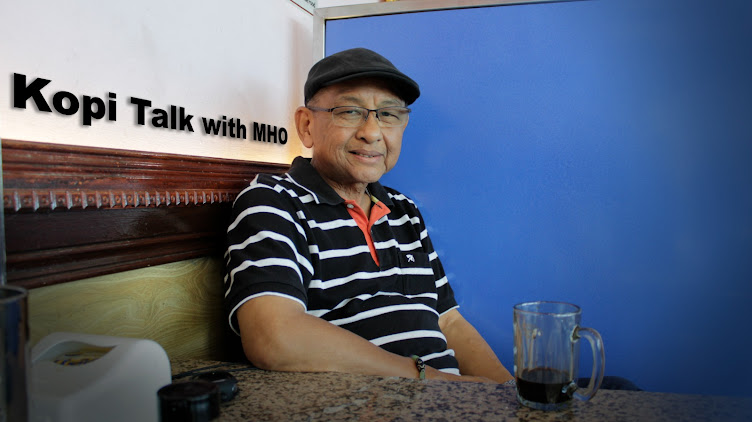
KopiTalk with MHO


Pagi 18 Ramadhan itu suasananya tenang. Udara subuh masih dingin dan langit belum sepenuhnya terang ketika kelas taddabur bersama Ustaz Malik Al Amin bermula.

Ramadhan sering membawa manusia memandang langit dengan cara yang berbeza.

Dalam suasana sederhana itu, perbincangan kami menyentuh tafsir Surah At-Tariq, surah ke-86 dalam Al-Qur'an.

Surah ini pendek, tetapi maknanya dalam. Ia bermula dengan satu sumpah yang sejak dahulu mengundang manusia berfikir:

"Demi langit dan bintang yang datang pada waktu malam."

Perkataan At-Tariq membawa maksud bintang yang muncul dalam gelap malam—seolah-olah sesuatu yang datang mengetuk dalam kesunyian.

Dalam tafsir para ulama, bintang ini bukan sekadar fenomena alam. Ia menjadi simbol cahaya yang menembusi kegelapan.

Jika direnungkan, kehidupan manusia juga sering melalui "malam" seperti ini.

Ada masa kita berjalan dalam gelap—berdepan tekanan hidup, kegagalan, atau kesusahan yang tidak diketahui orang lain. Kadang-kadang manusia merasa seolah-olah dia sendirian.

Namun Surah At-Tariq mengingatkan bahawa tidak ada satu pun perjalanan manusia yang terlepas daripada perhatian Allah.

Ayat keempat menyebut bahawa setiap manusia mempunyai penjaga yang memerhatikannya. Para ulama mentafsirkan penjaga ini sebagai malaikat yang mencatat setiap amal manusia—baik mahupun buruk.

Kesedaran ini memberi perspektif penting tentang kehidupan.

Dalam dunia yang sering mengukur kejayaan melalui pujian manusia, kita mudah lupa bahawa penilaian sebenar bukan datang daripada manusia.

Seseorang mungkin bekerja keras tetapi tidak dihargai.

Seseorang mungkin berbuat baik tetapi tidak dipuji.

Seseorang mungkin memikul kesusahan hidup secara diam.

Namun dalam pandangan Allah, tiada satu pun usaha manusia yang hilang daripada catatan.

Surah ini juga mengajak manusia merenung asal-usulnya. Allah menyuruh manusia memikirkan bagaimana mereka diciptakan—daripada setitis air yang hina.

Peringatan ini membawa mesej kuat tentang kerendahan diri.

Dalam kehidupan moden, manusia sering terperangkap dalam ilusi kekuatan. 

Apabila seseorang mencapai kedudukan, kekayaan atau kuasa, dia mudah merasa semuanya hasil kebijaksanaannya sendiri.

Tetapi Surah At-Tariq mengingatkan bahawa manusia pada asalnya datang daripada sesuatu yang sangat kecil dan lemah.

Segala kekuatan yang kita miliki hanyalah pinjaman daripada Allah.

Ayat seterusnya menyentuh satu perkara yang sangat mendalam - tentang rahsia manusia.

Allah menyatakan bahawa suatu hari nanti semua rahsia akan didedahkan. Bukan sahaja perbuatan yang dilihat manusia, tetapi juga niat dan apa yang tersembunyi dalam hati.

Dalam kehidupan seharian, manusia mungkin mampu menyembunyikan sesuatu daripada orang lain - kesalahan yang dilakukan secara diam, niat yang tidak diketahui, atau perasaan yang disimpan dalam hati.


Namun di hadapan Allah, tiada satu pun yang benar-benar tersembunyi.


Kesedaran ini membentuk nilai penting dalam kehidupan—kejujuran dalaman.


Ia mengajar manusia bahawa integriti bukan sekadar tentang apa yang dilihat orang, tetapi tentang siapa kita ketika tiada siapa yang memerhati.


Pada akhirnya, Surah At-Tariq membawa manusia kembali kepada satu hakikat yang sangat sederhana tetapi mendalam.


Manusia sering merasa kuat ketika hidup berjalan lancar.


Tetapi apabila ujian datang - kehilangan pekerjaan, masalah keluarga, penyakit atau kegagalan—barulah manusia sedar betapa lemahnya dirinya.


Surah ini mengingatkan bahawa tanpa pertolongan Allah, manusia sebenarnya tidak mempunyai kekuatan apa-apa.


Mungkin itulah sebabnya Allah memulakan surah ini dengan bintang yang muncul pada waktu malam.


Kerana dalam perjalanan hidup manusia, kadang-kadang cahaya petunjuk hanya kelihatan apabila langit kehidupan menjadi gelap.


Dan mungkin sebab itu juga, setiap kali Ramadhan tiba dan manusia kembali memandang langit subuh dengan hati yang tenang, bintang di langit malam seakan mengingatkan bahawa dalam kegelapan hidup sekali pun, Allah tidak pernah meninggalkan langit tanpa cahaya. (MHO/03/2026)


Saturday, March 7, 2026

Beyond the Address – Final Reflection

At first hearing, the National Day titah sounded like a familiar list of priorities — logistics, digital transformation, food security and human capital.


But read carefully, the speech reveals something more intriguing.

Across six reflections in this KopiTalk series, a quieter narrative begins to emerge — one that hints at how Brunei’s next economic chapter may unfold as the horizon of Wawasan 2035 draws closer.

Sometimes, the most important messages in a national address are not spoken loudly.

They are hidden in the structure of the speech itself.

The Decade of Delivery

    Six essays. One titah. One question:

Can Brunei turn vision into momentum before the horizon of Wawasan 2035 arrives?


By Malai Hassan Othman | KopiTalk with MHO 


When His Majesty delivered the National Day titah this year, the speech moved steadily across several themes: maritime logistics, digital transformation, food security, and human capital.


To many listeners, these sounded like familiar elements of the national development conversation surrounding Wawasan Brunei 2035. After all, these pillars have been discussed for years in policy frameworks, government initiatives and economic roadmaps.


But read more carefully, the address appears to mark something more significant than a restatement of priorities.


It marks a transition.


For much of the past decade, national discourse around Wawasan 2035 has focused on planning — identifying sectors of opportunity, designing strategies and laying the groundwork for diversification beyond oil and gas.


The years ahead, however, belong to a different phase.


They belong to execution.


With the horizon of 2035 now visibly approaching, the question facing the country is no longer simply what must be done. That question has largely been answered.


The question now is how quickly those ambitions can be translated into tangible outcomes.

Across the speech, the themes highlighted by His Majesty form a quiet architecture of transformation.


Maritime logistics represents the physical networks connecting Brunei to global trade routes. Digital transformation reflects the growing centrality of data, artificial intelligence and technological capability in shaping modern economies. Food security emphasises resilience in an increasingly uncertain global environment. Human capital underscores the importance of talent, skills and education as the engine of long-term progress.


Each of these pillars carries its own significance.


But together they tell a broader story.


They suggest that Brunei’s next phase of development will depend not on a single breakthrough industry but on the strengthening of interconnected systems that support economic vitality and national resilience.


This shift is subtle, but meaningful.


Historically, many resource-based economies have relied heavily on dominant sectors to drive growth. Diversification, however, requires a different approach. It demands the creation of ecosystems — logistics networks that facilitate trade, digital platforms that enable new businesses, agricultural systems that enhance self-reliance and educational institutions that cultivate talent.


The titah appears to recognise this systemic transformation.


Yet beyond the structure of these priorities lies another message — one that becomes clearer when viewed against the timeline of Wawasan 2035.


For the first time since the vision was announced, the target year no longer feels distant.


It sits within the planning horizon of institutions, businesses and young professionals now entering the workforce.


In practical terms, the coming years represent what might be described as the decade of delivery.


Strategies that were once long-term aspirations must now begin producing measurable outcomes.


Infrastructure must translate into connectivity.


Digital investments must translate into innovation and productivity.


Agricultural initiatives must translate into resilience and domestic capability.


Education reforms must translate into a workforce prepared for new industries.


In quiet discussions among policymakers and industry practitioners, a common observation often surfaces. The challenge rarely lies in identifying ideas or drafting strategies. Brunei, like many countries, has produced thoughtful plans across multiple sectors.


The more complex task lies in turning those plans into momentum.


This is where the significance of the titah becomes clearer.


Rather than announcing a dramatic new economic doctrine, the speech signals expectation that the systems already being built will begin to move with greater coherence and pace.


The tone remains measured and constructive. But the repeated emphasis on strengthening efforts, intensifying initiatives and enhancing competitiveness suggests an awareness that the coming years will be decisive.


Not because the vision itself is uncertain.


But because time has become a strategic factor.


Across the five reflections in this series, we have examined different dimensions of that transformation — logistics, digital infrastructure, food resilience and human capital. Each represents a pillar supporting Brunei’s aspiration to build a dynamic and sustainable economy.


Yet the final lesson of the titah may be surprisingly simple.


National transformation rarely arrives in a single dramatic moment. More often it emerges gradually, as institutions adapt, industries evolve and societies respond to changing circumstances.


The years ahead therefore represent an opportunity — not only to implement policies but to shape the rhythm of national progress.


If the earlier years of Wawasan 2035 were devoted to vision and preparation, the years ahead will test something deeper.


They will test momentum.


The titah does not announce a new destination.


That destination has long been clear.


What it does suggest is that the nation is entering the stage where vision must steadily translate into reality.


And in that sense, the message of the address may be less about where Brunei hopes to go.


It is about the pace at which the country is prepared to move.


Epilogue

The vision has been drawn.


The coming decade will show how firmly the nation can walk toward it.


Friday, March 6, 2026

Beyond the Address – Part 5: The System Test Behind Wawasan 2035

 Ports. Data centres. Food systems. Human capital.

Across five essays, one message from the titah slowly comes into focus: the challenge facing Brunei is no longer identifying the pillars of diversification — it is whether the entire system can move together fast enough before the horizon of Wawasan 2035.


By Malai Hassan Othman
KopiTalk with MHO


By the time the titah turned to maritimelogistics, digital transformation, food security and human capital, a quiet pattern had already begun to emerge. These were not merely separate sectors of development. Read together, they resemble the layers of a single system — the architecture of an economy seeking to move beyond its long dependence on oil and gas.


In earlier parts of this series, we looked at each pillar individually. Maritime logistics represents the physical connectivity linking Brunei to global trade. Digital infrastructure provides the technological backbone of a modern economy. Food security strengthens national resilience against external shocks. Human capital ensures that the system is operated by a skilled and adaptable workforce.


Yet taken together, these pillars raise a deeper question: what ensures that they work in concert?


The answer may lie in something rarely mentioned directly but increasingly implied in national discourse — the ability of the entire system to move with coherence and speed.


Across the titah, one rhetorical pattern appears repeatedly. Efforts must be strengthened. Competitiveness must be enhanced. Initiatives must be intensified. Coordination must improve. On the surface, these are expressions of encouragement. But when they appear across multiple sectors, they form a pattern that seasoned observers recognise as a subtle signal to the system.


The message is not that the direction of national policy is wrong. On the contrary, the vision remains clear. What the language suggests is that the pace of execution has now become the next critical challenge.


This is understandable when viewed against the horizon of Wawasan Brunei 2035. The vision, launched more than a decade ago, seeks to build a dynamic and sustainable economy supported by a highly educated and skilled population. With less than ten years remaining before that milestone, the emphasis naturally begins to shift from planning to delivery.


In quiet conversations with several policy observers over the past few years, a similar reflection often surfaces. Brunei does not lack ideas, strategies or frameworks. What determines progress is how quickly different parts of the system are able to move together once the direction is set.


This is where the idea of a Whole-of-Government and Whole-of-Nation approach becomes increasingly relevant.


The sectors highlighted in the titah span multiple domains of policy and administration. Ports involve transport authorities, customs agencies and trade institutions. Digital transformation involves regulators, telecommunications providers, technology firms and universities. 


Food security requires cooperation between agricultural agencies, research institutions, investors and farmers. Human capital development connects the education system directly with the needs of industry.


Each element belongs to a different part of the national machinery. Yet they must ultimately function as one integrated ecosystem.


This may be the most strategic implication of the titah. Economic transformation is no longer only about identifying promising sectors. It is about ensuring that the institutions, policies and people responsible for those sectors are able to operate in alignment.


Countries that successfully diversify their economies often discover that the decisive factor is not the availability of ideas or resources, but the agility of their systems. The ability of government agencies to coordinate effectively, of industries to respond quickly to new opportunities, and of the workforce to adapt to emerging skills demands becomes the true engine of change.


The speech therefore reads not only as a statement of national priorities but also as a gentle reminder that the next phase of development will depend on the efficiency of the system itself.


Maritime ports may expand, digital networks may grow and agricultural technologies may modernise. But without institutional agility and collective effort, these initiatives risk advancing at different speeds.


And that brings us back to the quiet question implied throughout the titah.


Can the entire national system move together quickly enough to realise the aspirations of Wawasan 2035?


Over the course of this five-part reflection, we have looked at four pillars highlighted in the address — logistics, digital infrastructure, food security and human capital. Each represents a strategic layer of national resilience.


But perhaps the deeper message of the titah lies not in any single pillar.


It lies in the understanding that all of them must advance together.


Infrastructure builds capability.


Technology accelerates connectivity.


Agriculture strengthens resilience.


Human capital powers innovation.


Yet none of these pillars can stand alone.


In the end, the real test of Wawasan 2035 may not be whether the vision is correct. The vision has long been clear.


The real test is whether the system — government, industry and society — can move with the clarity, coordination and urgency required to turn that vision into lived reality before the clock reaches 2035.


And perhaps that, quietly but unmistakably, is the signal embedded in the titah. (MHO/03/2026)


Thursday, March 5, 2026

Beyond the Address – Part 4: The Human Layer That Will Decide 2035

Maritime logistics.
Digital infrastructure.
Food security.

Three pillars of resilience are highlighted in the titah.

But beneath them all lies a quieter challenge — building the people capable of running the future economy. With less than a decade to Wawasan 2035, the real question may no longer be what Brunei plans to build, but whether the nation is ready to operate it.


By Malai Hassan Othman | KopiTalk with MHO


In recent days, much attention has been given to the economic signals contained in the titah delivered during the National Day celebrations. Many observers naturally focused on the visible pillars highlighted in the address — strengthening maritime logistics, advancing the digital economy, and enhancing food security.


Yet beneath these sectors lies another layer that may ultimately determine whether the nation's ambitions are realised. Infrastructure and industries can be planned, financed, and built, but the people who must operate, sustain, and expand them cannot be produced overnight.


In the titah, His Majesty the Sultan underscored the importance of human capital as a central element of the nation's development journey.


"Sebagai dokongan ke arah ini, sistem pendidikan negara perlu terus melalui proses penambahbaikan yang strategik supaya mampu melahirkan modal insan yang berkemahiran, berdaya saing dan bersedia menghadapi cabaran ekonomi masa depan."


Translated broadly, the message is clear: the education system must continuously evolve to produce skilled and competitive individuals capable of navigating the economic realities of the future.


This emphasis places human capital at the center of the national transformation agenda. Maritime ports, digital infrastructure, and agri-tech zones may form the physical backbone of diversification, but it is the availability of capable talent that determines whether these sectors truly flourish.


Across many industries, employers often remark that the challenge is not merely creating opportunities but ensuring the right capabilities are available to support them. At the same time, young graduates frequently express uncertainty about where their skills fit within an economy that is itself still evolving. Between these two perspectives lies the central task of human capital development.


The issue is not unique to Brunei. Many countries navigating economic transition encounter a similar dilemma — how to ensure that education, training, and industry needs move in step. When alignment is achieved, new sectors grow rapidly. When gaps persist, infrastructure may advance faster than the talent pipeline required to sustain it.


In the context of Wawasan Brunei 2035, this alignment becomes even more significant. The vision calls for a well-educated and highly skilled population as one of its core pillars. Achieving that goal is not simply about expanding educational access but about ensuring that knowledge, technical skills, and adaptability evolve alongside the economy itself.


This is why the human layer is often less visible but arguably the most decisive. Ports can be built within a few years. Data centers can be installed within months. Agricultural technology zones can be planned and developed within a decade. But cultivating the experience, confidence, and competence required to operate these systems takes far longer.


One young graduate recently remarked in an online discussion that the challenge today is not necessarily obtaining qualifications, but finding industries ready to absorb them. Whether anecdotal or widespread, such sentiments reflect a question many young Bruneians quietly ask: where do their skills fit in the economy that is being built?


This is where policy, educational institutions, and industry must increasingly move together. Universities and technical institutes shape the pipeline of knowledge. Businesses translate that knowledge into productivity and innovation. Government policies provide the framework within which both operate.


When these elements work in concert, the results can be powerful. Countries that successfully align education, entrepreneurship, and industry often see entire new sectors emerge within a generation.


The titah therefore reads not only as a call for sectoral development but also as a reminder that the human dimension must advance at the same pace. The three economic pillars highlighted earlier in this series — maritime logistics, digital infrastructure, and food security — all depend ultimately on people capable of managing complex systems, adapting to technological change, and creating new value.


In many ways, this human layer may become the quiet test of the nation's progress over the coming decade.


After all, buildings and infrastructure can be constructed relatively quickly. Preparing people to operate them is a much longer journey.


Maritime ports may expand, digital networks may grow, and food systems may modernise. Yet in the end, the success of Wawasan Brunei 2035 will not be measured only by the infrastructure the nation builds. It will be measured by whether the people of the nation are ready — and prepared in time — to run it. (MHO/03/2026)


Wednesday, March 4, 2026

Beyond the Address – Part 3: Building the Layers That Must Hold by 2035

Ports move goods. Data moves economies. Food sustains nations.
In the latest titah, three signals quietly emerged — maritime logistics, digital infrastructure and food security. With less than a decade to Vision 2035, the real question is no longer what we plan to build, but whether these layers will hold when the world tests them.


By Malai Hassan Othman | KopiTalk with MHO


In the National Day titah, His Majesty stated:


"Aspek keselamatan makanan negara juga terus diberikan perhatian. Ini merangkumi kerjasama strategik serantau termasuk pembangunan zon makanan bersama antara Negara Brunei Darussalam dan Republik Singapura melalui Brunei-Singapore Agri-Tech Food Zone. Kerjasama ini akan memperkukuhkan lagi rantaian bekalan makanan dan berpotensi menjana peluang pekerjaan dan perniagaan tempatan bagi kedua-dua buah negara."


In English:


"The aspect of national food security continues to receive attention. This includes strategic regional cooperation, including the development of a joint food zone between Brunei Darussalam and the Republic of Singapore through the Brunei-Singapore Agri-Tech Food Zone. This cooperation will further strengthen the food supply chain and has the potential to generate employment and business opportunities for both countries."


The words are measured, but the message is firm.


Food security is not being framed as a farming policy, but as supply-chain strength, regional positioning, and job creation. That is a different conversation altogether.

Because food security, in today's environment, is not theoretical. It manifests in shipping costs, restaurant margins, retail invoices, and the quiet anxiety of price volatility.


Over the past eight years, domestic food production has grown by roughly forty per cent — from about BND 525 million in 2017 to around BND 742 million in 2024. Self-sufficiency has been achieved for poultry and eggs. That is real progress.

But progress does not eliminate exposure.


Rice self-sufficiency remains limited, and beef production still covers only a fraction of demand. Imports remain significant. Agriculture contributes just over one per cent of GDP — modest in economic terms, but strategically sensitive.


The trajectory is upward, but the vulnerability remains visible.


This is where the Brunei–Singapore Agri-Tech Food Zone becomes more than diplomatic language.


Singapore brings technological depth, regulatory sophistication, and global supply-chain networks. Brunei brings land availability, halal positioning, macroeconomic stability, and policy continuity. The collaboration signals that resilience will not be built in isolation, but through complementary capabilities.


If commercially executed — and execution will be key — the initiative could anchor technology-driven agriculture, attract strategic investment, and generate skilled employment. But ambition alone will not close the gap. Land must be productively utilised, yields must be consistent, financing must be disciplined, and technology must be absorbed, not merely showcased.


With fewer than ten years remaining before Vision 2035, timelines matter more than intentions.


Across the first three pillars highlighted in the titah, a pattern emerges:


Maritime logistics strengthens connectivity.


Digital infrastructure strengthens intelligence.


Food security strengthens endurance.


Together, they form layers of economic stability.


Brunei's strengths are clear: stability, fiscal space, policy coordination, and regional credibility. In uncertain times, those are competitive advantages.


Its constraints are equally clear: small domestic scale, uneven sectoral depth, heavy reliance in selected food categories, and a workforce still transitioning toward technology-intensive sectors.


The opportunities lie in integration: agri-tech linked to digital systems, food production supported by efficient maritime logistics, regional cooperation leveraged into domestic enterprise.


The risks are external and real: supply-chain disruption, climate volatility, rising input costs, regional competition, and the narrowing runway toward 2035.


The titah does not dramatize these pressures, but signals readiness.


But readiness must now translate into pace.


The next decade will not reward plans on paper, but execution under pressure.


For investors, the signal is straightforward: resilience is becoming part of the economic strategy, not an afterthought. For local entrepreneurs, the message is equally clear: food security is no longer about subsistence, but about systems. For the public, it reassures them that exposure is being acknowledged and addressed.


If maritime logistics defines how Brunei connects, and digital infrastructure defines how it competes, food security defines how it withstands.


Vision 2035 will ultimately be judged not by announcements, but by whether these layers hold when tested.


And by 2035, the real question will not be what we planned, but what we managed to hold. (MHO/03/2026)


Sunday, March 1, 2026

Beyond the Address – Part 2: Digital Infrastructure and the Quiet Acceleration Toward 2035

Brunei has built the networks.

We have rolled out 5G.
We are planning AI-based data centres.

But infrastructure alone does not transform an economy.

As Vision 2035 moves closer, the real question is no longer whether we can build digital systems — it is whether we can move fast enough to use them. In this second part of the series, I reflect on what His Majesty’s digital signal truly means for competitiveness, trust and the narrowing margin between preparation and execution.


By Malai Hassan Othman | KopiTalk with MHO 


If maritime logistics illustrates how Brunei connects physically with the region, digital infrastructure illustrates how it competes intellectually. In this year's National Day titah, the reference to artificial intelligence and data centres may have sounded measured. Yet beneath that restraint lay one of the clearest forward-looking signals in the address.


His Majesty stated:


"Seiring dengan perkembangan teknologi global, negara juga turut memberikan perhatian kepada pembangunan pusat data berasaskan kecerdasan buatan ataupun Artificial Intelligence (AI). Selain membina keupayaan AI tempatan melalui usahasama Syarikat Berkaitan Kerajaan (GLC) tempatan, inisiatif ini juga dapat memperkukuh pembangunan teknologi strategik, memastikan keselamatan data dan memacu inovasi digital."


In English:


"In line with global technological developments, the country is also giving attention to the development of data centres based on artificial intelligence (AI). In addition to building local AI capability through collaboration with local government-linked companies (GLCs), this initiative can also strengthen the development of strategic technology, ensure data security, and drive digital innovation."


The paragraph was concise, but strategically structured.


This was not a call for more apps or incremental digitisation, but a signal that AI-based data infrastructure is being positioned as national economic infrastructure.


Brunei's digital transformation did not begin with AI. The Digital Economy Masterplan 2025 (DE25) laid the first structured roadmap toward a Smart Nation aligned with Vision 2035, emphasising connectivity, digital government, cybersecurity, and citizen enablement. Since then, foundational layers have been steadily put in place.


Nationwide 5G services were rolled out in 2023, reaching the vast majority of populated areas — a prerequisite for cloud computing, automation, and AI integration. The development of purpose-built data centre facilities, alongside strengthened sovereign hosting capacity, signalled that digital infrastructure was moving beyond policy intent into physical execution. Platforms such as the Digital Identity ecosystem and expanding e-government services have further deepened the digital backbone.


There is movement, but movement alone does not equal economic weight.


Measured by scale, the ICT sector contributed approximately 2.3 percent of GDP in 2023 — estimated at around BND 484.8 million. The number is meaningful, yet modest when placed beside the continued dominance of oil and gas. The base remains small, which makes the direction of travel more important than the current size.


Digital transformation ultimately rests not on hardware, but on trust. In an earlier reflection on broadband billing transparency, I noted how quickly confidence can erode when systems appear opaque or unresponsive. Infrastructure may be sophisticated, but public sentiment turns fragile when fairness and clarity feel uncertain. As Brunei advances into AI-based data infrastructure, the lesson remains relevant: a digital economy is sustained not only by fibre and servers, but by credibility and the confidence of those who depend on it daily.


This trust dimension, often understated in policy discussions, becomes central when digital ambition scales into everyday economic life — linking infrastructure to reliability and innovation to public confidence.


The inclusion of "memastikan keselamatan data" — ensuring data security — was therefore not incidental. In a region where data centre capacity is expanding rapidly under AI demand, governance and stability increasingly shape competitiveness. Singapore refines regulatory depth, Malaysia scales capacity aggressively, and Indonesia and Vietnam expand digital ecosystems alongside manufacturing growth. Brunei cannot compete on size alone, but it can compete on coherence and predictability.


The titah's reference to collaboration with local GLCs suggests an institution-led pathway — reducing early-stage risk and anchoring strategic capability domestically. Yet long-term diversification depends not merely on infrastructure ownership, but on ecosystem adoption.


5G networks can be deployed, data centres can be commissioned, and cybersecurity frameworks can be enacted. But unless SMEs, logistics firms, financial services providers, and public agencies integrate AI meaningfully into workflows, productivity gains remain theoretical. And unless workforce capability grows at pace, infrastructure risks outpacing absorption.


This is where inertia often hides — not in announcements, but in adoption rates.


Talent development therefore becomes the quiet determinant of success. AI-based infrastructure requires data engineers, cybersecurity architects, compliance specialists, and system integrators. Scholarship programmes, competency initiatives, and institutional partnerships are expanding. Yet building deep digital capability takes time. Without sufficient absorptive capacity, digital infrastructure risks becoming an asset class rather than an economic multiplier.


Across ASEAN, digital infrastructure is increasingly viewed as a strategic territory. Data centres are not simply storage facilities; they are nodes within regional value chains, enabling fintech, logistics optimisation, health technologies, and advanced manufacturing. In that competitive landscape, Brunei's positioning appears less about becoming the largest hub, and more about becoming a trusted, stable, and well-governed node within a wider digital network.


With fewer than ten years remaining before Vision 2035, the margin between steady progress and decisive execution is quietly narrowing. The shift from infrastructure-building to ecosystem velocity will increasingly determine whether digital ambition translates into measurable diversification.


The titah does not declare a digital revolution, but signals foundation-building. The question is no longer whether Brunei has begun constructing that foundation — it clearly has. The deeper question is whether execution speed, adoption depth, and talent readiness can converge in time to convert infrastructure into lasting economic weight.


In the end, digital transformation may prove less dramatic than headlines suggest. It often advances quietly — through system upgrades, regulatory refinements, and skills development. Yet it is precisely this quiet acceleration that will determine how firmly Brunei stands in the competitive landscape of the next decade.


The next reflection in this series turns to the intersection of digital capability and workforce transformation — where infrastructure ambition meets the human capital realities of a changing economy. (MHO/03/2026)