Most of us don’t know where the line of free speech in Brunei is.
Not because it’s hidden.
But because it was never drawn.
Over time, we learned to stay quiet.
Not because we were told to — but because it felt safer.
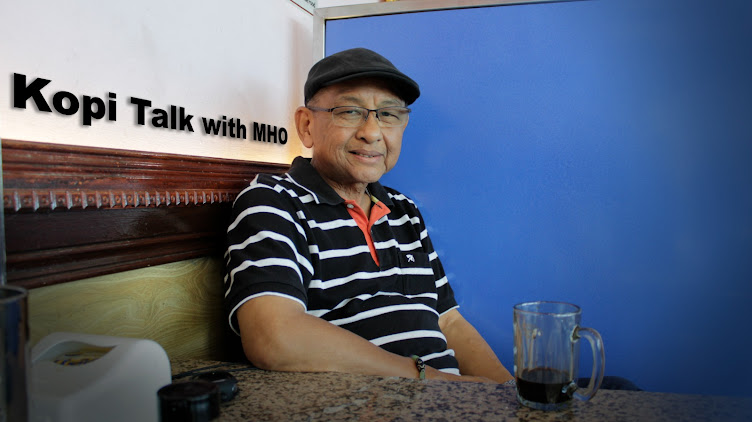
In this week’s KopiTalk, I write about the invisible line — how caution becomes habit, how silence becomes culture, and why a nation needs not just stability… but confidence.
This is not about being loud.
It is about remembering how to speak with wisdom
and courage.

I
never quite know how to answer it.
Not
because the question is difficult, but because the line itself does not exist
in any visible form. There is no clear marker on the ground, no sign that says,
"You may speak up to here, but not beyond."
The
boundary is not drawn on paper;
it lives in the air.
As
journalists, we were trained early in our careers to practise self-censorship.
Not because anyone sat us down and listed forbidden topics one by one, but
because we learned—slowly, carefully—that in the absence of a visible line,
everyone must develop their own internal one.
And
when everyone draws that line differently, a gap opens:
A
gap between ordinary citizens and journalists on the ground.
A gap between practitioners and those in authority.
A gap between what is truly dangerous and what merely feels sensitive.
Over
time, this gap subtly affects society.
It
makes us careful—not only about what we say, but about what we even think of
saying.
We
learn to avoid certain topics, to soften certain sentences, to leave some
questions unasked. Not necessarily because they are wrong, but because
they might be misunderstood or might be seen
as crossing an invisible line.
And
so we become cautious—not
dramatically afraid, just... conditioned.
Careful
to the point that we would rather stay silent than risk being seen as
"sensitive," and cautious to the point that we sometimes protect not only stability, but
also stagnation.
This is not fear in its loud form; it is habit.
And when habit becomes culture, the boundary no longer needs to be
enforced—it
enforces itself.
You can see this quiet psychology at work even in well-intentioned civic spaces.
Take the Sua Muka programme—the quarterly
"meet-the-people" sessions organised to bridge the government and the
grassroots. Officials come, briefings are given, issues are recorded, and
dialogue is encouraged. On paper, it is exactly what participatory governance
should look like.
Yet anyone who has attended knows the pattern: The hall is full, the questions are polite, the concerns are safe, and everyone is respectful. Everyone, instinctively, knows which questions not to ask.
No one says this out loud; no one needs to.
The line is already in the room.
This is perhaps one of the most distinctive features of Brunei's political and social environment. Much of what governs speech, discussion, and public expression is not written in black and white. It is carried in tone, in memory, and in inherited caution.
We grow up learning not only what is polite, but what is safer not to say.
And over time, safety becomes confused with silence.
In earlier episodes of this series, we spoke about political phobia, political literacy, soft influence, and the myth of opposition. All of those threads meet here. The invisible line is not just about speech; it is about confidence—whether a society believes it can think aloud without tearing itself apart.
Brunei's system is not built on confrontation; it never was. It is built on adab, hierarchy, respect, and harmony. These are virtues, not weaknesses. But harmony does not mean the absence of thought. Respect does not require the absence of questions. Loyalty does not demand the absence of conscience.
In Malay-Islamic political ethics, nasihat has always been part of governance.
Advice is not rebellion, and reminder is not betrayal. Even
silence, in the classical tradition, is supposed to be a form of wisdom—not a
substitute for it.
Yet when the line is invisible, people do not know how to approach
it,
so they stay far away from it.
The
result is not only careful speech, but careful citizenship.
We see this everywhere: People speak freely in private, but cautiously in public.
Discussions happen in WhatsApp groups, not in open forums. Concerns are shared
in whispers, not refined in daylight. Everyone has opinions, but few are
confident about where, when, and how to express them.
This creates a strange condition: a society that is not oppressed, but not fully expressive either; not silenced, but not fully voiced.
And this is where self-censorship becomes more powerful than any
regulation, because it does not come from authority—it comes from inside.
Of course, there are good reasons for caution. Brunei values stability, order, and social harmony. Nobody wants reckless speech, provocation, or imported political chaos. But there is a difference between discipline and nervousness, between responsibility and timidity.
A mature society is not one that says everything; it is one that knows how to say what needs to be said.
This brings us back to the deeper question: what is freedom of expression in a system like Brunei's supposed to look like?
It was never meant to be Western-style confrontation. It was never meant to be street politics or adversarial shouting. It was meant to be something more civilised, more ethical: participation through adab, correction through wisdom, contribution through loyalty.
But for that to work, the rakyat must not only be loyal; they must also be confident.
Confident
that asking a sincere question is not defiance.
Confident that offering constructive criticism is not disloyalty.
Confident that loving a country includes wanting it to improve.
When confidence is missing, the system still functions, but it functions
quietly—too quietly.
And quiet systems do not always hear early warnings.
This is not a call for noise, protest culture, or imported political habits. It is a call for civic maturity—for a society that understands where its line is, not because it fears crossing it, but because it understands why it exists.
Right now, many of us do not know where that line truly is, so we stand far behind it.
And when a whole society stands far behind its own line, the space between thought and action grows wide.
In the end, the most dangerous boundary is not the one drawn by law, but the one drawn by uncertainty.
KopiTalk ends this episode with a quiet reflection: a nation does not become unstable because its people speak; it becomes fragile when its people no longer know how.
The line we need is not the one that scares us; it is the one that guides us. (MHO/01/2026)

.jpeg)


