Sunday, February 1, 2026

FINAL EPISODE — Authority, Conscience, and the Moral State

   After all the debates about politics, power, and participation, perhaps the final question is simpler than we think:

What kind of conscience sustains a nation?

This final KopiTalk reflection looks beyond politics — toward amanah, moral restraint, and the quiet ethics that have long anchored Brunei’s political culture.


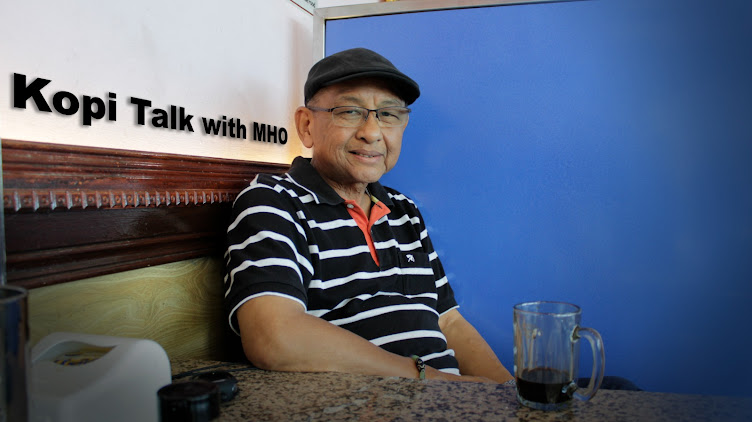
By Malai Hassan Othman | KopiTalk with MHO

As this series draws to a close, it is worth returning to a question that has quietly underscored every episode, whether explicitly stated or not: What is politics really for?

Throughout this series, we have discussed fear and silence, participation and caution, opposition and conscience, literacy and maturity. We have explored how Brunei's political culture has been shaped by history, faith, monarchy, and an inherited instinct for stability. We have examined both the visible structures of governance and the invisible lines that guide behaviour. Yet beneath all these discussions lies a deeper concern — not about power, but about order, and not about contestation, but about trust.

Classical Islamic political thought, particularly within the Shāfiʿī tradition, offers insights profoundly relevant to Brunei's context.

Shāfiʿī political theorists did not conceptualise politics as competition, but rather understood governance as a necessity. For them, authority was not an instrument of ambition, but a safeguard against chaos. Al-Māwardī argued that leadership exists to preserve religion and manage worldly affairs — not as separate tasks, but as intertwined responsibilities. Without authority, society fragments; without order, moral life weakens; and without moral order, neither state nor faith can endure.

This understanding reframes politics entirely, moving us away from the language of rivalry and toward the language of amanah.

Within this tradition, power is never celebrated for its own sake. It is tolerated because human society needs restraint, coordination, and continuity. As one classical maxim reminds us, the restraints imposed by authority often exceed what moral exhortation alone can achieve. This is not a justification for coercion, but a recognition of human nature: people require structure not because they are weak, but because they are social.

For Brunei, this matters deeply. The Malay-Islamic worldview has always understood authority as a moral trust, not a battlefield. Loyalty to the ruler is not blind obedience, but is grounded in sincerity, mutual responsibility, and the preservation of harmony. The ruler, in turn, carries the weight of accountability — before the people, before history, and ultimately before God.

This reciprocal moral order lies at the heart of MIB.

Yet throughout this series, we have also encountered a quiet tension: a society deeply committed to stability can, over time, confuse silence with loyalty and caution with virtue. When fear replaces understanding, participation narrows. When restraint becomes habit rather than choice, conscience slowly retreats inward.

The Shāfiʿī scholars were keenly aware of this danger. Al-Juwaynī warned that authority cannot be sustained merely through delegation and distance. Leadership requires engagement, listening, supervision, and correction. Al-Ghazālī went further, reminding us that religion and governance are twins: one guards the other, and both weaken when separated from ethical responsibility.

In other words, authority without conscience decays, and conscience without authority fragments.

This insight resolves many of the anxieties that have surfaced throughout this series: the fear of "opposition," the discomfort with disagreement, and the hesitation around participation. These are not signs of a weak system, but signs of a system that has prioritized order so successfully that it now fears disruption, even when that disruption takes the form of sincerity.

However, sincerity, in Islamic political ethics, is not disruption; it is duty.

Nasihat — advice offered with adab — is not rebellion. Counsel is not confrontation. A moral reminder is not disloyalty. These are the mechanisms through which authority remains legitimate and governance remains humane.

This is why the classical tradition does not frame obedience as silence. Obedience is alignment with purpose, not the absence of thought. A ruler is honoured not by the absence of voices, but by the presence of principled ones. And a society is not strengthened by fear, but by trust.

What emerges, then, is a political culture very different from the adversarial models often associated with politics today. It is a culture where stability is protected not by suppression, but by moral clarity; where participation is expressed not through protest, but through responsibility; and where critique is delivered not through hostility, but through conscience.

This is, in essence, what MIB was always meant to cultivate.

The series began by asking whether Brunei's political system allows participation. It ends by recognising that participation has always existed — but in a form that requires maturity to understand. Not everyone will speak, and not everyone must, but everyone must care. And caring, in this tradition, means understanding the system well enough to support it honestly.

A society that understands its political foundations does not become restless, but resilient. People who recognise authority as amanah do not become rebellious, but responsible. And a nation grounded in faith does not fear thought, but disciplines it.

This final reflection is not a defence of silence, nor is it an invitation to noise. It is a reminder that Brunei's political culture was never designed to mirror others, but to protect harmony without extinguishing conscience, and to preserve authority without abandoning ethics.

If there is one lesson to carry forward from this series, it is this:
Politics, at its best, is not about power, but about order with meaning.

And when order is guided by faith, conscience, and trust, a nation does not need louder voices, but a deeper understanding.

KopiTalk ends this series not with answers, but with reassurance:
That MIB, when understood in its fullest moral sense, is not fragile.
That authority, when anchored in
 amanah, does not fear sincerity.
And that a politically mature society does not resist order, but upholds it with wisdom.

The conversation ends here.
The responsibility does not.


Epilogue

 
This series began with questions many were hesitant to ask and ends with an understanding many quietly carry: that Brunei’s political culture is not empty, weak, or absent — it is restrained, moral, and deeply shaped by history, faith, and responsibility. 

Under MIB, politics was never meant to be loud, adversarial, or transactional; it was meant to be guided by adab, strengthened by conscience, and sustained by trust between ruler and rakyat. Yet restraint must never become silence, and loyalty must never erase thought. 

As Brunei moves forward in a world of soft power, quiet influence, and shifting narratives, the true measure of maturity will not be how little we speak, but how wisely we participate. 

If fikir sharpens our awareness and zikir anchors our intention, then civic engagement becomes not a threat to stability but its strongest safeguard. 

KopiTalk closes this journey with a simple hope: that Bruneians grow not more political in posture, but more mature in understanding — confident enough to care, brave enough to reflect, and faithful enough to serve. (MHO/02/2026)

Wednesday, January 28, 2026

PART 11 — The Invisible Line


Most of us don’t know where the line of free speech in Brunei is.

Not because it’s hidden.
But because it was never drawn.

Over time, we learned to stay quiet.
Not because we were told to — but because it felt safer.

In this week’s KopiTalk, I write about the invisible line — how caution becomes habit, how silence becomes culture, and why a nation needs not just stability… but confidence.

This is not about being loud.
It is about remembering how to speak
 with wisdom and courage.


Over the years, I have often been asked a simple, yet unsettling question: "Where is the limit of free speech in Brunei?"


I never quite know how to answer it.

Not because the question is difficult, but because the line itself does not exist in any visible form. There is no clear marker on the ground, no sign that says, "You may speak up to here, but not beyond."

The boundary is not drawn on paper; it lives in the air.

As journalists, we were trained early in our careers to practise self-censorship. Not because anyone sat us down and listed forbidden topics one by one, but because we learned—slowly, carefully—that in the absence of a visible line, everyone must develop their own internal one.

And when everyone draws that line differently, a gap opens:

A gap between ordinary citizens and journalists on the ground.

A gap between practitioners and those in authority.

A gap between what is truly dangerous and what merely feels sensitive.

Over time, this gap subtly affects society.

It makes us careful—not only about what we say, but about what we even think of saying.

We learn to avoid certain topics, to soften certain sentences, to leave some questions unasked. Not necessarily because they are wrong, but because they might be misunderstood or might be seen as crossing an invisible line.

And so we become cautious—not dramatically afraid, just... conditioned.

Careful to the point that we would rather stay silent than risk being seen as "sensitive," and cautious to the point that we sometimes protect not only stability, but also stagnation.

This is not fear in its loud form; it is habit.


And when habit becomes culture, the boundary no longer needs to be 

enforced—it enforces itself.

You can see this quiet psychology at work even in well-intentioned civic spaces. 


Take the Sua Muka programme—the quarterly "meet-the-people" sessions organised to bridge the government and the grassroots. Officials come, briefings are given, issues are recorded, and dialogue is encouraged. On paper, it is exactly what participatory governance should look like.


Yet anyone who has attended knows the pattern: The hall is full, the questions are polite, the concerns are safe, and everyone is respectful. Everyone, instinctively, knows which questions not to ask.


No one says this out loud; no one needs to.


The line is already in the room.


This is perhaps one of the most distinctive features of Brunei's political and social environment. Much of what governs speech, discussion, and public expression is not written in black and white. It is carried in tone, in memory, and in inherited caution.


We grow up learning not only what is polite, but what is safer not to say.


And over time, safety becomes confused with silence.


In earlier episodes of this series, we spoke about political phobia, political literacy, soft influence, and the myth of opposition. All of those threads meet here. The invisible line is not just about speech; it is about confidence—whether a society believes it can think aloud without tearing itself apart.


Brunei's system is not built on confrontation; it never was. It is built on adab, hierarchy, respect, and harmony. These are virtues, not weaknesses. But harmony does not mean the absence of thought. Respect does not require the absence of questions. Loyalty does not demand the absence of conscience.


In Malay-Islamic political ethics, nasihat has always been part of governance. 


Advice is not rebellion, and reminder is not betrayal. Even silence, in the classical tradition, is supposed to be a form of wisdom—not a substitute for it.

Yet when the line is invisible, people do not know how to approach 

it, so they stay far away from it.

The result is not only careful speech, but careful citizenship.

We see this everywhere: People speak freely in private, but cautiously in public. 


Discussions happen in WhatsApp groups, not in open forums. Concerns are shared in whispers, not refined in daylight. Everyone has opinions, but few are confident about where, when, and how to express them.


This creates a strange condition: a society that is not oppressed, but not fully expressive either; not silenced, but not fully voiced.


And this is where self-censorship becomes more powerful than any 

regulation, because it does not come from authority—it comes from inside.


Of course, there are good reasons for caution. Brunei values stability, order, and social harmony. Nobody wants reckless speech, provocation, or imported political chaos. But there is a difference between discipline and nervousness, between responsibility and timidity.


A mature society is not one that says everything; it is one that knows how to say what needs to be said.


This brings us back to the deeper question: what is freedom of expression in a system like Brunei's supposed to look like?


It was never meant to be Western-style confrontation. It was never meant to be street politics or adversarial shouting. It was meant to be something more civilised, more ethical: participation through adab, correction through wisdom, contribution through loyalty.


But for that to work, the rakyat must not only be loyal; they must also be confident.


Confident that asking a sincere question is not defiance.
 

Confident that offering constructive criticism is not disloyalty.
 

Confident that loving a country includes wanting it to improve.


When confidence is missing, the system still functions, but it functions 

quietly—too quietly.


And quiet systems do not always hear early warnings.


This is not a call for noise, protest culture, or imported political habits. It is a call for civic maturity—for a society that understands where its line is, not because it fears crossing it, but because it understands why it exists.


Right now, many of us do not know where that line truly is, so we stand far behind it.


And when a whole society stands far behind its own line, the space between thought and action grows wide.


In the end, the most dangerous boundary is not the one drawn by law, but the one drawn by uncertainty.


KopiTalk ends this episode with a quiet reflection: a nation does not become unstable because its people speak; it becomes fragile when its people no longer know how.


The line we need is not the one that scares us; it is the one that guides us. (MHO/01/2026)


Episode 11 — Itqan: Doing Things Properly, Even When Nobody Is Watching


 ☕ KopiTalk with MHO | MIB Management 101


There's a phrase we often hear in the office: "Yang penting siap."


As long as it's done.


Not necessarily done well.

Not necessarily done properly.

Just... done.


I used to think this was harmless—a practical attitude, a way to survive deadlines, pressure, and conflicting instructions. Over time, however, I began to realise something uncomfortable: this mindset quietly shapes our character.


It trains us to aim not for excellence, but for escape.


We don't ask, "Is this the best I can do?"

We ask, "Is this enough to get me through?"


And slowly, subtly, standards begin to sink.


In the previous episode, we talked about tatfīf—giving less than what is due, cheating not only with money but also with time, effort, and sincerity. Today, I want to talk about its opposite:


Itqan.


Itqan means doing something properly, carefully, with quality, and with responsibility—with a quiet sense of pride that doesn't need applause.


The Prophet ﷺ said:

"Verily, Allah loves that when any of you does a job, he does it with itqan (excellence and thoroughness)."


Not for show.

Not for KPI.

Not because the boss is watching.


But because Allah is.


Looking back at my younger working years, I can now see how often we lived in the space between "enough" and "proper". We cut corners not because we were malicious, but because we were tired, unmotivated, or quietly cynical.


Sometimes the system itself trains you to be that way.


You submit a careful report; nobody reads it.

You do extra; nobody notices.

You rush something; nobody questions it.


After a while, you learn the wrong lesson:


Why bother?


And that is how a culture of "janji siap" slowly replaces a culture of itqan.


We don't collapse, and we don't fail spectacularly.

We just became... mediocre.


Everything still works, but nothing shines.


Files are processed, but care is missing.

Meetings are held, but thinking is shallow.

Projects are completed, but pride is absent.

People come to work, but their hearts are not fully there.


It is not corruption.

It is not a scandal.

It is something more dangerous because it looks normal.


It is the quiet death of standards.


In a Negara Zikir, this should worry us.


Because Islam doesn't teach us to work only until we are safe from punishment, it teaches us to work until our conscience is satisfied.


Itqan is not perfectionism; it's sincerity meeting competence.


It's the difference between:

"I've done my part" and "I've done it properly."


It's the difference between:

"Not my problem anymore" and "Let me make sure this is right."


It's the difference between:

"This will pass inspection" and "This will stand before Allah."


When you work with itqan, you don't need to be supervised all the time. You don't need to be threatened or constantly reminded.


Your work is guided by something stronger than policy:

Your amanah.


And this is where everything in this series quietly connects.


Without amanah, itqan feels unnecessary.

Without ihsan, itqan feels exhausting.

Without 'adl, itqan feels pointless.

Without tawadhu', itqan turns into arrogance.


But when these values coexist, something changes.


Work becomes ibadah.

Duty becomes dignity.

Responsibility becomes honour.


We stop asking, "Can I get away with this?"

And start asking, "Is this worthy of trust?"


Sometimes people say, "Why should I do extra? My pay is the same."


That question itself tells us how far we have drifted.


Because itqan is not about extra.


It's about doing what is already yours—properly.


The tragedy of many organisations isn't a lack of talent. We have talented people everywhere. The tragedy is that, over time, good people learn to shrink.


They learn to stop caring too much, stop thinking too deeply, stop checking twice,
stop asking if something can be better.


Not because they are lazy, but because they are tired of being disappointed.


And so the organisation survives, but it never becomes great.


When itqan disappears, quality disappears quietly.

When quality disappears, trust disappears slowly.

When trust disappears, everything else becomes paperwork.


We end up managing forms instead of serving people.


In the end, perhaps the real question is a simple one:


If nobody checks your work, if nobody praises your effort, if nobody knows what you did...


Would you still do it properly?


That is where itqan lives.


Not in inspection, not in KPI, not in fear, but in the quiet space between you and Allah.


And maybe that is what MIB management is really trying to protect:


A civilisation where people do the right thing, not because they are watched, but because they are guided.


KopiTalk with MHO — reflections brewed gently, with honesty and heart.


Tuesday, January 20, 2026

From Vision to Delivery: Reading the 2026 Titah Through Wawasan 2035 and RKN 12

We have visions. We have plans. We have KPIs. But do we have velocity? The 2026 Titah reads less like encouragement and more like a polite performance review of a system that has learned to manage indicators better than outcomes. This is a reflection on why delivery, not direction, is now Brunei’s real test.


By Malai Hassan Othman — KopiTalk with MHO

In my earlier essay, Between Stability and Stagnation, I suggested that the New Year 2026 Titah should be read less as a celebration and more as a quiet reminder: stability is not the same as momentum. The more difficult question, I argued, is whether we are moving with the seriousness our promises require.

Once that question is asked honestly, another follows almost immediately.

If we are not moving fast enough, where are we in our national journey?

I don't mean in speeches, slides, or beautifully formatted progress reports, but in the real, sometimes untidy, architecture of delivery.

Brunei does not lack plans. We have Wawasan 2035, our long-term national vision, and RKN 12, the current development plan meant to translate that vision into outcomes. Now, we have a Titah that, while calm in tone, is unusually explicit in its signals about execution, speed, and reform.

Read together, these three form a quiet but serious national conversation.

And like most serious conversations, it is not entirely comfortable.

Wawasan 2035 promises three great things: a high quality of life, a dynamic and sustainable economy, and well-educated, highly skilled people. 

RKN 12 is supposed to be one of the main vehicles to carry us there, through diversification, private sector growth, productivity, digital transformation, and institutional reform.

In other words, we are long past defining what we want. We are now in the far more demanding stage of proving that our systems can actually produce it.

That is why the 2026 Titah should be read not merely as a New Year message, but as a mid-course signal.

Consider the economic picture it paints. It is honest and carefully balanced. Growth has slowed. Buffers remain. We are not in crisis.

But neither are we in lift-off.

This is, in many ways, the most dangerous position a system can be in. When things are clearly broken, urgency is unavoidable. When things are comfortable, urgency has to compete with habits, routines, and well-practised explanations.

The Titah's repeated call to "double efforts", to strengthen competitiveness, and to accelerate across sectors, is not the language of panic, but of impatience with slow machinery.

We hear again about investment, jobs, exports, Halal, and the business environment—exactly as Wawasan 2035 and RKN 12 require. Yet the fact that we are still speaking about these with such insistence suggests something quietly sobering: diversification is still more a project than a condition.

If it were already an engine, we would be discussing its momentum. Instead, we are still discussing how to make it start.

This does not mean nothing has been done, but that, in scale and speed, what remains to be done still outweighs what has already been achieved.

The same pattern appears in governance and service delivery.

The announcement of Brunei-ID and the corporatisation of the Postal Department into PosBru are not just technical updates, but structural signals, suggesting that the state itself is being asked to change how it works, not merely what it does.

The use of the term customer-centric is especially revealing. This is not the natural language of a procedure-driven system, but of an organisation that has begun to realise that compliance is not the same as impact.

Read in the context of Wawasan 2035, this implies something serious: delivery is no longer a back-office matter, but a strategic constraint.

In plain terms, how the system moves is now as important as what the system intends.

Many citizens and businesses already know this from experience. The greatest friction today is rarely about whether something is allowed, but about how long it takes, how many desks it visits, how many times it is "not rejected but not approved", and how much quiet energy is lost along the way.


A small contractor once described how a straightforward payment, already certified and completed, traveled for months from desk to desk "for checking". By the time it arrived, bank limits were stretched, workers had to be juggled, and the next job had quietly slipped away. Nobody had rejected the work. Nobody had made a mistake. 


The system had simply taken longer than the business could afford.


And here we touch a sensitive, but unavoidable, nerve.


Somewhere along the way, parts of the system became very good at managing indicators, surviving audits, and producing slides—but far less good at producing visible change at speed.


Activity is abundant, but outcomes are more selective.


This is what "inertia masked as activity" looks like in real life.


It is not refusal, but ritual.


If we place this against RKN 12, a gentle but firm question arises. We are already well into the life of this plan. At this stage, progress should not require so much explanation; it should be increasingly difficult not to notice.


At some point, a development plan must be judged not by how carefully it is written, but by how stubbornly it insists on being felt in daily life.


The Titah's repeated emphasis on speed, responsiveness, and transformation suggests that this threshold has not yet been crossed.


That does not mean the direction is wrong, but that traction remains the central problem.


The Titah's attention to youth, entrepreneurs, farmers, and breeders points to something deeper. These are not ceremonial mentions, but reflect an understanding that future resilience and growth cannot be delivered by administration alone, and require mobilization.


Food security, in particular, is no longer framed merely as efficiency, but clearly about resilience and sovereignty.


This marks a quiet but important shift in national thinking—from optimization to robustness.


But again, understanding is not the bottleneck. Translation is.


Notice, too, what the Titah does not say.


There is no mention of slow approvals, overlapping mandates, siloed institutions, or duplicated processes.


And yet, the repeated emphasis on transformation, responsiveness, and customer-centricity only makes sense if these are precisely the areas where the system still struggles.


In this sense, the Titah reads less like a celebration and more like a performance review.


Not a scolding,


But certainly not an endorsement of "business as usual".


This is where a crucial distinction must be made—one that insiders will recognize immediately.


A Titah can be used in two ways: as a compass for decisions yet to be made, or as a citation to decorate decisions already taken.


When it becomes mainly the latter, its authority is honored in form, but not in function.


And when procedures are followed more faithfully than purposes, the system becomes very safe, very polite—and very slow.


To be fair, no system chooses this deliberately. It evolves this way because it is rewarded for avoiding mistakes more than for producing breakthroughs, and for protecting equilibrium more than for testing limits.


But Wawasan 2035 is not a promise of equilibrium, but of transformation.


If Between Stability and Stagnation argued that comfort is the enemy of momentum, then reading the 2026 Titah through Wawasan 2035 and RKN 12 suggests something even more precise: the risk is not that we are going in the wrong direction, but that we are moving too slowly in the right one.


In development, that can be just as expensive.


To leaders and decision-makers, the implication is quiet but firm. The era in which elegant policy language was enough is ending. Legitimacy will increasingly be measured by how quickly real life changes, not by how neatly plans are defended.


To the public service, the implication is even more direct. In a system that aspires to be customer-centric, every queue, every delay, every "please wait" becomes part of the national story—not an administrative footnote.


And to the rest of us—businesses, youth, citizens—the message is equally demanding. Space is being opened, but space does not create motion. Capability, judgment, and persistence do.


Ultimately, Wawasan 2035 will not succeed or fail in a single dramatic moment, but quietly, cumulatively, and almost invisibly—in how many small frictions we remove, how many small decisions we accelerate, and how many small excuses we finally retire.


The 2026 Titah, read carefully, sounds less like a New Year greeting and more like a progress check.


Not a warning,


Not a threat,


But a reminder that the clock is no longer generous.


We are no longer in the phase of defining ambition, but in the phase of proving systems.


And history is rarely unkind to those who tried and failed — but it is unforgiving to those who were simply very good at explaining why tomorrow had to wait. (MHO/01/2026)

Tuesday, January 13, 2026

Episode 10 — Tatfīf: When We Take More Than We Give


We thought tatfīf was about wet markets and weighing scales.
Then one day we realised… it was about us.
Full salary. Short work.
Full rights. Short responsibility.
Episode 10 — Tatfīf: When We Take More Than We Give
A reflection on the small dishonesties that quietly hollow out our workplaces.

☕ KopiTalk with MHO | MIB Management 101

"Woe to those who give less [than due]..." — Surah al-Mutaffifīn

I recently attended an interesting class where the ustaz was doing tadabbur on Surah al-Mutaffifīn. To be honest, I went in thinking I already knew what it was about.

Tatfīf (defrauder), I thought, was about cheating in weights and measurements, about dishonest traders, wet markets, and vegetable sellers who tweak the scale a little.

Then the ustaz began to speak.

And slowly, uncomfortably, I realised something.

This surah wasn't really about them.

It was about us.

I must admit openly: I am not innocent of this sin.

In my younger days, there were many occasions when we did things we thought were just "a little naughty": going home earlier than we should, taking longer coffee breaks, spending too much time smoking and chatting during office hours, coming late, and leaving early—but still expecting full pay, full recognition, full entitlement.

At that time, we didn't really feel it was wrong. Everyone did it; it felt normal enough.

We thought tatfīf was about cheating money.

We never thought it could be about cheating time, effort, and trust.

That was when something shifted in me.

Tatfīf, I learned, is not only about scales. It is about moral scales.

It is about wanting full measure for ourselves, but giving short measure to others:

Full salary, short work.

Full rights, short responsibility.

Full respect, short sincerity.

That is tatfīf.

And the frightening part is this: it is often invisible, hiding inside routines, inside office culture, inside that quiet phrase, "that's how things are done."

No one feels like a criminal. No one feels like a thief.

But something is being taken.

Over time, I began to notice how this spirit quietly lives in many workplaces.

We demand efficiency from others, but give excuses for ourselves.

We complain about lazy staff, but quietly cut corners.

We get angry at systems, but also learn how to exploit them.

We want promotions, but not always improvement.

We want trust, but not always accountability.

And we rarely call this what it really is.

We call it pandai bawa diri.

Sometimes we excuse it by saying, "jangan luan rajin, inda jua kana puji, gaji pun inda jua labih."

And in the end we shrug and say, "asal kerja siap."

But in the language of the Qur'an, this is giving less than what is due. In our own Malay idiom, we call it curi tulang.

Tatfīf is not a scandal; it is a culture.

And that is why it is dangerous.

Because when an organisation lives like this, nothing collapses dramatically. Everything just becomes... hollow.

People still come to work, but they stop giving their best.

They still follow procedures, but they stop caring about meaning.

They still collect salaries, but something inside them slowly switches off.

And then one day, we wonder why productivity is low, why morale is poor, why trust is thin, why cynicism hangs in the air.

We rarely trace it back to this:

We have been short-changing each other for years.

In a Negara Zikir, this should make us pause and feel very uncomfortable.

Because this is not just a management problem; it is a spiritual problem.

Islam does not only care about whether you steal money. It cares about whether you steal time, energy, and sincerity.

The Prophet ﷺ taught that ihsan is to work as if Allah sees you.

Because He does.

Tatfīf is living as if no one sees.

It is doing the minimum when you could have done better.

It is hiding behind the excuse of "good enough."

It is slowly training your soul to accept mediocrity.

And what is most frightening is this: once you become comfortable giving less, you slowly become comfortable receiving more than you deserve.

That is how amanah dies quietly.

That is how adil becomes selective.

That is how ihsan becomes a slogan instead of a way of life.

I am not writing this to accuse anyone.

I am writing this because I recognise myself in it.

And maybe, if we are honest, many of us will too.

Perhaps the real question Surah al-Mutaffifīn is asking us today is not this:

Do you cheat in weights and measures?

But:

Do you give your work the weight it deserves?

Do you give your responsibilities their full measure?

Or are you quietly living on short measures, hoping no one notices?

Because in the end, even if people don't see...
Allah does.

KopiTalk with MHO — reflections brewed gently, with honesty and heart.


Saturday, January 10, 2026

Between Stability and Stagnation: What the 2026 Titah Is Really Asking of Us

 I read the New Year 2026 Titah as a calm and reassuring message — but also as a quiet reminder that stability is not the same as momentum. We are blessed with peace and resilience, yet many of us know how red tape, slow approvals, and slow payments quietly drain energy from good intentions, especially among small businesses. This essay is not a criticism of anyone, and certainly not a political argument. It is a reflection on what is said — and what is gently implied — about delivery, service reform, competitiveness, and our shrinking runway to Wawasan 2035. The Titah does not scold us. It trusts us. And that trust invites a simple, honest question for all of us — leaders, civil servants, youth, and citizens alike: are we finally ready to move with the seriousness we have long promised?

 
By Malai Hassan Othman | KopiTalk with MHO

A young businessman once told me that running a small business in Brunei is tough, not because of finding customers or money, but because of learning to wait.


He spent ages waiting for forms, approvals, and sometimes payments. By the time the cash arrived, salaries were due, suppliers were growing impatient, and his excitement had begun to wane.

In Brunei, a lot of small businesses don't fail because there's no work; they fail because they run out of cash. Delays choke cash flow, while bills keep piling up on time.

"The country is peaceful," he said, almost apologetically, "but sometimes it feels like that peace makes us move really slowly."

That chat popped into my mind when I read the New Year 2026 titah.

At first glance, it seems calm and reassuring. It thanks God for stability and notes that even with global chaos, climate issues, and economic challenges, Brunei is still steady, orderly, and resilient.

There's no alarmist tone, no drama, and no sense of panic. But that's exactly why we need to pay more attention to the message.

Underneath its chill vibe, the main point is clear: we can't keep moving at the same speed as before, even if that felt comfy and safe.

For the first time in a while, the titah isn't just about hopes and dreams. It's about actions, timelines, and real changes, which is how serious reform often sneaks in.

Starting January 2026, we'll have a national digital identity, Brunei-ID. The Postal Department is becoming PosBru. The phrase "customer-centric" service is popping up, not just as a catchy slogan, but as something we should actually expect.

These aren't just nice announcements. They signal that Brunei's current challenge isn't about vision, but about getting things done, coordinating efforts, and picking up the pace.

The economic outlook is honest and balanced. It acknowledges a 1.1 per cent contraction in the first half of 2025, while also noting trade surpluses and a welcome drop in inflation.

So, we're not in a crisis, but we can't afford to chill either. We're stable, but stability alone doesn't create momentum or build confidence.

Stability, at best, just buys us time. And as we approach 2035, time is becoming more precious and harder to come by.

The repeated calls to step up efforts, boost competitiveness, and speed things up in key sectors aren't just casual talk. They reflect a leadership that knows we can't afford to delay.

Wawasan 2035 isn't some far-off goal we can approach leisurely. It's a target that requires us to measure not just our direction, but how fast we're moving.

It's also notable who gets a shout-out in the titah. Youth groups, young entrepreneurs, farmers, and breeders are highlighted because they represent where real productivity and resilience will come from.

Food security isn't just an economic goal anymore. In a more uncertain world, it's about national resilience and serious strategy.

The focus on service reform and customer-centric delivery is also significant. This kind of language isn't typically linked to bureaucracy, and its inclusion here is intentional.

The corporatisation of PosBru isn't just a one-off experiment. It sets a quiet standard for how other public services might be expected to change.

What's left unsaid in the titah is just as crucial as what is said.

There's no talk about slow processes, siloed thinking, or institutional inertia. There's no public finger-pointing or blame.

But when transformation, responsiveness, and delivery are emphasized repeatedly, it's clear our current approach isn't cutting it.

There's also no outright admission that we're behind schedule on Wawasan 2035. But when urgency starts replacing celebration in national messaging, we don't need footnotes to get the picture.

The real bottleneck, as many quietly know, isn't about policy design. It's about execution, coordination, and the everyday friction that drains energy from good intentions.

This is where the titah reflects on all of us.

For those in leadership and decision-making roles, the message is gentle but firm: the time for comfortable policies without urgent action is coming to an end.

For civil servants on the ground, the message is crystal clear. You're not just administrators anymore; you're the living face of national reform and public trust.

Every counter, every approval, and every response time is no longer a minor detail. It's part of how we judge the nation's commitment to change.

To the youth, this encouragement comes with responsibility. You're not just the future; you're part of the present solution and need to help build what you want to inherit.

And for the public, maybe the quiet reminder is this: Brunei is safe, stable, and blessed, but stability without movement can turn into stagnation without us even realizing it.

In the end, Wawasan 2035 isn't just a document, a slogan, or a date on a calendar. It's about how we behave daily, reflected in how quickly we decide and how faithfully we keep our promises.

It lives in how much hassle we remove for others and how much unnecessary friction we're willing to break down in our own systems.

A system can stay polite, orderly, and calm - and still slowly fail the people it's meant to serve.

Stability is a blessing. However, stability without urgency can slowly turn into stagnation, and stagnation, in a changing world, is merely decline that hasn't yet learned to introduce itself.

The titah doesn't scold us. It does something more demanding. It trusts us - and quietly asks if we're finally ready to move as seriously as we've promised. (MHO/01/026)