A message came through WhatsApp.
No words. Just a screenshot.
One line circled in red:
“Refrain from engaging in political activities.”
It made sense.
It was fair.
And yet… it said more than it intended.
This episode isn’t about breaking rules.
It’s about understanding what happens after we stop asking questions.
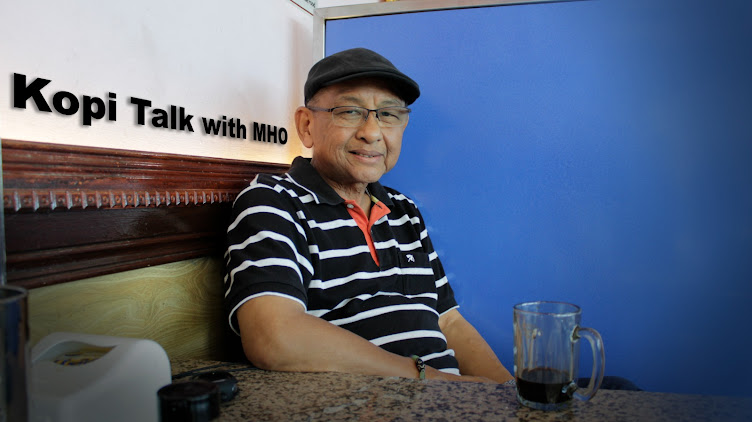
KopiTalk with MHO

One morning, a friend forwarded me an image on WhatsApp.
No caption.
No comment.
Just a screenshot.
It was a list of conditions for government scholarship recipients. Most were familiar and expected: obey the law, respect customs, follow university rules. One line, however, was clearly circled in red:
“Refrain from engaging in political activities.”
I understood immediately what my friend was trying to highlight.
I replied calmly, explaining that the rule was fair. Students under government scholarships have a responsibility to focus on their studies. They are representatives of the country, and discipline matters. In many parts of the world, similar conditions exist. There was nothing unreasonable about it.
I added one clarification.
That regulation applies while they are students. It does not automatically extend beyond graduation unless they enter the public sector. Once they return as working adults and citizens, their civic role changes. Participation, awareness, and contribution should not be confused with misconduct.
There was no reply.
Not disagreement.
Not correction.
Just silence.
That silence said everything.
It was not about the regulation itself. It was about how such rules are often interpreted beyond their literal meaning, and how caution quietly stretches from one phase of life into another. A guideline meant for students becomes, in the collective imagination, a warning for youth. A condition attached to a scholarship becomes a signal about politics itself.
This is how political fear is inherited — not through force, but through interpretation.
Not long after that exchange, I encountered a similar silence — this time in a different setting.
I had written about a foreign war vessel sighted lingering near Brunei’s Exclusive Economic Zone. The article was not alarmist. It did not accuse, speculate wildly, or call for confrontation. It simply highlighted presence, explained the strategic context, and encouraged awareness of sovereignty and security in an era of quiet geopolitics.
The reaction was revealing.
On Reddit, some mocked the piece as ignorant. Others narrowed the discussion to technicalities — freedom of navigation, legal definitions, maritime jargon — as if acknowledging presence was the same as misunderstanding international law. What was dismissed was not the legality of the situation, but the act of paying attention itself.
The discomfort was palpable.
In today’s strategic environment, geopolitics rarely announces itself through conflict. It works through normalisation — repeated presence, quiet signalling, and grey-zone activities that shift expectations without crossing red lines. These are not military provocations. They are political messages delivered softly.
Yet even a measured discussion of these realities triggered ridicule rather than engagement.
This, too, is political phobia at work.
Not fear of war, but fear of talking about power. Not resistance to aggression, but resistance to awareness. The instinct is to downplay, dismiss, or mock — as if silence itself were proof of sophistication.
But sovereignty is not protected by silence. It is protected by understanding.
Brunei is often described as an “apolitical” nation — calm, orderly, and free from the turbulence commonly associated with partisan competition. Politics rarely enters daily conversation, and many grow up believing it is something distant, unnecessary, or even dangerous. Yet beneath that calm surface, a quieter truth exists: the world does not treat Brunei as apolitical.
In today’s geopolitical landscape, politics is no longer confined to elections, parties, or public rallies. It operates through influence, resources, narratives, and networks. It flows via capacity-building programs, academic partnerships, foreign-funded NGOs, economic footholds, digital narratives, and youth engagement platforms. Modern politics often arrives without labels — wearing the language of development, cooperation, and empowerment.
For small nations, awareness is not optional.
Brunei occupies strategic ground — economically, morally, and geopolitically. Our hydrocarbon resources, our stability, and our standing within the Malay-Islamic world make us visible, whether we seek attention or not. In such an environment, neutrality without understanding is not protection. It is exposure.
This is where political literacy matters.
Political literacy does not mean agitation, opposition, or partisan rivalry. It means understanding how power moves, how influence is exercised, and how narratives shape choices. It means recognizing that even without elections, politics still happens — externally, structurally, and culturally.
Several observers have noted that while Brunei does not operate a competitive party system, a de facto governing structure exists — a network of institutions unified under national leadership and guided by MIB principles. This is not unusual for small states. But it carries an important implication: if political structures exist, even without electoral contestation, then political understanding among the rakyat remains necessary for maturity and resilience.
A politically literate society does not seek confrontation. It seeks comprehension.
Yet internally, unease persists. Political conversations are often avoided. Families caution their children, “Jangan tah ikut-ikut bepolitik.” In some workplaces, political involvement is viewed as a liability. Community leaders are required to remain visibly apolitical, reinforcing the idea that politics is something to be kept at a distance.
Decades under Emergency Laws have also left a psychological imprint. Caution has become instinctive — internalized rather than enforced. Fear persists not because of direct prohibition, but because of inherited memory.
This is where the idea of miskin politik becomes relevant.
Political poverty does not mean a lack of intelligence, loyalty, or patriotism. It means limited exposure, weak confidence, and a narrow understanding of politics as something dangerous rather than constructive. A society may be economically secure and socially orderly, yet politically unsure of its role.
When people do not understand politics, they still live with its consequences — only passively.
Here, the Malay-Islamic concept of fikir dan zikir offers guidance. Politics without zikir becomes ego and ambition without restraint. Zikir without fikir becomes passivity — devotion without discernment. Together, they shape a balanced civic character: thoughtful, disciplined, morally grounded, and aware.
Fikir sharpens awareness. Zikir anchors intention. In an age of soft power and subtle influence, awareness protects against manipulation, while spiritual grounding preserves integrity.
This balance was never foreign to Brunei’s political imagination. Even Al-Marhum Sultan Omar Ali Saifuddien III, through his Syair Perlembagaan, reminded us that governance is not merely about authority, but responsibility — a shared amanah between ruler and rakyat.
Political literacy under MIB is therefore not an imported idea. It is a rediscovery.
Brunei does not need partisan chaos. It does not need adversarial politics. What it needs is a confident citizenry — able to distinguish between toxic politics and moral participation, between influence and intrusion, between loyalty and blind silence.
The younger generation, especially Gen Y and Z, live in a world where narratives travel faster than policies and influence crosses borders effortlessly. Shielding them from political understanding does not protect them; it leaves them unprepared.
A society that does not understand politics will still be shaped by it — unknowingly.
Political literacy, then, becomes a form of national security. Not the security of fences and force, but the security of awareness, confidence, and cultural clarity. A politically literate Brunei does not panic, does not overreact, and does not unknowingly surrender its values. It observes, evaluates, and responds with calm conviction rooted in identity.
In an era where influence arrives quietly and power cloaks itself in polite language, silence is no longer a neutral stance. It is an unguarded space.
KopiTalk closes this episode with one reflection:
A nation grounded in zikir must also be strengthened by fikir. Only then can Brunei remain peaceful without being passive, stable without being unaware, and sovereign not only in form, but in understanding. (MHO/12/2025)

.jpeg)
No comments:
Post a Comment