A fertiliser plant that serves farmers across the world raises a quieter question about the farmers at home.

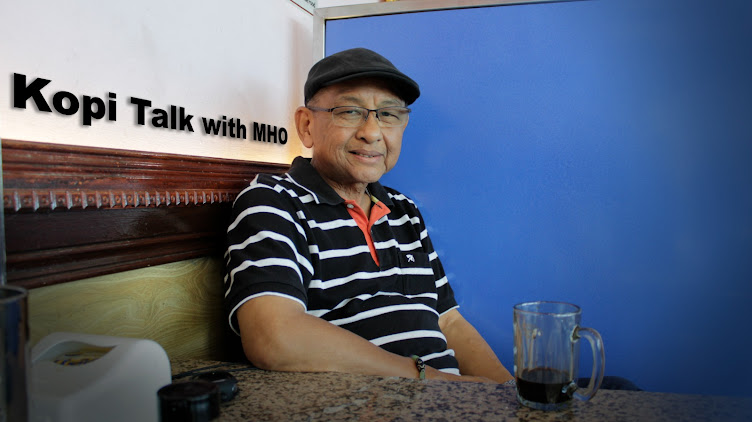
KopiTalk with MHO
By Malai Hassan Othman
Brunei can now help feed the world.
Read that again and let it settle. For a small country that spent most of its modern life selling oil, that is something worth pausing over.
Brunei Fertilizer Industries — wholly owned by the Government of Brunei Darussalam and built at Sungai Liang in the Belait District — is now one of the largest single-train fertiliser plants in Southeast Asia. Its customers stretch from Thailand and Vietnam to Australia, New Zealand, and the Americas. The plant produces 3,900 metric tonnes of granular urea every day. More than 1.3 million tonnes a year.
These are not paper targets. This is a working plant, serving real farmers in real countries, helping grow real food.
That is a point of genuine national pride. And it should be said clearly before anything else.
But pride should make us more honest, not less.
Because here is the quieter, harder question that follows: if Brunei can produce fertiliser at that scale to help farmers across the world, how much of that same strength is helping the farmers here at home?
The answer, based on official data, is more uncomfortable than we might like.
In a January 2026 briefing, officials confirmed that Brunei had reached 112 per cent self-sufficiency in eggs and 100 per cent in broiler chicken. Good progress, and it deserves acknowledgment.
But the same briefing told a different story for almost everything else on the plate. Local rice production covers only 8.5 per cent of national need. Beef and buffalo meat: 1.6 per cent. Tropical fruits: 43 per cent. Vegetables: 78 per cent. Fish and shrimp: around 63 per cent.
These are not abstract statistics. They are the gap between what Brunei grows and what Brunei eats — a gap that gets paid for every day in import bills, and felt acutely whenever global prices rise, shipping is disrupted, or a producing country faces its own crisis.
Now here is the detail that makes this picture even sharper.
Among BFI's newer products is a fertiliser specifically developed to help rice grow better. The science is straightforward: without the right nutrients in the soil, rice yields fall short — and one of the most common and correctable causes of poor rice harvests is a soil deficiency that targeted fertiliser can address directly. BFI identified this problem and developed a product to fix it.
Brunei grows 8.5 per cent of the rice it eats.
BFI has a product designed to help close exactly that kind of gap.
The question this raises is not whether BFI has done its job. The question is whether that product — and others like it — is reaching Brunei's own padi farmers, at workable prices, backed by proper soil guidance and farmer support. Or whether its main practical impact remains concentrated in larger export markets.
That question deserves a clear, public answer.
To be fair, this is not BFI's burden to carry alone. Growing more food in Brunei requires more than better fertiliser. It requires land, water, training, financing, market access and young people who see a future in farming worth pursuing. No single company solves all of that.
But BFI is not just any company.
A plant of that scale, owned by the government, sitting at the upstream end of the food chain, carries a public-interest importance that goes beyond export volumes and production records. Its value to the nation should be measured not only by what it sells abroad, but by what it enables at home.
There are signs that the domestic link is being taken more seriously. Borneo Bulletin reported in April 2026 that BFI had appointed Wasan Milling Company — which last year more than doubled Brunei's national rice milling capacity — as local distributor for domestically produced fertiliser. In May 2026, BFI and UNISSA formalised a strategic partnership through a memorandum of understanding to strengthen research and industry collaboration.
These are encouraging moves.
But encouragement is not the same as a system.
A distributor appointment does not transform agriculture. An MoU does not put more local produce on the supermarket shelf. What turns individual initiatives into genuine national progress is whether they are connected — whether there is a clear strategy linking fertiliser supply to soil testing, farmer training, crop planning, market access and measurable improvement over time. And whether anyone is tracking, honestly, whether things are actually getting better.
Are Brunei's farmers getting access to BFI's products at the right price and in the right quantities? Is fertiliser supply translating into better yields? Is the drive for rice self-sufficiency being coordinated with the very plant that produces the nutrients rice needs most?
These are not complicated questions. They are basic accountability questions. And they deserve clear answers from the agencies responsible.
Wawasan 2035 promised Brunei a diversified, sustainable economy — one that builds real capability across multiple sectors and leaves the next generation with more options than the last. Food security is part of that promise. So is making sure that strategic national assets work for the whole country, not just the export ledger.
Brunei has a consistent pattern of building impressive things, and then not quite connecting them to the next national priority. A plant gets built. A plan gets written. An MoU gets signed. And somewhere in between, the farmer in Tutong is still running the same calculations he ran five years ago, wondering whether planting another season still makes sense.
That is not necessarily a failure of vision. It is a failure to follow through.
And it is the kind of weakness that does not announce itself loudly. It builds quietly — in rising import bills, in shrinking agricultural land, in a younger generation that sees farming as a last resort rather than a serious livelihood.
Brunei does not need to grow everything itself. That is not the point. But it must decide which food categories matter most, which local sectors deserve serious long-term investment, and which national assets — BFI among them — can be deployed more deliberately to close the distance between what we produce industrially and what we can actually put on our own table.
That journey must not stop at the export jetty.
It must reach the field. The farmer. The padi grower weighing whether to plant another season.
It must reach the market.
It must reach the dinner table.
So yes — well done, BFI. Well done, Brunei.
We should be proud that this country can now help feed the world.
But pride should not stop us from asking the harder question.
Can Brunei also feed itself?
That is the real food for thought.
— Malai Hassan Othman
KopiTalk with MHO | kopitalkmho.blogspot.com

.jpeg)
No comments:
Post a Comment