For eighteen years, Brunei has spoken of diversification.
The plans are there. The roadmaps are there. The committees, consultations and policy language are all there.
But the flatlines remain.
Perhaps the harder question is not whether Brunei has ambition. It clearly does.
The harder question is whether the system around that ambition is strong enough, urgent enough, and accountable enough to deliver it.
Government job security. Missing scoreboards. Fragmented responsibility. Subsidies that soften pressure. Tourism constraints that few want to name too plainly.
These are not secrets.
They are the invisible walls between aspiration and delivery.
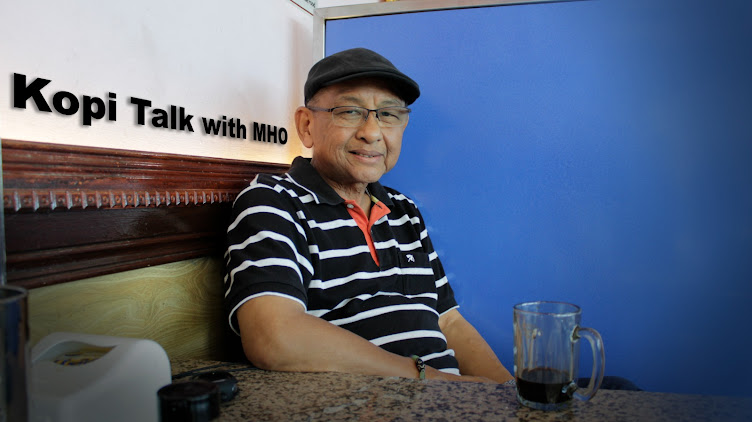
KopiTalk with MHO — Part Three: What Nobody Wants to Say
KopiTalk with MHO

WHAT NOBODY WANTS TO SAY
The structural factors behind the flatlines — and why they have rarely been named plainly.
By Malai Hassan Othman | Investigative Journalist & Policy Analyst, Brunei Darussalam
The previous two columns examined what the numbers show. This column examines what they do not — and why.
The Brunei Economic Outlook 2026 is a candid report by the standards of official analysis in a small country where institutional relationships matter and political sensitivity is real. It names declining retail, structural fiscal deficits, the feedstock dependency of downstream diversification, and the flatlines across four of five priority sectors.
These are important findings. But there are structural factors behind those findings that official reports — for entirely understandable reasons — have approached with caution.
These factors are not secrets. Anyone who has worked in or studied Brunei's economy recognises them. They surface in careful language in AMRO consultation reports, in peer-reviewed academic papers, in the footnotes of development studies. They are discussed, quietly, in offices and over coffee.
What they rarely are is said plainly. In public. With the clarity that a policy conversation about such matters requires.
That is what this column will attempt.
─────────────────────────────
THE JOB THAT NEVER NEEDED TO BE EARNED
─────────────────────────────
For two generations, the rational career path for a capable Bruneian graduate has been the same: seek government employment. Stable income. Pension. Predictable hours. Social status. The security that no private sector employer in tourism, food, ICT, or services can credibly match.
This is not a criticism of those who made that choice. It is a description of rational behaviour in a system that makes it the obvious one.
The consequence is structural. The private sector in non-oil sectors — the sectors Wawasan 2035 depends on — competes for talent against an institution offering security that no commercial enterprise can replicate. It loses that competition more often than not.
The BEO 2026 notes, carefully, that the government has adopted a stance of "no longer acting as employer of first resort." That is the stated position. The social expectation, built across decades, has not shifted at the same pace.
In measurable terms, the number of locals employed in the private sector rose from approximately 75,000 in 2019 to more than 90,000 in 2024. That is real progress. But much of that movement came from necessity during the pandemic years, when foreign workers left and firms had no alternative. The deeper question — whether young Bruneians are choosing the private sector or being drawn into it by circumstance — remains an open one.
Until the career calculus changes — not through exhortation but through a private sector that can credibly compete on opportunity and reward — the four flatlined sectors will continue to struggle for the talent they need to grow.
─────────────────────────────
THE PLAN WITHOUT A SCOREBOARD
─────────────────────────────
Here is a structural feature of Wawasan 2035 that is rarely discussed publicly: it has no hard numerical targets per sector.
No percentage of GDP that ICT must reach by 2030. No tourist arrival number that constitutes success or failure. No employment benchmark for the food sector. No investment threshold for services.
The BEO 2026 confirms this. Wawasan 2035, it notes, "does not set out rigid numerical targets such as specifying a percentage GDP share for each sector or a fixed number of jobs per industry." The operational roadmap translates the vision into priorities and directions. Not into measurable, time-bound outcomes with clear ownership attached.
Without a scoreboard, there is no accountability. Without accountability, there is no urgency.
Without urgency, there is activity — committees, strategies, roadmaps, MOUs, consultations, launches — but not necessarily results.
This is not a conspiracy. It is a design feature. And it is the architecture that has allowed eighteen years to pass, four sectors to flatline, and the distance between Wawasan 2035's ambitions and their delivery to remain, as yet, without a formal owner.
The gap between intention and execution is real. The gap between execution and accountability has, in the absence of hard targets, remained difficult to measure.
─────────────────────────────
EVERYONE'S PROBLEM IS NOBODY'S PROBLEM
─────────────────────────────
Ask a straightforward question: who is accountable if Brunei's tourism sector falls short of its 2035 ambitions?
The Ministry of Primary Resources and Tourism holds the mandate. The Brunei Economic Development Board courts investors. The Ministry of Finance and Economy controls the budget. Local authorities govern land use. Immigration determines visa policy. Halal certification falls under a separate institutional domain entirely.
An investor navigating this landscape does not encounter a single government. They encounter a series of offices, each with its own process, its own timeline, and its own set of approvals. Every door has a key. Finding the person who holds all the keys is a different matter.
The same fragmentation applies to food security, ICT, and professional services. Multiple agencies with overlapping mandates. Multiple planning cycles that do not always align. Multiple approval layers that, in a more streamlined system, could move faster.
The AMRO 2025 consultation report identifies constraints related to Brunei's "bureaucracy" alongside labour market and cultural factors. The BEO 2026 calls for "bankable roadmaps" with "clear links to power reliability and skills development" — a call that reflects both the distance still to be covered and the urgency of covering it before 2035.
When responsibility is spread across enough agencies, it is difficult to say who answers for the overall result. This is not a failure of individuals. It is a structural challenge. And structural challenges can be addressed — but only if they are named clearly enough to be acted on.
─────────────────────────────
THE SUBSIDY THAT COSTS MORE THAN MONEY
─────────────────────────────
Energy subsidies account for approximately 6 percent of GDP, according to the BEO 2026. That is the fiscal cost. The economic cost is less frequently examined.
Subsidised fuel, electricity, and other household provisions reduce the pressure that, in other economies, drives enterprise. When the cost of living is cushioned substantially by the state, the push that motivates people to build businesses, take commercial risks, and create new industries is moderated. Not removed — but moderated.
The evidence appears in an unexpected part of the BEO 2026. Brunei's financial institutions have grown their foreign lending portfolio from 11 percent of total loans in 2020 to 31 percent by the third quarter of 2025 — the highest level on record.
In plain terms: capital is finding its opportunities abroad.
The domestic private sector, in the non-oil sectors Wawasan 2035 depends on, is not generating the investment pipeline that a diversifying economy should be producing. Local banks are not making a poor decision. They are responding to a market that is not yet offering enough to keep that capital at home.
Subsidy reform is the hardest policy conversation in Brunei. Not because the economics are complicated — they are not — but because subsidies are part of the social contract. They are the tangible expression of what oil wealth has meant for ordinary Bruneians across two generations. Reforming them requires touching something more than a budget line.
But the BEO 2026 is clear: a credible medium-term fiscal framework requires rationalisation of energy subsidies and a broadening of the non-oil revenue base. The fiscal arithmetic demands it. The elevated oil prices from the Middle East conflict offer a rare window to begin the transition with a buffer in place.
That window will not remain open indefinitely.
─────────────────────────────
THE HONEST TOURISM RECKONING
─────────────────────────────
This is the observation that successive tourism strategies have tended to frame carefully rather than resolve directly.
Brunei's tourism offering — pristine rainforest, Islamic heritage, safety, quiet authenticity — appeals to a specific and relatively small segment of the global market. It does not appeal, structurally, to the majority of travellers who drive volume tourism in Southeast Asia.
The government's own strategy acknowledges this implicitly by adopting a high-value, low-volume regenerative model centred on eco-tourism, cultural heritage, and wellness. That is the appropriate response to real constraints. The BEO 2026 itself rates tourism's 2035 viability as "low" — the only sector to receive that assessment — noting that "strict local regulations make it difficult to compete with mass-market heavyweights like Bali, Phuket, or Sabah."
The structural constraints are specific. Ground transport for independent travellers remains limited. Hotel room inventory is insufficient for scale. Air connectivity has shrunk from 29 routes before the pandemic to 22 today. The high-value visitor that the regenerative model targets requires a premium product — in Temburong eco-infrastructure, wellness facilities, trained guides, and digital marketing — that has not yet been built at the pace the model requires.
The honest conversation is this: tourism, as currently structured, may contribute more reliably to national identity and cultural positioning than to GDP and employment at the scale Wawasan 2035 originally envisaged. Acknowledging that openly would allow policy attention and investment to concentrate where returns are demonstrably higher — in logistics, aquaculture, professional services, and ICT. That shift requires naming the constraint clearly first.
─────────────────────────────
WHY THIS MATTERS FOR WHAT COMES NEXT
─────────────────────────────
None of the five factors above are secrets.
None require insider access or classified information. They are observable, documented, and acknowledged — in careful language — across multiple official and academic sources. What they have lacked is a plain public naming. A clear statement that connects these structural realities to the outcome the data shows: eighteen years, four flatlines, nine years remaining.
These are not technical problems. They cannot be resolved by another strategy document, another stakeholder consultation, another roadmap placed beside the previous one.
They require political will. And political will, in any system, grows from honest public conversation — the kind that makes it easier to act than to wait.
In the final column, we ask what accountability actually looks like in practice — not in theory, but in the specific, achievable steps that the remaining nine years still make possible.
Nine years is not enough to do everything.
It is enough to do the right things.
─────────────────────────────
Next: Part Four — "The Reckoning We Cannot Defer"
Data sources: Brunei Economic Outlook 2026 (CSPS, April 2026); BDKI 2025 (DEPS); AMRO 2025 Annual Consultation Report on Brunei Darussalam; BEO 2026 Labour Force Survey data; UBD Institute of Policy Studies Policy Brief 2024; Department of Economic Planning and Statistics quarterly reports 2024–2025.

.jpeg)
No comments:
Post a Comment