Teachers got their applause. Pupils got promising PISA headlines. A new centre got the royal go-ahead. But when a teacher is away, who gets the extra class? His Majesty has called for better management of relief teachers. The real report card begins when the ceremony ends and Monday’s timetable lands.

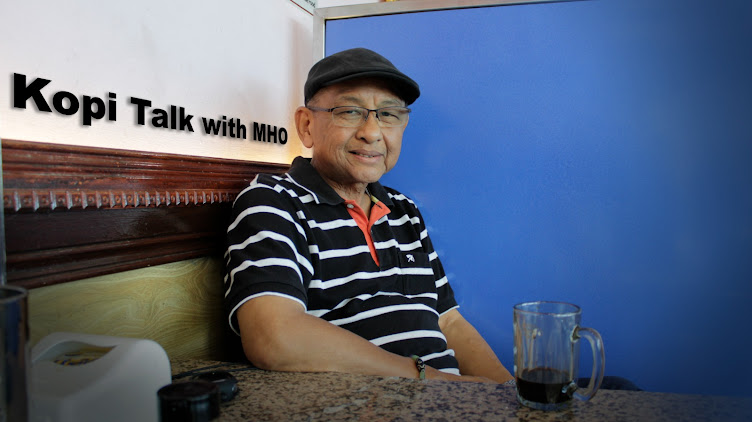
KopiTalk with MHO
Sultan calls for better relief-teacher management as early intervention centre gets go-ahead
At the 36th Teachers’ Day celebration, His Majesty links teachers’ wellbeing to classroom learning and approves an early intervention centre for children aged two to four.
BERAKAS, 24 September 2026 — His Majesty Sultan Haji Hassanal Bolkiah Mu’izzaddin Waddaulah called for better management of relief teachers to protect teachers’ wellbeing and the quality of lessons.
Speaking at Brunei’s 36th Teachers’ Day celebration at the International Convention Centre yesterday, the Sultan also approved an early childhood education intervention centre for children aged two to four from 2027.
His Majesty said the burden of teaching and other duties had long received his serious attention. Teachers’ wellbeing would remain a government priority, he said, urging integrated and effective improvements to the management of Guru Relif.
The titah did not spell out the changes envisaged. How relief cover is organised affects teachers called upon to fill gaps, their absent colleagues and pupils whose lessons must continue.
His Majesty linked teacher commitment to pupils’ success. Citing PISA 2025, the OECD’s Programme for International Student Assessment, he said Brunei pupils rated teacher support more positively than the OECD average.
The OECD’s country note bears this out. In science lessons, 85 per cent said teachers gave extra help when needed, against an OECD average of 73 per cent. Eighty-two per cent said teachers continued until pupils understood.
His Majesty also praised Brunei’s showing in computational problem-solving: more than 70 per cent of pupils performed above expectations, placing the country second on that measure. The OECD puts the share at 80.5 per cent, second among 84 systems.
This compares performance with what pupils’ science results would predict. Brunei’s average computational problem-solving score was 496, below the OECD average of 500. The second-place ranking is a relative-performance measure, not an overall subject ranking.
His Majesty said Brunei was among a few countries where performance had improved in science, mathematics and reading. The OECD reports significant gains in science and reading against 2018, Brunei’s first PISA cycle. Against 2022, mathematics fell while science and reading were broadly unchanged.
Congratulating teachers, His Majesty said those gains could not have been achieved without their commitment and sacrifice. Their amanah extended beyond knowledge and technology to forming pupils’ character, conduct and values.
He urged the education and religious affairs ministries to refine the curriculum together and strengthen good values and Melayu Islam Beraja ethics from primary school, when character formation begins.
That emphasis on the early years led to the announcement of the National Intervention Centre for Early Childhood Education, or NICEe, for children aged two to four from 2027.
His Majesty said inclusive early education should offer every child, regardless of background or ability, an equal chance to develop. The education, health, culture, youth and sports, and home affairs ministries will jointly lead the centre.
The titah gave no location, capacity, referral route or list of services. These details will determine how families obtain help and whether children in every district can reach it.
The celebration, themed “Guru Pemangkin Pendidikan Lestari dan Inovasi” (Teachers as Catalysts for Sustainable Education and Innovation), honoured 43 recipients in four award categories. His Majesty presented the awards and toured a nine-booth exhibition on technology, sustainability, green education and financial literacy.
In her address, Education Minister Yang Berhormat Datin Seri Setia Dr Hajah Romaizah binti Haji Mohd Salleh said 4,281 teachers had received AI literacy certification through professional development on ethical use. Another 772, including 22 from the Department of Islamic Studies, attended a workshop on guidance for AI in schools.
The Minister said the Brunei Examinations Board was preparing to handle examinations and certification in Bahasa Melayu, Malay Literature and Islamic Religious Knowledge at upper secondary and pre-university levels from 2028. She also cited digital literacy standards, a School Innovation Award and updated procedures for private institutions.
She said four ministries had begun developing a national early childhood care and education framework from birth to age five, covering education, health, nutrition, family protection and Melayu Islam Beraja values.
The framework involves Education, Religious Affairs, Culture, Youth and Sports, and Health. NICEe involves Home Affairs in place of Religious Affairs. How the two initiatives will work together remains to be explained.
For teachers, the immediate test is whether better relief cover eases the working day. For families, it is whether the promised centre turns early help into a service they can actually reach.


No comments:
Post a Comment