A nation’s sovereignty is only as strong as the public service guarding it. But what happens when fear replaces integrity, bureaucracy stifles initiative, and citizens are left waiting? His Majesty calls for transformation. The question is whether those entrusted with amanah are prepared to act, not merely obey.

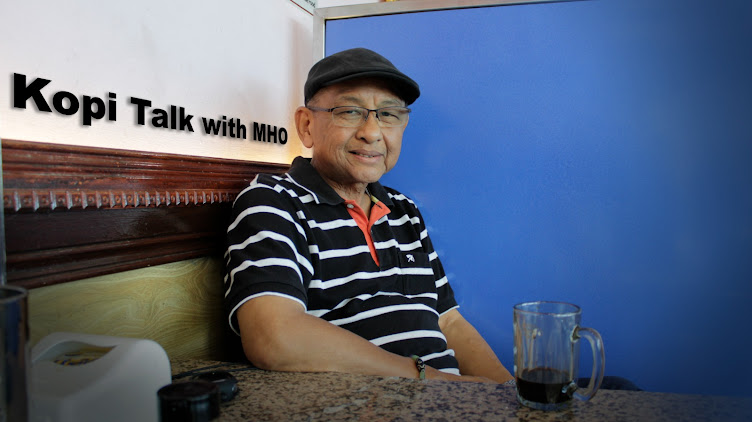
K O P I T A L K W I T H M H O
His Majesty calls the public service the nation’s wall of sovereignty. The titah also shows how
that wall must be built.
By Malai Hassan Othman
Benteng kedaulatan. A wall that guards the nation's sovereignty.
That is how His Majesty Sultan Haji Hassanal Bolkiah Mu'izzaddin Waddaulah ibni Al-Marhum
Sultan Haji Omar 'Ali Saifuddien Sa'adul Khairi Waddien, Sultan and Yang Di-Pertuan of Brunei
Darussalam, described the public service at the close of the 33rd Public Service Day in Berakas on
29 October.
His Majesty said sovereignty depends not on physical defence alone, but on effective
administration. An honest officer defends the country against corruption, abuse of power and the
collapse of institutions.
The logic is simple. If the public service is weak, the wall is weak. And a weak wall leaves
everything it guards exposed: the nation, its people, the Monarchy and the faith.
Integrity is therefore not only a personal virtue. It is a matter of national sovereignty.
Every wall invites the same question: what is it made of? A public service built to protect its own
status quo can stand for years. It keeps out threats, but also ideas and reform. Sooner or later, it
cracks from within.
The titah points to a different material: integrity, initiative and service.
Rooted in Melayu Islam Beraja (MIB), public office is an amanah to the Raja, nation and people.
Why now
Vendors have waited. In June 2024, the Ministry of Finance and Economy publicly apologised for
payment delays following the introduction of a new treasury system. For a small contractor, an
unpaid invoice is not paperwork. It is wages, rent and a bank loan.
Projects have stalled. Official figures as at 31 March 2024 showed that only 54 of 221 projects
under the 11th National Development Plan had been completed. In August 2026, the Council again
heard about the causes of project delays.
The service struggles to house its own. On 3 August, the Legislative Council heard that 1,092 civil
servants were on the Public Service Department's waiting list for government housing, including
684 in Division IV, with average waits of one to four years.
The poor have waited too. In August, meeting the Brunei Islamic Religious Council, His Majesty
questioned delays in assistance to asnaf fakir miskin. Why, His Majesty asked, had such matters
been allowed to continue for so long? Earlier warnings, His Majesty said, had been like mencurah
air di daun keladi.
These are not merely failures of delivery. They can breed disappointment, frustration and a loss of
keyakinan in the administration, eroding the loyalty and trust that hold the wall together.
That is the backdrop to 29 October, and the real test of the wall.
A wall of fear
A wall can be built from fear. Fear of the superior. Fear of the mistake that damages a career. Fear
of saying aloud what everyone already knows.
Fear does not produce integrity. It produces caution of the wrong kind.
The frightened officer does not decide. He minutes the file upwards. He finds the regulation that
lets him say no, because no has never cost anyone a promotion.
One online commenter, recalling an attachment in a government office, described ideas ending up
in the dustbin, only to reappear under someone else's name. The junior was rejected, not the idea.
Tikam belakang, the commenter called it.
Every office knows the little Napoleon. He rules a small kingdom of files, treating requests as
favours, juniors as threats and questions as insubordination.
Petty authoritarianism corrodes the very integrity His Majesty expects the public service to defend.
When backstabbing becomes office culture and bullying becomes management style, initiative
dies. Officers who fear questioning a process will eventually stop questioning anything.
A workplace where an officer can raise a concern or report misconduct without punishment is not a
perk. It is part of the wall.
This is not an argument against discipline or accountability. The danger begins when compliance
becomes a hiding place from judgement.
A wall of amanah
His Majesty reminded officers that their posts are not merely jobs, but amalan yang
dipertanggungjawabkan oleh Raja dan Negara — responsibilities entrusted by the Raja and nation.
Nobody should need frightening into honouring an amanah.
Support for leadership, the titah said, is bukan sekadar retorik atau simbolik. It must be
demonstrated through diligent work and precise implementation.
Loyalty is proven at the desk, not performed in the meeting room.
Jangan hanya setakat mendengar, tetapi perlu melaksanakannya, dan jangan juga sekadar setuju,
tetapi perlu menyempurnakannya.
"Do not merely listen; act upon what you hear. And do not merely agree; see it through to
completion."
Fear produces attentive listeners and agreeable subordinates. Finished work requires officers
willing to own decisions and risk honest mistakes.
The stamp and the counter
Anyone who has stood at a government counter knows the other side. An application returned for
one missing photocopy. A complaint answered with a regulation instead of a solution.
A procedure should be the road to a decision, not a toll gate.
In August, Yang Berhormat Dr Awang Haji Mahali bin Haji Momin warned the Legislative
Council against a culture of passing responsibility between ministries. Necessary bureaucracy must
not become red tape.
His Majesty posed a more fundamental test: have public services truly made people's lives easier
while demonstrating loyalty to the Raja and nation?
In that test, easing the lives of the rakyat is how loyalty is shown. An officer who delays a citizen
to assert his importance is not guarding the wall. He is loosening a brick.
His Majesty's instruction was plain: perbaikilah dengan tindakan dan bukan keluhan. Correct them
through action, not complaints.
One online reader asked whether transformation begins after the meeting or after makan.
Another suggested inspecting problems at night and in heavy rain, before complaints reach Talian
Darussalam.
That is turun padang. Go to the problem instead of waiting for it to queue at the counter.
What the index cannot see
His Majesty noted Brunei's position in Transparency International's 2025 Corruption Perceptions
Index (CPI): 31st among 182 countries and second in ASEAN after Singapore.
Transparency International gave Brunei a score of 63 out of 100. But the CPI measures perceived
public-sector corruption, not how long an application takes. A clean ranking and an efficient
service are cousins, not twins.
A service where juniors fear raising problems will send good news upwards. Fear does not only
slow the service. It blinds it.
So a few questions for the Public Service Department.
Are agencies publishing actual performance against their Tekad Pemedulian Orang Ramai (TPOR),
or Client's Charter, commitments? When targets are missed, what changes? Are officers rewarded
for solving problems or avoiding mistakes? Can juniors report bottlenecks or bullying without
risking their careers?
The wall cannot be repaired if those responsible for maintaining it are afraid to report the cracks.
Muraqabah
Islam has a word for this integrity.
Muraqabah is the awareness that Allah sees what the supervisor does not.
Rules enforced by watching last only while somebody watches. Integrity rooted in muraqabah
remains at the desk after everyone has gone home.
His Majesty closed with four qualities: obedience, wisdom, readiness for change and steadfast
values.
Taat, bijaksana, pantas, teguh.
Obedience can be commanded. Wisdom cannot. Nor can initiative be frightened into existence.
Benteng kedaulatan will not be built with the stick, nor bought with the carrot.
It is laid brick by brick, by officers who keep their amanah when nobody is watching.

