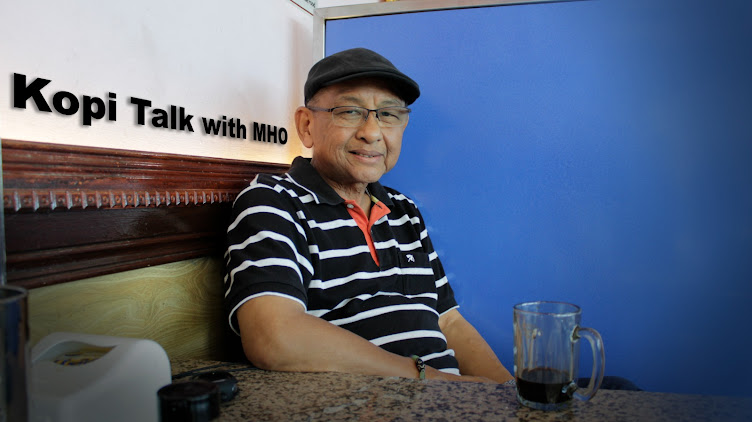
KOPITALK WITH MHO
His Majesty has turned the national youth theme from readiness to leadership. The agencies that serve young people have been shown where the work lies.

For seven years, National Youth Day carried one theme: Belia Siaga Masa Depan, or Future-Ready Youth. On 8 October 2026, at the International Convention Centre, that changed.
His Majesty Sultan Haji Hassanal Bolkiah Mu’izzaddin Waddaulah ibni Al-Marhum Sultan Haji Omar ‘Ali Saifuddien Sa’adul Khairi Waddien, Sultan and Yang Di-Pertuan of Brunei Darussalam, told the 21st National Youth Day celebration that the choice of a new theme this year was his own.
It is Belia Peneraju Negara, or Youth Leading the Nation. His Majesty said the theme suits the role of youth as the pulse of development.
For more than two decades, the country has raised its expectations of the young one step at a time.
The first National Youth Policy came in 2002. National Youth Day followed in 2006.
National service, the Program Khidmat Bakti Negara (PKBN), began as a pilot in December 2011. In December 2020 the youth policy was revised to run to 2035.
Each step asked a little more of young Bruneians. This year’s theme asks the most.
The two themes differ in tense. Ready is something a person becomes for later. Leading is done now, in front of other people.
That raises a practical question: where can young people exercise that leadership?
A theme His Majesty chose himself sets a standard. For agencies with youth in their mandate, it is a reason to look hard at the opportunities they provide.
His Majesty also called on youth to seize opportunities, use technology and help drive a progressive, resilient economy. By that measure, leadership reaches into working life.
The number, and what sits beneath it
His Majesty said he was glad to learn that the Youth Development Index rose from 65.1 in 2018 to 69.0 in 2025, the highest since the index began in 2008.
Two areas drove the rise, the titah said: Values and Identities, and Education. On identity and schooling, the numbers are moving the right way.
The titah then named the areas that still need strengthening: community engagement and financial literacy among youth. Effort on both, His Majesty said, must be continuous.
Education and job opportunities must also keep being strengthened, His Majesty added, so that youth development is carried out in a balanced way.
The areas needing attention were named from the national stage, in the same breath as the record score.
Set the new theme beside those two areas and the connection is clear. Leadership is practised in the community: in the kampung, on the mosque committee, in the youth association.
Leading also takes money sense. A young person handling a first salary or a first loan learns quickly whether independence begins there or stalls.
Whose desk
His Majesty welcomed the Ministry of Culture, Youth and Sports’ work to review the National Youth Policy and Strategy, known by its Malay initials DBNS.
His Majesty advised that the review draw on the latest index findings and take account of changes in the economy, in technology and in what young people need.
The next index will show whether those two scores have moved. What it cannot show is how much responsibility young people were given.
The scores for community engagement and financial literacy deserve the widest circulation, each with a target and a date for reporting progress.
Young people would also want to know when the reviewed policy will be ready, and how their own voices are being gathered while it is written.
On volunteerism, the titah named the partners: youth, educational institutions, the Mukim and Village Consultative Councils, and other community groups. Their cooperation, His Majesty said, is very important.
The councils work close to the ground. Two figures would say much: how many young people sit on them, and how many council projects young people lead.
Financial literacy crosses several desks: schools, banks, the Brunei Darussalam Central Bank, employers. A task shared that widely needs one desk that answers for it.
The titah’s line on job opportunities is brief. The agencies that plan manpower and match jobseekers hold the figures that will show whether a generation asked to lead has somewhere to do it.
Six months
His Majesty took note that the PKBN pilot now runs for six months, up from three.
It carries two new modules: Siap Siaga Masa Depan, on readiness for the future, and a Civil Defence Programme.
His Majesty advised that the pilot’s effectiveness be evaluated thoroughly, so that PKBN has a real effect on the identity and discipline of youth. His Majesty also called on more young people to join.
For the organisers, that points to an assessment whose measures are known early and whose findings reach participants and their families.
Practical skills would strengthen the case for joining. A certificate helps. A skill an employer recognises helps more.
The gaps have been named. A young Bruneian is twenty only once.

.jpeg)
No comments:
Post a Comment