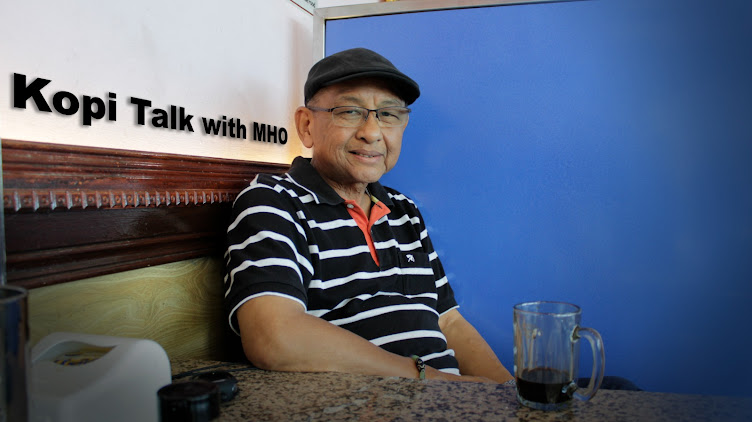
At 78, a man who served his district for nearly thirty years has lost his pension and free medical care. Assistance channels exist. He did not know where to ask. When welfare moves online, who finds those without the means or skills to apply? We found him while planning tourism.

A 78-year-old in a Temburong longhouse has lost his pension and his free medical care. Assistance channels exist, but he did not know where to ask.
By Malai Hassan Othman
We went to Temburong to prepare a day trip. The National Development Party, whose advisory board I chair, plans to bring visitors from Belait as a small contribution to Brunei Visit Year 2027.

During the visit, we called on party members at Rumah Panjang Sumbiling Baharu and spent time talking with residents, among them the elders of the longhouse.
One issue caught our attention: medical care for permanent residents who hold foreign passports.
One of the elders is 78. I will not name him. His wife and children are Brunei citizens. He is a permanent resident with a foreign passport.
He told us he worked at the Temburong District Office for almost thirty years, paid by the day. After he retired, he received the $250 monthly old-age pension.
He no longer receives it, and his treatment at government clinics is no longer free. He depends on his family to support him.
He asked whether any help was available to a man in his position. He did not know there was anywhere to ask.
He said his friends face the same difficulty, and he put their number in Temburong at about 800. That is his estimate, not a verified count. It is unclear precisely whom it includes.
Two decisions, four years apart
The pension went first. From 1 October 2021, the old-age pension was limited to citizens and stateless permanent residents under an amended Old Age and Disability Pensions Act.
The Ministry of Culture, Youth and Sports said then that more than 2,000 permanent residents holding foreign citizenship would stop receiving it.
Free medical care went second. Since 1 July 2025, permanent residents with foreign nationality and the foreign spouses of citizens have generally been required to pay for treatment at government hospitals, subject to exemptions.
Dato Dr Haji Mohd Isham Haji Jaafar, speaking as Minister of Health that month, said the government had spent close to $70 million in a year on their care.
He said the ministry's budget had grown from $391 million to more than $652 million in three years, and he cited cases of people marrying citizens to obtain cancer treatment.
I do not quarrel with the arithmetic. A small country cannot carry every cost indefinitely, and abuse of that kind deserves a closed door.
A man of 78 who served a district office for almost thirty years is a different case.
The general charging policy distinguishes by nationality. Long residence and public service do not, in themselves, secure the exemption he previously enjoyed.
Help that waits to be asked
The Ministry of Health did leave a door open. Patients facing difficulty paying can be assessed by medical social workers and the ministry’s finance division.
Help may then come from the Patients' Relief Fund, the Brunei Islamic Religious Council (MUIB), the Sultan Haji Hassanal Bolkiah Foundation or an instalment plan. Those who cannot afford care, the minister said, should "let us know".
The weakness lies in that phrase. An invitation to ask is of little use to someone who does not know whom to approach. Fear of a bill can make that distance greater.
The man at Sumbiling Baharu told me he did not know the door was there.
Insurance is the other answer on offer.
At the same press conference, Dato Haji Ahmaddin Haji Abd Rahman, as Minister of Home Affairs, said Takaful Brunei planned to extend medical cover up to the age of 95, with higher premiums for existing illness.
I would like to see the quotation offered to a man of 78 with no pension.
Welfare follows the same pattern. Since July 2020, applications for monthly assistance and for zakat, the obligatory alms, have gone through Sistem Kebajikan Negara (SKN), the National Welfare System.
SKN is a digital platform. By March 2025, it had received more than 68,000 applications.
Digital applications bring another barrier. In my report dated 18 October 2025, participants at a BITAR dialogue in Belait described difficulties applying online.
Some had never owned a smartphone or computer. Others were unfamiliar with the internet or struggled with missing documents and unstable connections. These were obstacles they described themselves.
An online application may be convenient for someone with a device and the skills to use it. For someone without either, applying depends on finding another person to help.
At SKN’s introduction, assistance with registration was announced through officers of the Community Development Department (JAPEM) and village heads. The question is whether that support reaches people who do not know it exists.
Application figures tell us how many requests reach the system. They do not tell us how many people need help but have yet to apply.
The remedies the Ministry of Culture, Youth and Sports described to the Legislative Council (LegCo) that month were job matching, skills training and small business grants. They suit people who can still work.
Three ministries each hold part of his case. Health set the charges. Culture, Youth and Sports administered the pension and runs welfare.
Home Affairs oversees his resident status and the district offices, to which the penghulu and ketua kampung, the heads of mukim and village, answer.
A body exists to join them, the National Council for Social Issues. I would like to know whether these elders have ever come before it.
In 2021, the ministry said pension payments would stop whether they were made through banks or through village heads.
Where a village head handed over the pension each month, he knows which hands stopped receiving it.
The former pension rolls offer a starting point for finding those affected. Assistance channels also exist. What remains unclear is whether anyone was tasked with contacting these elders and explaining their options.
His account does not establish that no outreach has taken place. It does establish that, when we met him, he did not know where to seek help.
Turun padang
A familiar phrase describes the approach needed here: turun padang, going down to the field. The practice is on the record.
In March 2025, Pehin Udana Khatib Dato Paduka Seri Setia Ustaz Haji Awang Badaruddin bin Pengarah Dato Paduka Haji Awang Othman, the then Minister of Religious Affairs, described it to LegCo.
In the 1960s and 70s, he said, Welfare Department officers went down to the villages, met the ketua kampung and asked who there should be receiving help.
He explained why they had to go. The poorest would not come forward. They were malu, ashamed, to call themselves fakir or miskin, destitute or poor, and relatives discouraged them from applying.
The minister believes that reluctance has gone. After 2009, he said, when zakat accumulated over many years was released, applicants came forward in numbers he likened to a floodgate.
A rise in applications does not mean everyone knows how to seek help. At Sumbiling Baharu, a man of 78 put his question to a visiting political party.
On 24 August this year, His Majesty Sultan Haji Hassanal Bolkiah Mu'izzaddin Waddaulah ibni Al-Marhum Sultan Haji Omar 'Ali Saifuddien Sa'adul Khairi Waddien, Sultan and Yang Di-Pertuan of Brunei Darussalam, addressed members of MUIB on the management of zakat.
In that titah, or royal address, His Majesty said MUIB "tidak boleh hanya sebagai pemerhati tetapi mesti berada di barisan hadapan": it cannot be only an observer and must be at the forefront.
His Majesty did not wish to hear again of applications left pending or help arriving late, and asked for results that could be seen within four months.
Earlier advice, His Majesty said, had been "umpama mencurah air ke daun keladi", like water poured on a yam leaf.
In 2020, on an unscheduled visit to the Ministry of Religious Affairs, His Majesty had spoken of applicants returning to the MUIB office repeatedly to settle their cases.
The August titah was addressed to the Council, the ministry and the zakat department. It also told them to use the existing machinery of government.
The penghulu, the ketua kampung and the district offices are part of that machinery. In my reading, the standard extends to the welfare officer and the medical social worker as well.
The principle has an older precedent. Abu Ubaid’s Kitab al-Amwal records instructions from the Umayyad caliph Umar ibn Abd al-Aziz to an official who reported a surplus: find those in debt and settle what they owed.
The historical account is no substitute for today’s eligibility rules. It illustrates a duty to seek out need, rather than assume that everyone in need will come forward.
A question for MUIB
The Ministry of Health named MUIB among the places these residents may turn. I do not know what happens when they do, so I put it as a question.
The Minister of Religious Affairs told LegCo that withholding zakat from those entitled to it is wrong in law, "salah bagi negara, bagi kerajaan": wrong for the state and for the government.
The National Council for Social Issues adopted a Syariah-aligned definition of poverty: a person unable to earn enough for a decent life for himself and his dependants.
As reported, that definition does not mention nationality. Eligibility for particular assistance schemes is a separate question.
Can a Muslim of long residence in Temburong apply as asnaf fakir miskin, whatever passport he holds? How many like him are among the more than 14,000 His Majesty cited in August?
A second question follows. Not every elder in a Temburong longhouse is Muslim. For those who are not, I would like to know which of the Ministry of Health's four avenues is open.
A place to begin
In March 2025, the Ministry of Culture, Youth and Sports told LegCo it was reviewing the guidelines for monthly welfare assistance and preparing the next five-year poverty eradication plan.
If those documents are still being written, either could provide for elders of long residence whose wives and children are Bruneian. If they are finished, the public should be told what they say.
A practical start would be to give one office the task of finding these elders and visiting them. Village heads and district officers could show the way.
He gave the District Office almost thirty years of mornings. The pension came and then stopped. The clinic was free, and then it was not.
Assistance channels exist, and so do the officers and a council to join the ministries. His Majesty has asked the zakat authorities for results within four months, which runs to late December.
The longhouse is not hard to find. We found it on a tourism errand.

.jpeg)
No comments:
Post a Comment