One wage, four lives. On BND500 a month, an illustrative family of four has BND4.17 each daily for every expense. Brunei’s subsidies help, but what opportunities remain for its children? Wawasan 2035 counts on their potential. Are our wages and safety nets giving that potential a fair chance to flourish?

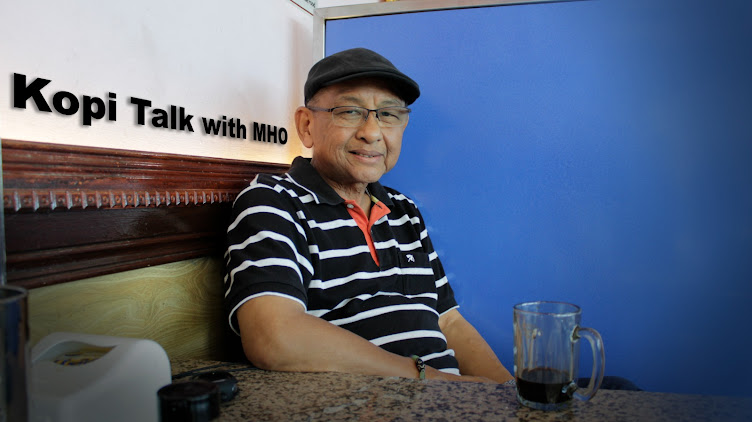
KopiTalk with MHO
An anonymous father describes life on BND660 and asks for prayers. His account raises a question about the generation Wawasan 2035 is counting on.
By Malai Hassan Othman
A father has written publicly, without his name, about life on BND660 a month. He says he supports a wife and children, has lost his rented home and had his car repossessed.
He says he has sold household possessions and taken whatever extra work he could find. Little remains but clothes, by his account. He asks for prayers rather than money.
His account has not been independently verified, including whether he sought or received assistance. It does not prove that an agency failed him. The response nevertheless deserves attention.
Much of the response online turned to blame. He should not have married on that income, some said. He should not have had children he could not afford to feed.
Whatever one thinks of the parents’ choices, the children made none. They did not choose the wage, the rent or the repossession. They simply live inside the result.
Children in such families belong to the generation expected to realise Wawasan 2035. Its first goal is to produce educated, highly skilled, and accomplished people. That ambition begins in their homes.
In my earlier series, Between Survival and Dignity, I examined the distance between minimum pay and a decent livelihood. This essay is about the children growing up within that distance.
The available wage and price figures do not directly measure child deprivation. Understanding how many children lack essentials requires evidence about households, their resources and their unmet needs.
Brunei introduced its minimum wage in July 2023, first for banking, finance, and information and communications technology. It set BND500 a month for full-time workers and BND2.62 an hour for part-timers.
From April 2025, coverage widened to seven specified industries. It includes designated medical, educational, tourism, professional and security activities; the policy does not yet cover every private-sector worker.
The policy aimed to protect workers from excessively low pay and meet their subsistence needs. It was a real step forward. Household adequacy also depends on dependants, essential expenses and available support.
The father’s claimed BND660 exceeds that floor, although his employment and the policy’s application to him are unknown. Earning above the minimum does not itself establish household security.
Now take the floor itself. Picture two adults and two children living on BND500. Over a 30-day month, that is BND16.67 a day, before retirement contributions are deducted.
Divided equally, that is BND4.17 per person daily: an illustrative share of gross household income, not a food allowance or poverty threshold. All cash expenses draw on the same purse.
Fairness requires the full picture. Government-funded healthcare and education for eligible residents, together with rice and fuel subsidies, reduce household costs. Any honest assessment must count these protections.
Family counts too. A room from parents, grandparents minding the children, groceries shared between households: such help can make a thin wage workable. Two families on the same pay may live very differently.
Yet families may still face costs for uniforms, shoes, stationery and transport, depending on existing provision. Subsidised rice supplies a staple; a varied diet requires other foods too.
Nor can family support be assumed. A household without relatives able to help has fewer resources to draw upon when earnings fall short or an unexpected expense arrives.
Wages offer little cushion. The Department of Economic Planning and Statistics (DEPS) put median monthly employment income in 2025 at BND950 overall and BND1,100 for local workers.
The overall median fell from BND1,000 in 2024. BND950 marks the midpoint of employment income, not household resources. The figures cannot establish how many children experience deprivation.
Prices are rising slowly overall, which offers little comfort. DEPS recorded overall inflation of 0.1 per cent for January to August 2026, compared with the same period in 2025.
Food tells a different story. Food and non-alcoholic beverages cost 1.7 per cent more in August 2026 than a year earlier. For a family already short, small rises reduce what remains for other needs.
None of this is new. In January 2021, before the policy took effect, a Universiti Brunei Darussalam research project by Syasya Nur Qistina binti Yahya surveyed 99 people online about a minimum wage.
Some respondents considered BND500 workable without rent or dependants; others questioned its adequacy. This small, self-selected survey cannot represent all workers, but highlights the importance of household circumstances.
The harder question is what happens when a family asks for help.
Brunei has the channels. The National Welfare System (SKN) takes applications for Department of Community Development (JAPEM) monthly assistance, and for the Brunei Islamic Religious Council’s zakat aid to asnaf fakir miskin.
Applicants can visit agency offices or call Welfare Line 141. The practical questions concern how needs are assessed, how decisions are communicated and what support is available in urgent cases.
Verification protects fairness and public money. Families still need food, accommodation and utilities while applications are assessed. Clear information about decisions and urgent support helps them plan.
This is where turun padang matters. Home visits can reveal conditions that an application may not fully convey. Their value depends on assessment being followed by decisions and communication.
Other countries have approached the same problem from the child’s side.
Singapore pairs its Progressive Wage Model with Workfare support for eligible lower-wage workers. School financial assistance also helps eligible pupils with meals and transport.
Japan provides child allowance and municipal school attendance assistance for eligible families, including help with school supplies and lunches. Support addresses expenses beyond tuition.
Finland gives every pupil a free school meal, from pre-primary to upper secondary. The need is met directly, at school, whatever the parent earns.
Brunei’s costs, revenues and existing subsidies differ, and any comparison must count them. The lesson is narrower: when a wage cannot cover a child’s needs, the state can reach the child directly.
This requires a whole-of-nation approach. Employment, housing, health, nutrition, transport and education meet in the same household. Policies that leave essential needs unresolved can undermine the ambitions they are meant to serve.
Four practical steps deserve consideration, with responsibilities coordinated across the relevant ministries and agencies.
First, publish the next stages of minimum-wage coverage and review the rate against essential living costs, worker needs and employment conditions, alongside assistance for differing household responsibilities.
Second, set and publish service standards for welfare: how long an assessment takes, when a family will hear back, and what interim help is available while it waits.
Third, strengthen routine outreach through schools, clinics, and village and mukim heads. Families struggling to apply should receive help, with referrals followed through and their privacy respected.
Fourth, review the reach and nutritional adequacy of existing school feeding and assistance schemes. Expand support where needs remain unmet, and monitor whether eligible children actually receive it.
Employers have their part. Fair pay and secure contracts lighten the load on the state. Mosques and neighbours already help quietly, and their help deserves support, not replacement.
Children from poor homes do succeed. Parents make extraordinary sacrifices, and many children rise anyway. But a national plan should not depend on sacrifice heroic enough to beat the odds.
The father asks for prayers. Beyond his account lies a national responsibility: helping families provide their children with nourishment, stable accommodation and opportunities to develop.
Wawasan 2035 is nine years away. The children expected to realise it are growing up now. For deprived families, its promise gains meaning when their children have a fair opportunity to flourish.

.jpeg)
No comments:
Post a Comment