Twenty-eight years ago, I walked the modest streets of Vientiane and watched a country find its feet. Even ordering iced lemon tea became an adventure. Today, Laos is transforming, and its friendship with Brunei is entering a new chapter. But beyond diplomatic handshakes, what has truly changed for ordinary people?

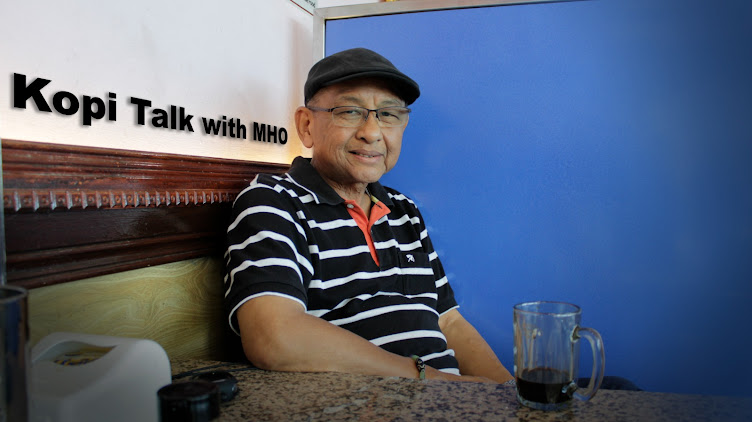
KopiTalk with MHO
By Malai Hassan Othman
A news report about Brunei and Laos seeking tangible results from their strategic partnership brought back memories of an overseas assignment I covered almost three decades ago.
It was May 1998. I was in Vientiane, covering the State Visit of His Majesty Sultan Haji Hassanal Bolkiah Mu’izzaddin Waddaulah ibni Al-Marhum Sultan Haji Omar ‘Ali Saifuddien Sa’adul Khairi Waddien, Sultan and Yang Di-Pertuan of Brunei Darussalam, for the Borneo Bulletin.
At that time, Laos was still finding its feet as a relatively new member of the Association of Southeast Asian Nations (ASEAN), having joined the regional grouping in July 1997.
For me, it was an opportunity to see a country that was beginning to emerge from years of relative isolation.
A Capital Finding Its Feet
As I recall, there were no direct flights from Brunei to Vientiane. I travelled with the royal press entourage and stayed at the newly opened Lao Plaza Hotel.
The hotel was one of the more modern buildings in a capital where development was only beginning to gather pace. It had opened less than a year earlier.
Outside, Vientiane presented a rather different picture.
Modern multi-storey buildings were slowly appearing, but much of the city retained its modest character. The roads were not particularly impressive, reflecting the challenges facing a developing economy.
I remember our briefing before the visit. Laos was a landlocked country with no seaport of its own, heavily dependent on neighbouring countries for access to international trade.
Thailand was particularly important. Much of the merchandise entering Laos, including motor vehicles, came through Thai trading and transport networks.
The First Lao–Thai Friendship Bridge across the Mekong River had opened only four years earlier, providing a vital connection between Vientiane and neighbouring Nong Khai.
For a country without direct access to the sea, roads and bridges were more than infrastructure. They were economic lifelines.
When Iced Lemon Tea Became Coca-Cola
What I remember most vividly, however, was not necessarily the official engagements but the everyday life of the people.
Many Lao women wore their traditional long skirts, known as the sinh, often paired with modern blouses. The men generally dressed more casually in shirts and trousers.
That contrast felt distinctive. Even as modern influences were entering the country, traditional clothing remained a visible part of everyday life.
Communication was another challenge. English was not widely spoken, and even a simple request could sometimes become an amusing exercise in misunderstanding.
I remember trying to order an iced lemon tea from a young waiter. He could not understand what I wanted, despite my attempts to explain.
Eventually, I gave up and settled for a Coca-Cola.
It was hardly a diplomatic incident, but it remains one of my fondest little memories of Vientiane.
Looking back, such encounters remind me that travelling as a journalist was never simply about covering official speeches, meetings and ceremonies.
It was also about observing people, their culture, and the everyday realities that rarely made it into our news reports.
Twenty-Eight Years Later
This week, a report published by The Star, quoting the Vientiane Times, caught my attention. Brunei and Laos are seeking to turn their strategic partnership into tangible results.
The report followed a meeting between His Majesty and Lao Prime Minister Saleumxay Kommasith on 16 November at the Philippine International Convention Centre in Manila, on the sidelines of the 49th ASEAN Summit.
The meeting came barely six weeks after Saleumxay took office on 5 October. Having previously hosted a Bruneian delegation in Vientiane, he received His Majesty’s congratulations and conveyed greetings from Lao President Thongloun Sisoulith to His Majesty and Her Majesty the Raja Isteri.
It reminded me how far the relationship has developed since my visit in 1998, when Laos had been an ASEAN member for less than a year.
Brunei and Laos established diplomatic relations in July 1993. Their ties were elevated to a strategic partnership during His Majesty's State Visit to Vientiane in October 2023, his first state visit there since 1998.
Today, the relationship extends beyond diplomatic goodwill to cooperation in trade, investment, defence, education and people-to-people exchanges.
In Manila, His Majesty highlighted Brunei’s scholarships for Lao students, including their extension until 2029, and welcomed Lao participation in English-language training courses conducted through defence cooperation.
I could not help remembering that young waiter in Vientiane. Nearly three decades later, English-language training has become one of the ways Brunei is helping to strengthen human connections between our two countries.
Such programmes are less visible than railways and bridges. Their value lies in the people they shape, and that value should not be underestimated.
Agriculture is another thread. In his titah at the state banquet in Vientiane in October 2023, His Majesty spoke of deepening trade links through agricultural joint ventures and energy cooperation.
The groundwork was laid a year earlier. During President Thongloun's State Visit to Brunei in October 2022, the two leaders witnessed the signing of two memoranda of understanding, on agriculture and on energy.
For Brunei, which still imports much of its food, these are practical areas where both countries could build mutually beneficial opportunities.
From Landlocked to Land-Linked
Perhaps the most striking change since 1998 is Laos's effort to turn its geographical disadvantage into an economic opportunity.
The country, once heavily dependent on road transport through neighbouring Thailand, now has a railway connecting Vientiane with China, alongside expanding regional transport networks.
The China–Laos Railway, which began operations in December 2021, has become a centrepiece of the country's ambition to transform itself from landlocked to land-linked.
The clearest measure of change came in Manila. His Majesty congratulated Laos on its forthcoming graduation from Least Developed Country status, scheduled for 24 November 2026.
The country I saw in 1998, with its modest roads and few modern buildings, was approaching a threshold that once seemed far off.
Geography has not changed. Laos still has no coastline. But improved connectivity offers possibilities that would have seemed distant when I first visited Vientiane.
Of course, railway lines and highways alone do not guarantee prosperity. The real test is whether improved infrastructure translates into productive businesses, employment and better livelihoods.
For Brunei, the relationship also deserves attention beyond ceremonial exchanges and diplomatic anniversaries.
We are two relatively small ASEAN nations with different economic circumstances. Brunei has maritime access and petroleum resources. Laos has its rivers, its hydropower and its new rail links.
An oil producer and a hydropower producer have obvious reasons to talk about energy. Those differences need not limit cooperation. They may provide the very reasons to explore it more seriously.
Beyond the Handshakes
Diplomatic relationships are often measured by the number of visits, agreements signed and joint statements issued.
These have their place. They establish trust, sustain dialogue and open doors that might otherwise remain closed.
But the more meaningful measure is what happens after the dignitaries return home and the ceremonial photographs disappear from the headlines.
His Majesty has invited Saleumxay to visit Brunei officially at a mutually convenient time. That visit offers a natural occasion to take stock.
Four years after the agreements on agriculture and energy were signed, it would be useful to know what progress has been made. Have they generated investments, opened markets or created opportunities for businesses and ordinary people?
Do agreements create opportunities for businesses? Do partnerships open markets? Do ordinary people benefit through jobs, education and greater economic security?
These are reasonable questions to ask when two countries speak of delivering tangible results.
Twenty-eight years have passed since I walked the streets of Vientiane as a journalist accompanying the royal press entourage.
Vientiane has changed considerably since then. So, too, has the relationship between Brunei and Laos.
The friendship is not in doubt. The measure now is whether it makes a difference to the lives of ordinary people, in Bandar Seri Begawan and in Vientiane alike.
That, perhaps, is where the real story begins.


No comments:
Post a Comment