Friday, December 19, 2025

Where Accountability Quietly Ends

A project approved in principle. Costs paid in good faith. Months of waiting. No rejection, no wrongdoing — just silence. This is a familiar story in the business community, and it raises an uncomfortable question: when no one is at fault, who carries the loss?


Doing everything right, and still losing

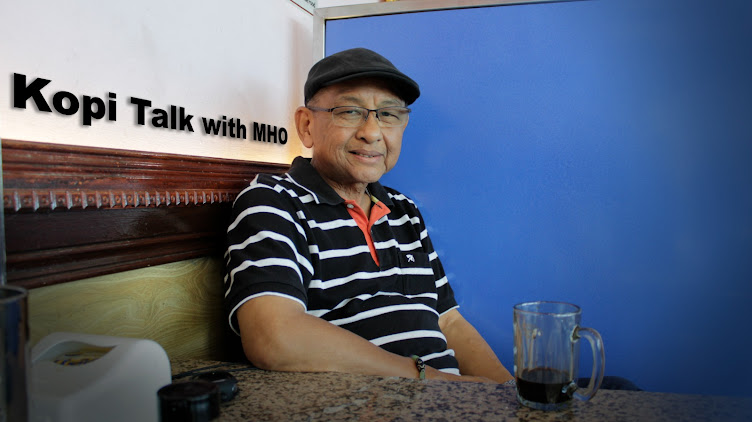
KopiTalk with MHO


Every small business owner here knows this phase. You’ve signed the documents. You’ve paid the consultants. The land is ready. You’re told the approvals are “in process.” You’re not approved, not rejected — just waiting. And while you wait, time quietly works against you.


At first, the waiting feels normal. Development takes time, people tell you. Committees meet. Papers move around. Someone still needs to sign. You send a follow-up email, then another, careful not to sound impatient. You’re told, politely, that things are still being reviewed. No one says no. No one says yes. And because nothing sounds wrong, you keep going. You pay the architect. You settle the valuation. You clear the legal bill — just one more, you tell yourself — because that’s what commitment usually looks like.


From the outside, everything seems orderly enough. There’s a scheme. There are rules. There’s a process. From the inside, it feels fragile. Progress depends on approvals you don’t control and timelines you don’t manage. Still, you trust the system. After all, this is meant to be a development initiative. It’s supposed to help projects like yours move forward.


Then something subtly changes. Meetings become harder to arrange. Replies take longer than before. The officer you used to speak to is no longer there. You’re told the matter is being “transitioned.” No one tells you to stop. No one tells you to proceed. You’re left hanging somewhere between intention and execution.


This is where the real risk begins — not financial, but structural.


In many development schemes, responsibility is spread out. One body assesses. Another administers. Another releases funds. Each stays within its role, and each can honestly say it followed the rules. But when approvals stall or institutions change, there’s no single owner of the outcome. Things slow down. Accountability thins out. Silence becomes the default.


For the entrepreneur, that silence costs money. You keep making decisions in good faith. Bills still need to be paid. Commitments are still honoured. All the while, the clock keeps moving. Deadlines don’t announce themselves. They just arrive, expire, and only show their impact when it’s already too late.


When clarity finally comes, it often comes in the form of a formal letter. The facility has lapsed. The scheme has changed. A fresh application is required. What the letter doesn’t talk about are the months spent waiting, the money already sunk, or the reasonable belief that the system would say something if things were going wrong.


When situations like this reach the courts, the outcome is usually predictable. Contracts are read. Timelines are enforced. No breach is found. Legally, the decision makes sense. The law does what it’s meant to do. But development isn’t built on legal certainty alone. It’s built on confidence — the belief that systems respond, that processes conclude, and that silence doesn’t carry hidden penalties.


The quieter effect of these experiences is rarely talked about. Entrepreneurs don’t protest. They don’t issue statements. They simply pull back. Next time, they hesitate before putting money upfront. Next time, they scale down their ambitions. Next time, they wait a little longer before taking the first step. Over time, development schemes remain well-intentioned and well-documented — but slowly, quietly, less trusted.


There’s a difference between legal closure and institutional responsibility. One ends a case. The other sustains confidence. When systems don’t have clear ownership for continuity, the cost isn’t measured in court decisions, but in opportunities that never get pursued.


The hardest truth is this: sometimes no one is legally wrong, yet someone still loses. And when that happens often enough, the business community doesn’t get angry. It gets cautious. That quiet caution — unseen, uncounted, and rarely discussed — may be the most expensive outcome of all. (MHO/12/2025)


Monday, December 15, 2025

PART 8 — From Fear to Confidence: Reimagining Civic Maturity under MIB

What if Brunei’s answer to political fear was written long ago — in poetry, not protest?

In Syair Perlembagaan, Al-Marhum Sultan Omar Ali Saifuddien spoke of governance as amanah, balance, and shared responsibility — not silence, fear, or withdrawal.

This latest episode of Understanding Brunei’s Political System through MIB asks a quiet but urgent question:

Have we mistaken restraint for maturity… and fear for loyalty?

From zikir to fikir, from obedience to understanding, this essay revisits an old wisdom to rethink civic confidence today — especially for a younger generation growing up in a complex, globalised world.


After seven episodes exploring Brunei’s political system and culture through the lens of Melayu Islam Beraja, one truth becomes increasingly difficult to ignore: the challenge before us is no longer about ideology. It is about maturity.


Brunei’s political culture has long been shaped by calmness, order, and restraint.

These are virtues, not weaknesses. Yet over time, restraint has quietly shifted into hesitation, and caution into fear. 

Politics, once understood as amanah and service, has gradually become something many prefer to avoid — whispered about, misunderstood, or dismissed altogether.

This did not happen overnight. It is the product of history, structure, and habit.

Decades of governance under Emergency Laws have left a deep psychological imprint on society. 

Even where no explicit prohibition exists, the instinct to “stay away” remains strong. 

Families advise their children not to get involved. Employers quietly discourage political association. Community leaders are bound by rules requiring strict political neutrality. 

The result is not oppression, but self-regulation — driven by fear of consequences that may never materialise, yet feel real enough to shape behaviour.

This is the context in which political phobia took root.

Yet fear is not a principle of MIB. Silence is not a virtue in Islam. And passivity is not what the founders of Brunei’s governance tradition envisioned.

Long before modern political theory entered our region, Al-Marhum Sultan Omar Ali Saifuddien articulated a deeply moral view of governance — one in which power is inseparable from responsibility, and leadership is sustained not by force, but by trust. 

In his reflections on constitutional governance, the relationship between ruler and rakyat is portrayed not as a distant hierarchy, but as shared amanah. 

The ruler governs with justice and ihsan; the people respond with loyalty grounded in conscience, not fear.

What is striking in the Syair Perlembagaan is not its legal form, but its moral tone. 

Governance is repeatedly framed as a trust that must be carried with wisdom, balance, and restraint. 

The people are not imagined as silent subjects, but as moral participants whose well-being, dignity, and harmony are central to the purpose of rule. 

Read in this light, the syair quietly points toward civic maturity — a society that understands its role, respects authority, and participates with adab rather than fear.

Implicit in this worldview is participation — not noisy politics, but aware citizenship.

Civic maturity under MIB does not demand confrontation or adversarial postures. It demands understanding. 

It calls on the rakyat to think, to care, and to engage within the bounds of adab and loyalty. 

Participation here is moral before it is political. It is expressed through ideas, service, responsibility, and maturity.

The problem today is that fear has crowded out confidence.

When politics is seen only as a danger, the rakyat withdraw. 

When withdrawal becomes normal, awareness declines. And when awareness declines, society becomes vulnerable — not to internal instability, but to external influence and internal stagnation.

This is where the conversation must shift.

Brunei does not need mass mobilisation or partisan rivalry. 

What it needs is civic confidence — a society comfortable discussing national issues without suspicion, a youth population able to distinguish between reckless politics and responsible participation, and institutions that recognise awareness as a strength rather than a threat.

Political literacy is not about choosing sides. It is about understanding how power works, how decisions are made, and how values are protected. 

A politically literate society is not a noisy society; it is a resilient one.

The Malay world has long warned against miskin politik — a condition where people are rich in culture and faith, yet poor in political understanding. 

Such poverty does not serve the nation. It weakens society’s ability to protect its own interests and undermines the very stability it seeks to preserve.

Here, the balance of fikir dan zikir becomes crucial. Zikir without fikir produces obedience without understanding. 

Fikir without zikir produces cleverness without conscience. MIB demands both — a thinking society guided by remembrance, and a faithful society capable of discernment.

From this perspective, civic participation is not an imported concept. It is embedded in our own intellectual and spiritual tradition. The challenge is not compatibility, but confidence.

We must therefore ask a more honest question: are we afraid because politics is dangerous, or because we have forgotten how to practise it with adab?

Civic maturity means recognising that loyalty and awareness are not opposites. It means understanding that loving the nation includes caring enough to think clearly.

It means accepting that silence may preserve comfort, but awareness preserves dignity.

As Brunei moves forward in an increasingly complex world, the greatest risk is not political awakening — it is political sleepwalking.

A confident rakyat strengthens the state.

An aware youth safeguards the future.

And a mature political culture honours the true spirit of MIB.

KopiTalk Reflection

Fear once helped preserve stability. But confidence is what will now preserve relevance.

The task ahead is not to politicise society, but to mature it. Not to challenge authority, but to deepen trust. Not to import foreign models, but to rediscover our own foundations.

From fear to confidence — that is the journey of civic maturity under MIB.
And it is a journey Brunei must be ready to take. (MHO/12/2025)

Saturday, December 13, 2025

Episode 7 — Sabar & Istiqamah: Leading When Change Is Slow

Not everyone who gives up is wrong.
Some grow tired of doing the right thing alone.

In Episode 7 of MIB Management 101, I reflect on sabar and istiqamah — what it truly means to remain steadfast when change is slow, resistance is subtle, and integrity feels isolated.


 KopiTalk with MHO | MIB Management 101


“Ad-dāʾimūna al-muḥsinūna bi-l-hudā — Always render service with God’s guidance.”


When Doing the Right Thing Starts to Feel Heavy


I once watched a capable, well-intentioned officer quietly give up.


Not because he was wrong.


Not because he was lazy.


Not because he lacked ideas.


He gave up because doing the right thing took too long.


Looking back, many of these moments only began to make sense later when I started to see work not merely as output, but as a service guided by something higher.


He entered the organisation with energy and hope. He asked questions others avoided. He suggested improvements that others postponed. He tried to solve problems that people had learned to live with.


At first, he was tolerated.


Then he was labelled belabih.

After that, he was slowly ignored.


Eventually, he stopped pushing.


He still came to work.

He still did what was required.

But something had dimmed.


That moment stayed with me because it reminded me of this:


Not all failures come from bad intentions. Some come from patience slowly wearing thin.


The Quiet Struggle of Those Who Want Change


Most people don’t enter the workplace wanting to cut corners.


They want to contribute.

They want to improve things.

They want to believe their efforts matter.


But over time, resistance appears — not always loudly, not always openly.

Sometimes it comes as:

  • endless delays
  • polite deflections
  • reminders to ikut cara lama
  • warnings not to disturb the balance

Change does not always fail through confrontation. More often, it fades through fatigue.


People don’t abandon principles because they stop believing in them. They abandon them because standing alone is tiring.


Over the years, I have come to realise that these quiet struggles are not unknown at the highest level. 


His Majesty has repeatedly reminded leaders that their duty is not merely to hold office, but to care, guide, and show concern for those under their charge. 


Leadership, in this understanding, is not about looking down from above, but about staying close enough to notice when people are struggling.


In a Negara Zikir, patience is not weakness. It is how conscience survives pressure.


Sabar Is Not Silence


Sabar is often misunderstood.


It is not about keeping quiet at all costs.

It is not about accepting everything.

It is not about pretending nothing hurts.


Sabar, to me, is emotional discipline.


It is feeling frustrated — and choosing not to become bitter.


It is feeling disappointment — and choosing not to give up on yourself.


The Qur’an reminds us:


“Indeed, Allah is with those who are patient.” (Al-Baqarah 2:153)


Not those who shut down.

Not those who pretend.

But those who stay steady without losing their values.


Istiqamah Is Not About Being Hard-Headed


Istiqamah, too, is often misunderstood.


It is not about pushing endlessly.

It is not about winning arguments.

And it is not about forcing change.


Istiqamah is about moral consistency.


It means staying upright when shortcuts are tempting.

It means remaining honest when dishonesty seems rewarded.

It means doing what is right even when no one notices.


The Qur’an says:


“So remain steadfast as you have been commanded.” (Hud 11:112)


Not as long as it feels comfortable.

Not as long as applause comes.

But as you have been guided.

 
When ‘Belabih’ Becomes a Label for Integrity


In some workplaces, people who remain consistent are not encouraged.


They are labelled.


Too idealistic.

Too vocal.

Too ambitious.

Too different.


Sometimes, istiqamah is mistaken for defiance.

Sometimes, sincerity makes others uncomfortable.


I have seen capable people sidelined — not because they were wrong, but because they refused to bend quietly.


This is where many start asking themselves:


“Is it worth it?”


This is where sabar and istiqamah begin to need each other.


Sabar keeps the heart steady.

Istiqamah keeps the direction clear.


Knowing When to Pause Without Giving Up


One difficult lesson I have learned is this:


Sabar does not always mean pushing forward.

Sometimes it means slowing down.


Istiqamah does not always mean staying loud.

Sometimes it means staying clean.


There are moments when reform is not about winning today — but about planting seeds quietly.


Not every sincere effort bears fruit in our lifetime.

But every sincere effort still counts.


And sometimes, that has to be enough.

 
Closing Reflection: Staying Upright When the Path Is Crooked


Leadership, especially principled leadership, is not a sprint.


Systems change slowly.

Mindsets change more slowly.

Egos change the slowest of all.


Along the way, many good people grow tired — not because they lack faith, but because they feel alone.


I am reminded of moments when welfare concerns were raised by rank-and-file officers, and His Majesty chose to listen rather than dismiss. 


He did not side with position or rank, but with fairness. That matters because it tells those who try to remain upright that patience is not invisible, and consistency is not pointless.


Sabar reminds us not to abandon ourselves.

Istiqamah reminds us not to abandon what is right.


And perhaps the question is not:


“Why is change taking so long?”


But this:


“Can I remain honest, kind, and principled — even while waiting?”


Perhaps this is what it means to keep rendering service with guidance — not perfectly, but sincerely.


Because sometimes, the real test of leadership is not how much we change the system…


…but how well we remain ourselves while living within it.


📖 KopiTalk with MHO — reflections brewed gently, with honesty and heart.