Brunei knows how to count man-hours in industry. The question is whether we have ever counted what our farmers lose.

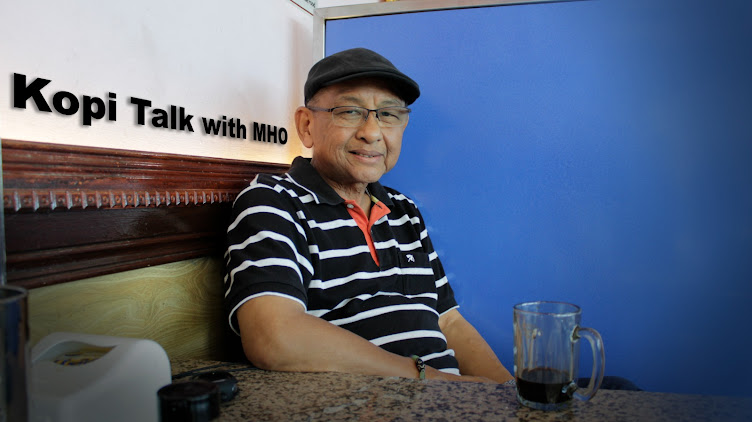
KopiTalk with MHO | Malai Hassan Othman
Not long ago, I visited a friend whose company was a vendor with Brunei Shell Petroleum.
His business was in transportation and waste management. In that line of work, safety is not decoration. It is discipline. It is reputation. It is contract survival.
Before I even walked through the door, something stopped me.
Near the entrance was a safety board. It showed the company had achieved more than one million man-hours without a Lost Time Incident.
I stood there for a moment.
One million man-hours.
No serious incident. No worker losing time to injury. No broken chain in the flow of work.
I remember thinking how seriously the oil and gas industry treats time. Every hour counted. Every exposure tracked. Every incident investigated.
If time was lost, the system wanted to know why.
That is what a serious industry does. It counts what matters.
Not long ago, I had coffee with a retired farmer.
He talked about the years he tried his hand at padi planting. He did not speak like a policy expert. He did not reach for words like productivity, national output or food security.
He spoke like a man who had tried.
He had spent money. He had spent energy. He had spent time.
But much of that time did not become harvest. It did not become income. It did not become progress.
It became experience.
And, quietly, disappointment.
There was no dashboard behind him. No board showing how many hours he had put into the field. No figure recording how much time was lost waiting for water. No measure of the hours swallowed by poor drainage, limited access to machinery, land that was difficult to reach, or markets that were never quite certain.
Yet those hours were real.
They were his life-hours.
They were farmer-hours.
And many of them were lost.
That conversation stayed with me.
Brunei knows how to count man-hours in industry. We have the boards, the systems, the discipline.
But do we count farmer-hours in agriculture?
Do we know how many hours our farmers lose because the farming ecosystem is incomplete? How much working time is swallowed by poor irrigation, broken drainage, limited machinery, bad access roads, uncertain buyers and fragmented support?
In oil and gas, lost man-hours are taken seriously because they signal a failure in safety and productivity.
In padi farming, lost farmer-hours disappear without record.
But they may be one of the missing links between our food security speeches and our food security reality.
This is not only about time. It is about what time converts into.
When a farmer loses hours, the field loses productivity. When fields lose productivity, the farming sector loses momentum. When farming loses momentum, food security stays weak. And when this goes on long enough, Brunei does not only lose harvest.
It loses farmer knowledge. It loses youth interest. It loses productive land. It loses confidence in agriculture itself.
The numbers carry their own quiet argument.
Rice self-sufficiency in 2023 still sat at around 8.1 per cent — far below the targets we have been setting for years. Meanwhile, the wider agrifood sector tells a clearer story: livestock leads, agrifood processing follows, and crops — including padi — remain the smallest piece of the picture.
That contrast is worth sitting with.
Livestock attracts organised capital. It works with controlled environments, feed supply chains, biosecurity protocols, processing facilities and distribution networks. Capital understands how to enter it because the ecosystem is already assembled.
Padi is different.
Most padi farming is still carried by small operators — kampong people, older pesawah, and family farmers working with uncertain water supply, limited machinery and weak market access.
They are not running integrated businesses.
They are running on patience.
That is not enough.
If rice is a matter of national security, then padi farmers cannot be treated as small players carrying a small problem. They are small players carrying a national burden. And when their time is wasted, the country loses alongside them.
A farmer does not only invest money.
He invests life-hours. Days under the sun. Time spent preparing land, managing water, clearing drains, searching for inputs, waiting for machinery, harvesting, hauling and trying to find a buyer who will pay a fair price.
If the system supports him, those hours become yield. They become income. They become local supply. They become resilience.
If the system is incomplete, those same hours become frustration. They become lost productivity. They become a quiet argument against ever farming again.
This is why the youth participation problem will not be solved by campaigns or slogans.
Young people are watching. They see what the hours cost and what they return. They see older farmers working hard with uncertain reward. They see padi farming leaning too heavily on personal endurance and too lightly on institutional support.
Then we ask why they do not come.
They are not avoiding farming because they lack grit. They are avoiding it because nobody has shown them a credible future in it.
If Brunei wants young people to enter agriculture, farming must look like a vocation with a system behind it — not a test of character conducted without one.
Perhaps what our food security conversation has been missing is not another policy commitment.
It is a different unit of measurement.
We count hectares. We count tonnes. We count output. We count allocations.
But do we count wasted farmer-hours?
Do we know how many hours disappear in a single padi season because a farmer is solving problems the system should have solved long before he reached the field? Do we know how much productivity evaporates before the first stalk is planted? Do we know how many farmers quietly stop — not because they failed, but because the return stopped justifying the time?
These are not peripheral questions. They go to the centre of what food security actually requires.
Because food security is not built by policy alone. It is built by human hours converted into food. Protect those hours, and the country gains. Waste them, and the country pays — in import dependency, lost knowledge, weak youth participation and a farming sector that struggles to grow with the urgency food security requires.
The way forward does not need another grand framework.
Take one padi area. Study it properly — not by land size alone, not by yield alone. Study the farmer’s actual working day.
How much time goes into preparing the land? How much is spent waiting for water? How much is lost to drainage failures? How much to machinery that does not arrive on time? How much to a market that offers no certainty?
Then fix the system. Fix the irrigation. Fix the drainage. Open the access. Provide shared machinery. Connect farmers to reliable buyers. Then measure again.
Did yield improve? Did income improve? Did wasted hours fall? Did anyone young start paying attention?
That would tell us more than another plan that looks complete on paper and arrives incomplete in the field.
In oil and gas, a board showing one million man-hours without a Lost Time Incident tells you something important. It tells you that time — and the people who give it — were taken seriously.
Brunei’s padi farmers have been giving their time for a long time.
Maybe it is time we started counting it.
— MHO

.jpeg)
No comments:
Post a Comment