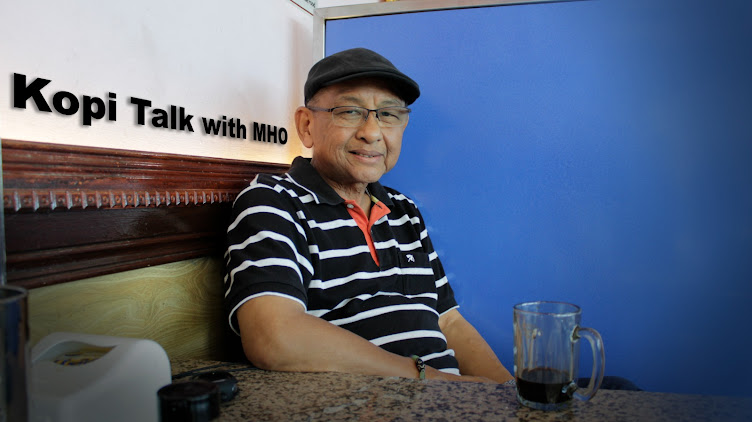
A new Cabinet has been sworn in, but His Majesty’s titah was more than a welcome. It was a reminder that titles mean little without delivery. With Wawasan 2035 approaching, Brunei’s test is no longer planning. It is whether the rakyat can finally feel the results of government action.

By Malai Haji Othman | KopiTalk with MHO | June 2026
There is a version of a formal address that every government knows how to produce.
It lists achievements. It thanks ministers. It speaks of progress, confidence and continuity.
It is safe. It is familiar. It offends no one.
What came out of the 92nd Cabinet Council Meeting on 15 June 2026 was not that version.
His Majesty delivered two titahs — one at the opening and one at the close. Read separately, each carries weight. Read together, they form something more important: a clear message to the new Cabinet on what Brunei must now fix, how the Government must work, and why time is no longer a luxury.
Pull up a chair. This one matters.
ROYAL PRESENCE, PUBLIC STANDARD
This was the first Cabinet Council meeting for the newly appointed Cabinet for the 2026–2030 term.
It was also the meeting where His Majesty formally welcomed the royal princes into the Cabinet and the Cabinet Council, expressing confidence that they would play important roles based on their inclination and previous experience in government.
That is the formal record.
But the wider message of the titah was not about personalities. It was about standards.
In the same address, His Majesty reminded all ministers to carry out their duties with honesty, integrity and ethics. He also stressed that the government machinery must remain free from cronyism, nepotism and any form of abuse of power that could affect the credibility of the Government.
That line applies not to one person, not to one group, and not to one ministry.
It applies to everyone entrusted with public office.
That is not a small thing.
THE MIRROR OF PUBLIC REACTION
There was another signal in the opening titah that deserves more attention than it will likely receive.
His Majesty acknowledged that the appointment of the new Cabinet had drawn various reactions from inside and outside the country, with much of it expressed through social media.
Overall, the new lineup was received positively. But those reactions also carried expectations: that ministers would discharge their trust properly and perform better than in the previous term.
Then came the line that matters most.
Constructive criticism should be treated as a reason for self-reflection and as motivation to correct weaknesses.
In a country where public commentary is often careful, that statement gives responsible criticism a legitimate place in the national conversation. It does not mean every comment online is wise. It does not mean every criticism is fair.
But it does suggest that when criticism is constructive, it should not automatically be treated as hostility.
It can be a mirror.
It can be a warning light.
Confidence in office is not given once and forgotten. It must be earned through conduct, delivery and results.
COORDINATING MINISTERS: TITLE OR TRUST?
The appointment of three Coordinating Ministers is not merely a change in title.
His Majesty made clear in the closing titah that these posts carry an important amanah. Their task is to ensure that ministries under national security, economy, and social and human capital do not move separately, but in line with national goals.
In plain language: the old silo problem has been named.
Every government knows this problem. One ministry plans. Another delays. One agency approves. Another asks for more documents. One committee meets. Another committee waits.
The rakyat only sees the result — slow delivery, unclear responsibility and policies that look good on paper but do not always move on the ground.
Coordinating Ministers have been given the mandate to issue directives on cross-cutting issues of national importance.
But there is a critical limit.
Any decision involving new policy, strategic policy change, significant resource allocation, or major inter-agency consequences must first receive His Majesty's consent.
This clarifies the nature of the post.
Coordinating Ministers are not being asked to become independent power centres. They are managers of execution, not architects of policy. Their authority lies in coordination, discipline and follow-through.
Their task is to close gaps, not create confusion.
That is both a constraint and a clarity.
For years, Brunei has had many plans, many committees and many frameworks. The issue has rarely been the absence of ideas. The issue has been delivery.
That is what this structure is now being asked to fix.
WAWASAN 2035: THE CLOCK IS LOUDER THAN THE PLAN
Less than a decade remains before 2035.
Not twenty years. Not fifteen. Less than ten.
His Majesty said every approved KPI and target must be translated into concrete action plans, complete with timelines, assigned responsibilities and effective monitoring mechanisms.
Not frameworks.
Not workshops.
Not another round of consultations or committee minutes that produce polite agreement but no visible outcome.
The question being asked is now simpler.
Who is responsible?
What is the timeline?
How will progress be monitored?
What happens when a target is missed?
That is the language of delivery.
His Majesty also said every blueprint, strategy and plan must be regularly reviewed to remain relevant to changing conditions.
A plan is not sacred because it was printed nicely. If the world changes, the plan must change. If circumstances shift, government must be responsive enough to shift with them.
For those watching Brunei's governance cycles for decades, this lands with weight. Too many blueprints have been produced, launched, celebrated — and then quietly left to gather dust while the next planning cycle begins.
His Majesty appears to know this too.
Planning is not governance.
Delivery is.
NATIONAL SECURITY JUST GOT BIGGER
Perhaps the most substantive policy signal in either titah is the one that may receive less commentary than it deserves.
His Majesty explicitly broadened the meaning of national security.
It is no longer confined to military and defence. His Majesty named four pillars that must all be kept robust and assured: political stability, economic security, energy security and food security.
This is significant for reasons beyond semantics.
It means a weakening food supply chain is a national security issue.
It means energy resilience, production, transition and supply assurance are national security issues.
It means economic fragility — especially in a country still structurally reliant on hydrocarbons — is also a national security issue.
For those writing about Brunei's food security gap, fiscal exposure and overdependence on oil and gas revenue, this framing is not new territory.
But it is official acknowledgement from the highest authority that these are not secondary concerns to be managed on the margins.
They are pillars of national survival.
UNEMPLOYMENT, GLCS AND THE JOBS QUESTION
His Majesty gave special attention to unemployment, calling for stronger efforts to create more quality jobs for locals while gradually reducing dependence on foreign labour.
The Government, he said, must work closely with the economic and industrial sectors to ensure better opportunities for Bruneians.
The interesting development is what sits alongside that directive.
GLCs — Government-Linked Companies — are now being positioned as a major engine of employment after oil and gas. His Majesty expressed hope that GLCs would grow into significant contributors to jobs and human capital, supporting more sustainable economic growth.
That is a heavy expectation.
Some GLCs have performed well. Others still need to demonstrate that they can deliver jobs, efficiency and public value at the level now expected.
They cannot be seen merely as corporate extensions of government comfort.
Words of hope are a starting point.
Structure and accountability are what turn hope into outcomes.
FDI: COORDINATION AS ECONOMIC NECESSITY
His Majesty also pointed to the need to strengthen the financial sector and attract foreign direct investment continuously, with closer cooperation with the Ministry of Development on land, infrastructure and support facilities needed to make Brunei easier for investors to enter and grow.
This is a practical point that should not be missed.
FDI does not arrive because a country says it wants investment.
Investors look at speed, clarity, land availability, infrastructure, approvals, utilities and confidence that government agencies can move together.
If one ministry promotes Brunei, but another cannot prepare the land, another delays the infrastructure, and another complicates the approvals, then the investor sees not potential, but friction.
Coordination is not an administrative luxury.
It is an economic necessity.
WHAT THE CABINET IS REALLY BEING TOLD
Strip away the protocol and formality, and the message from both titahs to the 2026–2030 Cabinet is this:
You have been given roles, not ornaments.
You have been given trust, not comfort.
The Coordinating Ministers must close the gaps that silos created. The KPIs must become action plans. The blueprints must stay relevant. The national security lens must include food, energy, economy and stability.
Unemployment must be tackled with more urgency. GLCs must become real contributors. FDI must be backed not just by ambition but by land, infrastructure and administrative readiness.
His Majesty ended by saying that success will not be measured by planning alone, but by results felt by the rakyat and visible impact on national development.
That sentence belongs in every ministry.
The 92nd Cabinet Council was not merely a ceremony. It was a briefing — direct, structured and unusually candid.
His Majesty did not soften the urgency of Wawasan 2035. He did not treat the silo problem as a minor technical matter. He did not dress cronyism and nepotism in diplomatic language.
The question now is not whether the ministers heard the titah.
They were in the room.
The question is what happens after they leave it.
That answer will not come in speeches.
It will come in jobs created, delays cut, food supply strengthened, investment made easier, GLCs made productive, KPIs tracked honestly, and ordinary Bruneians feeling that government plans are finally touching real life.
The kopi is poured.
The clock has started.
Malai Hassan Othman (MHO) is a veteran Brunei-based journalist, columnist and policy analyst with over 40 years of experience. KopiTalk with MHO is published on Substack.

.jpeg)
No comments:
Post a Comment