The world may be watching because of Prince Mateen.
But the real question is not why the world is watching.
The real question is what Brunei will show.
His appointment as Minister of Foreign Affairs is more than a headline about youth, visibility or royal appeal. It is a rare diplomatic opening for Brunei — a chance to turn attention into trust, trust into relationships, and relationships into national advantage.
For a small state, diplomacy is not decoration.
It is survival with manners.

Public Affairs Column | Substack | LinkedIn
What the World Sees, and What Brunei Must Show
Prince Mateen's appointment as Minister of Foreign Affairs is not merely a story about visibility. It is a rare diplomatic opening for Brunei — one built on responsibility, preparation and national purpose.
By Malai Hassan Othman
The Cabinet reshuffle was news. Prince Abdul Mateen's appointment as Minister of Foreign Affairs became a story — and it is still travelling.
That distinction matters.
A news item is reported and filed. A story has legs. It keeps moving, finding new audiences and generating reactions in places the original announcement may never have expected to reach.
Within hours, the appointment was circulating in regional newsrooms. Within a day, it had reached audiences that rarely follow Brunei closely — not only because of the portfolio, but because of the person now carrying it.
The world already knew him.
It knew a military man — disciplined, trained and familiar with the meaning of duty. It knew an athlete and sportsman of genuine accomplishment. It knew a prince whose warmth and outgoing nature had made him genuinely familiar across cultures and distances. And it knew the romantic — a royal love story, played out with quiet grace, that the world watched and found, in its own way, irresistible.
What followed him into public life was not merely manufactured attention. It was public familiarity and goodwill built over time — earned, not inherited.
Locally, the news landed with pride, warmth and curiosity. But beneath that, there was also a pause — people trying to place a familiar public figure into a role carrying real national weight.
That pause is what called me to write this.
As a journalist, I felt obliged — terpanggil — to put the appointment in its proper perspective. Not to diminish what is being celebrated, but to make sure that what is being celebrated is understood correctly.
International coverage, however warm and enthusiastic, has mostly told only part of the story.
The part it missed is the more important one.
A Cabinet reshuffle is a serious act of governance. Ministers are repositioned. Portfolios are reassigned. The machinery of state is recalibrated.
Yet in this case, the reshuffle was quickly overtaken by a single name.
That tells us something — not about the reshuffle, which stands on its own significance, but about the unusual public presence Prince Mateen brings into office.
He did not seek this surge of international attention. He carried it into the appointment from a life partly lived in public view, with enough authenticity for people to respond to the person, not merely the title.
In most circumstances, that kind of public recognition would be unusual for a Foreign Minister.
At this point in Brunei's diplomatic journey, it can be an asset — if understood and used well.
His Majesty Sultan Haji Hassanal Bolkiah was precise in the language used when announcing the new Cabinet line-up. The appointments took into account their interests, inclinations and early exposure in the government's administrative system.
That sentence deserves careful attention.
It is not merely ceremonial language. It gives the appointment its proper Bruneian frame: preparation, exposure, responsibility and continuity.
What may look to the outside world like a sudden, attention-commanding elevation sits, within Brunei's own system, inside a longer process of observation, exposure and gradual responsibility.
The military background is not incidental. A person shaped by military discipline understands hierarchy, duty and responsibility. An athlete understands preparation, setback and the long work that precedes any moment of recognition.
A sportsman understands teamwork — that individual performance matters only when it serves the broader effort.
These are not soft qualities.
They are qualities that diplomacy also demands.
Foreign headlines may not have paused long enough to see this. Brunei should make sure they do.
Foreign affairs is not a portfolio of handshakes, airport arrivals and ceremonial courtesy. For a small state, it is the discipline of keeping doors open when larger powers want smaller countries to choose sides.
Brunei does not have size. It does not have a large military presence on the regional stage. It does not have the economic weight to dominate any room it enters.
What it has carefully protected across decades is reputation — reliability, calm, principled engagement and the discipline of knowing when to speak and when silence carries more weight than words.
That reputation was built through Brunei's steady conduct in ASEAN, its role in Islamic finance and halal standards, its careful neutrality when larger powers press for alignment, and the accumulated trust of neighbours who know that Brunei says what it means and does not say more than it means.
None of that was loud.
All of it mattered.
This is where some outside readings of the appointment become useful, even when they do not fully capture Brunei's own perspective.
Foreign observers may read the reshuffle through the lens of great-power competition, the South China Sea, China's economic rise and the search for Western strategic reassurance.
Those concerns are not irrelevant.
Brunei sits in a difficult neighbourhood, at a time when energy security, maritime claims, food supply, investment flows and regional trust are becoming harder to separate.
But Brunei has rarely seen its future as a simple choice between one power and another.
Its strength has always been balance.
Brunei's diplomatic posture is built on discretion, not noise; pragmatism, not alignment for its own sake; and a steady effort to remain a friend to all while preserving independence of action.
Its anchors are not found in one capital alone. They are found in ASEAN, in long-standing ties with Singapore, in defence and institutional links with the United Kingdom, in neighbourhood relations with Malaysia and Indonesia, and in wider multilateral platforms where small states multiply their voice by acting carefully and consistently.
Seen this way, Prince Mateen's appointment should not be reduced to a geopolitical pivot.
It is better understood as generational renewal at a serious diplomatic moment — the preparation of a younger figure to carry forward Brunei's tradition of balance in a world where balance is becoming harder, but more necessary.
That is the point foreign commentary may miss.
The bigger story is not whether Brunei is turning one way or another. The bigger story is how Brunei prepares a new generation to carry old relationships, trusted habits and national interests into a more demanding world.
This appointment offers a chance to carry Brunei's quiet diplomatic tradition forward with a presence the world already recognises.
Not to replace substance with image.
But to let a credible human presence carry Brunei's substance further than quiet diplomacy alone may reach.
Visibility, in today's diplomatic environment, is not vanity. It is infrastructure.
A Foreign Minister who commands genuine international attention walks into every meeting already known. That familiarity, if handled well, can become the beginning of deeper trust.
That is what Prince Mateen brings.
The question now is what Brunei chooses to build around it.
For Bruneians, it would be easy to receive this appointment as a moment of domestic pride and then step back and watch.
That would be a mistake.
Foreign affairs is not something that happens somewhere else. It happens here, in every household, every month.
When food prices rise because of supply-chain disruptions elsewhere, foreign policy is felt at the dinner table.
When oil revenues shift because of decisions made in distant capitals, foreign policy is involved.
When investment slows and graduates struggle to find work, economic diplomacy matters.
When Brunei's voice at a regional table determines whether an agreement serves us or merely includes us, foreign policy becomes national life.
We are not insulated from the world.
We are embedded in it.
There are partnerships to deepen - in education, food security, Islamic finance, green economy and digital infrastructure.
There are relationships to tend carefully, with neighbours and partners watching Brunei's trajectory.
There are conversations in ASEAN and beyond where Brunei's presence, or absence, will shape outcomes for years.
This is the moment to be present.
And to be present with something to say.
Prince Mateen's appointment is not a story about a popular figure taking on a serious title. It is a story about Brunei placing real responsibility in the hands that have already demonstrated discipline, preparation and public connection in different arenas.
The country needs both continuity of established purpose and the energy of a new generation willing to carry it forward.
The two are not in tension.
They are exactly what effective diplomacy requires.
His Majesty's words — interests, inclinations and early exposure — describe a person who has been watching, listening and preparing, even while the world was watching him for different reasons.
That is the distinction Brunei must now make clear, to international audiences and to itself.
The visibility that preceded this appointment is not separate from the responsibility that now defines it.
One was the man the world came to know.
The other is the minister Brunei now needs.
The world is watching because of who Prince Mateen is.
Now Brunei has the opportunity — and the obligation — to show the world what Brunei stands for.
Not as a country forced to choose sides.
Not as a small state waiting to be interpreted by others.
But as a nation that understands the value of balance, the weight of continuity and the discipline of quiet confidence.
That is the real story.
And it has only just begun.
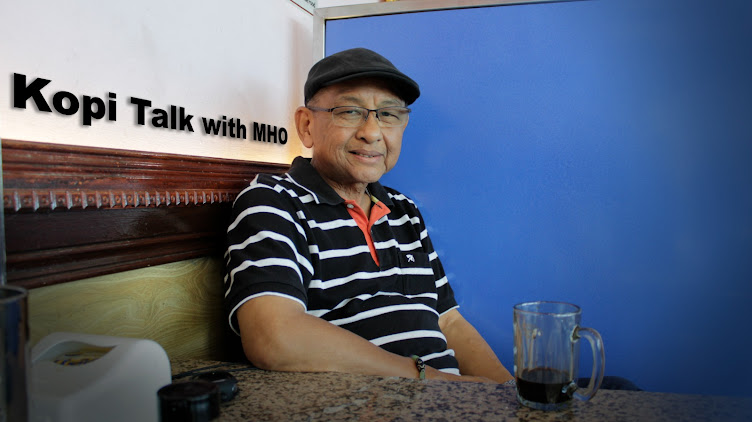
KopiTalk with MHO is published on Substack and distributed via LinkedIn. Views are the author's own.

.jpeg)
No comments:
Post a Comment