Food security is one of those issues that everyone agrees is important.
Yet after nearly two decades, we are still discussing many of the same questions: irrigation, idle sawah, farmer survival, youth participation, infrastructure and execution.
Perhaps the problem is not that Brunei lacks plans.
Perhaps the problem is that warnings often take too long to be heard.
In 2008, a warning was given:
“...Negara Brunei Darussalam tidak dapat lagi semata-mata bergantung kepada ‘ihsan alam’ luar negara untuk mendapatkan beras…”
Today, that warning feels more relevant than ever.
If rice is a national security issue, why are so many of those carrying that burden still small farmers, kampong people and ageing pesawah struggling against an incomplete ecosystem?
Maybe the real question is not whether Brunei understands food security.
Maybe the real question is whether we are ready to do what food security actually requires.
Because when the same concern keeps returning through different voices, across many years, it may no longer be noise.
It may be an alarm.
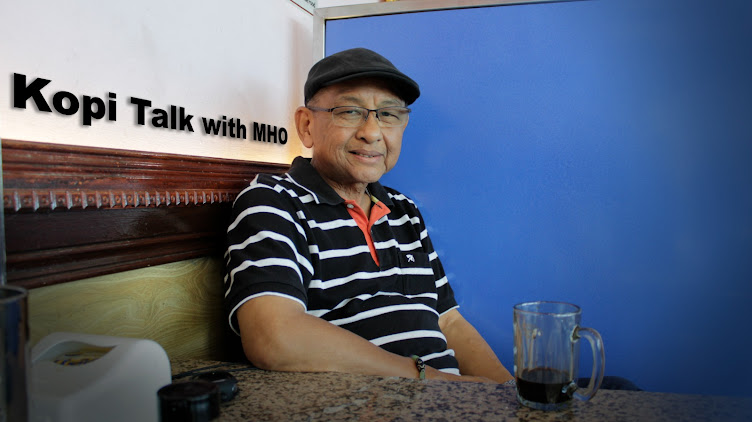
#KopiTalkWithMHO

Brunei has heard the food security warning before. The question is whether we have ever truly listened.
By Malai Hassan Othman
2 June 2026
Sometimes a country does not suffer because no one warned it.
Sometimes it suffers because the warning was heard too late.
Not because the warning was wrong.
But because the warning came from a place people were not comfortable listening to.
That thought returned to me after following a recent private discussion among concerned Bruneians about food security, padi land, idle sawah, irrigation, farming infrastructure, youth participation and Wawasan 2035.
The discussion was noisy, as many informal discussions are.
There were strong views, jokes, memories, frustrations, policy suggestions and practical observations.
But beneath the noise, one question kept coming back.
Why are we still talking about the same food security issues after so many years?
That is the uncomfortable part.
Because this conversation did not begin yesterday.
It did not begin in a WhatsApp group.
It did not begin because some people suddenly discovered the importance of rice, farmers and agriculture.
The warning was already there.
In 2008, during the global food crisis, His Majesty Sultan Haji Hassanal Bolkiah gave a reminder that still feels current today:
“…Negara Brunei Darussalam tidak dapat lagi semata-mata bergantung kepada ‘ihsan alam’ luar negara untuk mendapatkan beras, walaupun kita mampu mengadakan peruntukan untuk itu. Sikap semata-mata bergantung kepada wang ringgit untuk mengisi perut sudah tidak relevan lagi dengan terjadinya krisis makanan ini.”
— Titah sempena Keputeraan KDYMM 2008
That was not party politics.
That was national foresight.
It was a warning about dependency, and about the danger of assuming that money alone can always buy food.
It was also a reminder that rice is not just another imported item to be secured through budget allocation.
Rice sits on the table of almost every Bruneian household.
When rice feels secure, people feel secure.
When rice becomes uncertain, even a wealthy country can feel exposed.
Years later, that warning still feels unfinished.
This is where the issue becomes sensitive.
The National Development Party had raised food security as one of its major concerns since its early years.
In its 2010 presidential policy speech, NDP discussed national food security as part of Brunei’s development priorities.
It referred to the need to develop the food sector so that Brunei would not continue depending on other countries.
It also referred to efforts to increase rice production and expand padi areas across the four districts.
But NDP is a political party.
And in Brunei, the moment an issue is linked to a political party, the issue itself can become uncomfortable.
The message becomes secondary.
The messenger becomes the problem.
The substance becomes trapped inside the label.
This essay is not about proving that NDP was right.
That would be too small.
Food security is bigger than any party.
The more important question is whether Brunei has sometimes lost valuable time because useful warnings were filtered through political discomfort before their substance was properly heard.
That is not only a political question.
It is a question of national maturity.
It is a question of whether we can separate the warning from the label attached to the person or organisation giving the warning.
In a mature society, an idea should be tested by its truth, not only by its source.
When an issue is raised by a ministry, it may be treated as policy.
When it is raised by a consultant, it may be treated as expertise.
When it is raised by ordinary people, it may be treated as complaint.
But when it is raised by a political party, it can too easily be treated as politics — even when the issue is rice, irrigation, farmers, drainage, machinery, youth and national preparedness.
This is one of the quiet problems in Brunei’s public conversation.
We avoid political language.
We avoid difficult questions.
We avoid asking who benefits when the system does not change.
Then years later, the same issues return in another form, raised by different voices, through different platforms, with the same frustrations.
By then, the cost of delay may already have been paid by farmers, by youth, by consumers and by the country itself.
That cost need not be paid in the form of crisis to be real.
It is paid quietly, in fields that stayed idle, in youth who did not come, in land that held potential but never yielded.
One of the clearest reminders is Lot Sengkuang in Labi.
Lot Sengkuang was not some small forgotten patch of land.
It was recognised as an important padi-growing area in Belait, seen as having strong potential to contribute to national rice self-sufficiency.
The land was there.
The farmers were there.
The national need was there.
But potential alone does not feed a country.
For years, the concerns around Lot Sengkuang sounded familiar: water supply, irrigation, drainage, infrastructure, machinery, skilled manpower and farmer survival.
These are not small issues.
They are the difference between a productive padi field and an abandoned one.
They are the difference between a farmer staying and a farmer giving up.
It is easy to blame farmers from a distance.
It is easy to say young people are not interested.
But the harder truth is this: farmers operate inside a system.
If the system is incomplete, even hardworking farmers can lose heart.
If land has no proper access, no reliable water, no working drainage, no machinery support, no market certainty and no fair return, then agriculture becomes a burden dressed up as opportunity.
That is why food security cannot be treated as land allocation alone.
It must be treated as an ecosystem — one that includes land, water, drainage, roads, seeds, machinery, research, technology, financing, storage, processing, transport, markets, procurement, youth participation and farmer income.
Remove one part, and the whole chain weakens.
This is what many ordinary people are beginning to understand.
They may not use academic language.
They may not say “ecosystem integration.”
But they know when something does not work.
They know when a field has no water, when a road is poor, when a farmer cannot sell consistently, when young people see no future in agriculture, when a project looks good on paper but does not survive on the ground.
This is why informal public discussion should not be dismissed too quickly.
Yes, it can be noisy.
Yes, not every claim is verified.
But public noise can sometimes carry public truth.
In the middle of chatter, people may be describing what official reports cannot fully capture: frustration, fatigue, lost confidence, repeated promises and the feeling that the same problems keep returning under different names.
This is not necessarily opposition.
It may simply be national muhasabah.
There is a difference between politicising an issue and discussing a national issue that has policy implications.
If every serious national discussion is quickly viewed as political, then our public conversation becomes smaller, more fearful and less useful.
A country cannot become mature by avoiding difficult conversations.
It becomes mature by learning how to have them with adab, evidence, fairness and national intention.
The 2023 Agriculture and Agrifood Statistics show that Brunei has made progress.
The gross output value of the agriculture and agrifood sector rose from BND431.22 million in 2019 to BND554.51 million in 2023.
Livestock remained the largest contributor, followed by agrifood processing and crops.
This progress should be acknowledged.
There are farmers, entrepreneurs, officers, investors and businesses who have worked hard.
But the same statistics also show the harder side of the story.
Crop output remains much smaller than livestock and agrifood processing.
Agriculture’s contribution to GDP remains small.
Rice self-sufficiency remains low.
The contrast within the agriculture sector itself is revealing.
Livestock is clearly the strongest performer.
That should not surprise us.
Livestock is more attractive to larger and more organised investors.
It can be developed through bigger farms, controlled systems, imported technology, structured feed supply, biosecurity, processing and more predictable commercial planning.
In other words, livestock has the kind of ecosystem that capital understands.
But padi and much of crop agriculture are different.
They are still largely carried by small and medium farmers, kampong people, older pesawah, and family-based operators working with limited land, limited machinery, uncertain water supply and weaker market power.
When big investors enter livestock, the system tends to organise itself because capital requires roads, electricity, logistics, technical support, market access, scale and certainty.
But when small farmers carry padi, they are often expected to survive with patience, subsidies, seasonal support and patriotic language.
That is not enough.
If rice is a national security concern, then padi farmers cannot be treated as small players carrying a small issue.
They are small players carrying a national burden.
This is where food security becomes a fairness issue.
Brunei cannot expect kampong farmers to carry national resilience while the full ecosystem of capital, infrastructure, technology, procurement and market certainty is available more easily to bigger players elsewhere in the sector.
If the country wants padi to matter, then the padi ecosystem must be made investable, workable and liveable — not only for big companies, but also for small farmers, youth, cooperatives and village producers who are willing to work the land if the system allows them to survive.
Beyond the visible problems of land, irrigation, machinery and manpower, have the incentives within the agriculture sector always supported the national interest?
This is a sensitive question.
But it is a necessary one.
Agriculture does not fail only because farmers are weak or youth are uninterested.
Sometimes sectors fail because the incentives around them are not properly aligned.
If imports are easier than production, local farming will struggle.
If land can remain idle without consequence, productive farmers may be kept outside.
If supply chains are controlled by too few players, small producers may never grow.
If policy becomes too cautious around established arrangements, national food security may remain slow.
This is not an accusation against any person or institution.
It is a governance question.
Does the system truly reward those who produce?
Or does it quietly protect those who benefit from things remaining as they are?
Brunei needs serious investors, capable companies, strong private sector players — people with capital, technology, networks and discipline.
But food security cannot be left only to those who already have access.
It must also create space for genuine farmers, youth, cooperatives, village enterprises, small producers and new agropreneurs.
Otherwise, agriculture becomes another sector where opportunity exists on paper but participation remains difficult on the ground.
This is where the idea of Ease of Economic Participation becomes important.
It is not enough to say land is available, or that youth should farm, or that locals should be more enterprising.
The real question is whether the system allows them to enter, survive, grow and sustain their participation.
Can they access land, finance, machinery, water, markets, government procurement?
Can they sell consistently, manage risk, earn enough to stay?
If the answer is no, then agriculture will remain a slogan of food security, not an engine of it.
His Majesty’s 2008 warning remains relevant because the world today is even more uncertain.
Supply chains can be disrupted.
Climate can affect harvests.
Conflicts can raise shipping costs.
Exporting countries can protect their own people first.
What feels available today may not be available tomorrow on the same terms.
This does not mean Brunei must produce everything locally.
That is not realistic.
But Brunei must know which basic foods matter most, which vulnerabilities are too dangerous, which farmers need stronger support, which lands must be made productive, and which parts of the food chain must be strengthened before crisis arrives.
Perhaps one reason Brunei sometimes feels slow is not because people lack ideas.
It may be because ideas move through too many filters.
Who said it?
Which group said it?
Is it sensitive?
Will it offend someone?
Is it better to keep quiet?
By the time the system becomes comfortable enough to discuss the issue openly, years may have passed.
Farmers may have left.
Youth may have lost interest.
Land may have become idle.
The world may have changed.
A mature nation should not be afraid of ideas.
It should test them, verify them, improve them, reject what is weak and act on what is sound.
The source of an idea should not matter more than the truth of the problem.
Political maturity means the ability to discuss national issues without panic.
It means understanding that policy criticism is not automatically disloyalty.
It means accepting that a concern can be raised by a party, a farmer, a villager, a retired officer, a professional, a youth or a businessperson — and still deserve to be examined on merit.
We do not throw away the message simply because we are uncomfortable with the messenger.
The practical question now is simple.
What do we do?
Perhaps we do not need another grand slogan.
Perhaps we need one serious pilot area where the whole food ecosystem is made to work properly from end to end.
Choose one padi area.
Fix the irrigation.
Fix the drainage.
Fix the access road.
Provide machinery support.
Bring in youth.
Create a fair joint-production model for idle or underused sawah.
Link farmers to guaranteed markets.
Use government procurement to support local production.
Measure the yield, farmer income and youth participation.
Publish the results.
Learn from the failures.
Scale what works.
That would be more meaningful than another beautiful plan that does not reach the field.
This is the real meaning of “buat tia” — not reckless action, not emotional action, but disciplined action.
Measurable.
Accountable.
Action that learns and improves.
Action that brings the country closer to food resilience.
For too long, food security has lived between speeches, plans, targets and repeated concern.
It is time for it to live in the field.
In the water channels.
In the farm roads.
In the machinery sheds.
In the procurement system.
In the village economy.
In the rice bowl of ordinary families.
In the end, this essay is not about NDP.
It is not about any private discussion.
It is not about who deserves credit.
It is about whether Brunei can learn to separate policy substance from political discomfort — and whether Wawasan 2035 can become a living national effort, not merely a document we admire.
Food security was never just politics.
It was never just padi.
It was never just farmers.
It was a warning about dependency, about execution, about national resilience.
When the same concern keeps returning from different corners, across many years, through different voices, it may no longer be noise.
It may be the sound of a country being asked to wake up.

.jpeg)
No comments:
Post a Comment