Blog Archive

Thursday, February 19, 2026

Episode 13 — Titih dan Lutanan: The Quiet Path to Itqān


Some people work fast.
Some people work hard.
But our orang lama used to say — buat kerja mesti titih dan lutanan.

Somewhere between rushing for deadlines and chasing KPIs, many of us forgot what that really means.

This episode is not about productivity hacks.
It is about something quieter — the difference between being busy… and doing work with itqān, the kind of excellence that nobody may see, but Allah always does.

If Episode 10 made us reflect on tatfīf,
Episode 11 reminded us about amanah,
and Episode 12 spoke about heavy hearts —

Episode 13 asks a simple question:

Are we working merely to finish…
or working with care that leaves a trace of barakah?


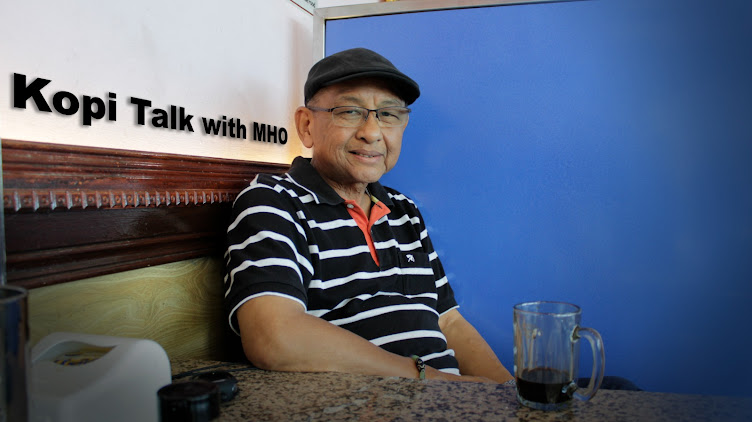
 KopiTalk with MHO | MIB Management 101


There is an old Brunei phrase I heard many times growing up.

“Buat kerja mesti titih dan lutanan.”


Back then, I thought it simply meant rajin — work hard, don’t be lazy, jangan duduk diam.


The elders never explained it like a theory. They just lived it.


They repaired things carefully. They finished tasks properly. They didn’t rush just to say the job was done.


Only much later did I begin to see something deeper.


What our orang lama called titih dan lutanan carries a spirit very close to what Islam calls itqān — doing work with care, precision, and sincerity, even when nobody is watching.


And maybe, somewhere along the way, we forgot that quiet habit.


These days, many workplaces feel busy. Almost restless. But not always moving forward.


People are busy. Very busy.


Emails fly. Meetings happen. Files move from one table to another.


Yet something feels… unfinished.


Not wrong enough to cause a scandal.


Not broken enough to stop operations.


Just slightly off.


Like a door that closes, but never fully locks.


We notice it when reports are rushed because deadlines matter more than depth.


When tasks are completed just enough to avoid complaints.


When people say quietly, “asal siap sudah.”


Nobody openly rejects excellence.


But slowly — almost without realising — excellence becomes optional.


And that is where the difference between lutanan and itqān begins to show.


A person may be lutanan — always moving, always doing something, never sitting still.


But itqān asks a gentler question:

Not just how much did you do — but how well did you do it?


Islam teaches that Allah loves when a believer performs work with excellence — not perfectionism that suffocates the soul, but sincerity that honours the amanah entrusted to us.


Itqān is not about impressing supervisors.


It is about respecting the work itself.


I remember observing two types of workers during my early years.


One moved quickly, always appearing busy. Papers everywhere. Phone calls are non-stop.


The other worked quietly. Slower at times. But when his work reached your table, it rarely came back for correction.


The first looked impressive.


The second built trust.


And over time, people began to realise that real strength in an organisation is not noise — it is reliability.


Today, many offices feel exhausted not because work is hard, but because work keeps repeating.


Fixing the same mistakes.


Revisiting the same issues.


Correcting what should have been done properly the first time.


Maybe this is not only a system problem.


Maybe it is a loss of itqān.


Our Brunei culture once understood this quietly.


Titih means measured, careful, not careless.


Lutanan means industrious, persistent — always moving with purpose.


Put together, they describe a person who works not only with effort, but with conscience.


And when I look back, I realise our elders were not talking about productivity.

They were talking about character.


They knew that a person who works titih dan lutanan will, over time, produce work that carries itqān — mastery shaped by sincerity.


But modern workplaces often reward speed more than depth.


We praise quick results.


We celebrate fast turnaround.


We measure output, but rarely measure care.


So people adapt.


They learn to finish quickly instead of finishing well.


They learn to look busy instead of being meaningful.


They learn that perfection is not required — only compliance.


And slowly, quietly, the soul of work becomes thinner.


No one notices immediately.


But over years, organisations begin to feel heavy.


Not because people lack skills.


But because work begins to lose barakah.


Itqān does not demand that we become flawless.


It asks something simpler:

Do your work in a way that you would not feel ashamed if Allah saw the smallest detail.


Because He does.


That awareness transforms even ordinary tasks.


Writing an email becomes an act of amanah.


Serving a customer becomes an act of ihsan.


Reviewing a document becomes a form of adl.


And suddenly, work is no longer just labour.


It becomes ibadah.


In a Negara Zikir, this understanding matters deeply.


We are not only building efficient institutions.


We are shaping hearts that carry responsibility with dignity.


Titih and lutanan remind us that excellence is not foreign to our culture.


It has always been here — in our language, in our elders, in the quiet way people once approached their duties.


Maybe we do not need new slogans.


Maybe we only need to remember what we already knew.


Work carefully.


Work sincerely.


Work as if it matters — because it does.


Perhaps the real question for us today is simple: Are we just busy?


Or are we building something that carries the spirit of itqān?


Because when effort becomes titih, and character becomes lutanan, excellence stops being a target.


It becomes a way of living.


KopiTalk with MHO — reflections brewed gently, with honesty and heart.


Tuesday, February 17, 2026

Between Survival and Dignity: A Quiet Reflection on Work in Brunei Today Minimum Pay, Meaningful Work — Part Two


We often debate minimum wage through numbers — inflation, formulas, and economic models. But what if the real question is not how much people earn… but how they experience work itself?


Curious to hear your thoughts.


KopiTalk with MHO


The Gap Nobody Wants to Define

After Part One was shared, a reader reached out to suggest that discussions about minimum wage should be closely aligned with inflation — that wages ought to move symmetrically with economic indicators that rise and fall beyond our control. 

It was a thoughtful observation, and one that reflects how many of us instinctively approach economic questions. When conversations about work become uneasy, we often return to numbers — inflation rates, market forces, productivity curves — because they feel measurable and reassuring.

And yet, the comment stayed with me for a different reason.

It reminded me how quickly our national conversations shift toward formulas, as if the right equation might finally settle the question of fairness. Inflation is certainly part of the equation. But sometimes our discussions focus so heavily on the mechanics of adjustment that we overlook a deeper reality — how people actually live within those numbers, and how they experience work beyond what an index can capture.

In Part One, I reflected on the idea that minimum pay often represents survival rather than dignity. The policy itself exists, and its intention is clear. But once we move beyond the existence of a wage floor, another question quietly emerges: if minimum wage is meant to prevent the worst outcomes, what then defines a meaningful livelihood?

This is where the conversation becomes less comfortable.

Because the gap between a policy figure and a lived reality is not always easy to quantify. Some will argue that wages should follow inflation closely, rising with the cost of living. Others will point to economic sustainability, employer capacity, or external pressures that shape the labour market. All of these perspectives have merit. 

Yet perhaps our discussions have become so accustomed to debating adjustments at the margins that we hesitate to ask whether the structure of work itself has changed beneath us. 

Perhaps the real challenge is that none of them fully explains why many workers — especially younger graduates — feel caught between employment and uncertainty, working hard yet unsure whether their efforts are leading toward stability or simply maintaining momentum.

I was recently reminded of a young graduate who quietly shared his frustration after years of study, only to find himself accepting work far outside his field simply to remain employed. 


The job paid enough to survive, but not enough to plan a future. He did not complain about working hard — he worried about standing still. His experience is not unique. 


It reflects a growing undercurrent of underemployment among graduates, where qualifications rise faster than opportunities that match their skills or aspirations.

Perhaps this is where many of our labour conversations become difficult. We speak openly about wage figures, inflation and policy adjustments, yet are more cautious about the structural mismatch between education, expectations and the kinds of jobs our economy is currently able to absorb. Numbers help us understand the surface of the issue, but they do not always reveal how people feel when the path forward seems uncertain.


And maybe that is why the question raised in Part One continues to echo in a different form: not simply what the minimum should be, but whether the gap between survival and dignity is widening quietly beneath the numbers we debate so confidently — and whether meaningful work is becoming the next question we can no longer avoid. (MHO/02/2026)


Thursday, February 12, 2026

Between Survival and Dignity: A Quiet Reflection on Work in Brunei Today


Someone asked me a simple question about minimum wage.


The more I thought about it, the more it became a question about dignity — not just numbers.

Part One of a quiet reflection on work in Brunei today.

KopiTalk with MHO

Minimum Pay, Meaningful Work — Part One
Minimum Pay: Survival, Not Dignity

Recently, someone asked me — quite candidly — for my opinion on the issue of minimum wage in Brunei.

It did not begin in a seminar room, nor in a policy paper. It began with a forwarded message, a simple exchange among friends who were trying to make sense of a complicated reality. The questions were disarmingly direct:

What is the minimum pay required for a Bruneian to live on?
What is a meaningful income?
What is a meaningful job?

One voice insisted that any wider discussion about productivity, employment or economic participation would be redundant unless we first answered these basic questions. Another recalled an old poverty study from years ago suggesting that a living threshold might be around BND 1,500 a month — while elsewhere, people were quoting figures as low as BND 500.

Between those two numbers lies more than just a policy debate. It reflects the tension between survival and dignity.

My immediate response in that conversation was simple: minimum pay is about survival, not dignity. And perhaps that distinction is where this discussion must begin.

Brunei is not new to the idea of minimum wage. The country has already taken a measured step through the Employment (Minimum Wage) Order, which entered its second phase on 1 April 2025. The policy mandates a wage floor of BND 500 per month, or BND 2.62 per hour, covering selected industries such as finance, healthcare, education, professional services and hospitality. The intention is clear — to strengthen worker welfare, narrow wage gaps and provide a basic safeguard against exploitation.

But perhaps before we debate whether the number is high or low, we must first be honest about what minimum wage is designed to do — and just as importantly, what it is not meant to solve.

Minimum wage is, at its core, a protective mechanism. It is a boundary line drawn to prevent exploitation, not a guarantee of comfort. It sets the lowest acceptable standard, not the ideal destination. When policymakers speak of a wage floor, they are not promising prosperity; they are establishing a safeguard so that work does not slip below a level society considers unacceptable.

In that sense, minimum wage answers a narrow question: How low is too low? It does not necessarily answer a deeper question that many Bruneians quietly ask themselves — Is this enough to live with dignity?

The distinction matters.

When the figure of BND 500 is discussed, some hear it as a lifeline. Others hear it as a reminder of how far the conversation still needs to go. And perhaps both reactions are valid. A policy designed to protect the most vulnerable will inevitably feel modest to those measuring it against rising living costs, family responsibilities and the quiet expectations of adulthood in modern Brunei.

To be fair, the phased approach suggests that policymakers are trying to balance two realities at once. On one side stands the welfare of workers; on the other, the capacity of industries — particularly smaller enterprises — to absorb higher labour costs without shrinking opportunities.

So perhaps the real question at this stage is not whether minimum wage is right or wrong. That chapter has already begun.

If minimum pay defines where survival begins, then the more uncomfortable question waiting ahead is this — where does dignity truly start, and are we ready to talk honestly about the gap in between? (MHO/02/2026)


Wednesday, February 11, 2026

Episode 12 — When Work Feels Heavy: Lessons from Surah Al-Insyirah

Some days, work is not just busy.

It feels heavy.

Not because we are weak — but because we are carrying amanah.

Episode 12 — When Work Feels Heavy: Lessons from Surah Al-Insyirah

A reflection on burnout, meaning, and how Allah teaches us to carry responsibility with an expanded heart.


☕ KopiTalk with MHO | MIB Management 101


There are days when work does not just feel busy.

It feels heavy.

Not because of the tasks alone, but because of the people, the systems, the expectations, the politics, the pressure to perform, and the quiet fear of making mistakes.

Some mornings, you sit in your car a few seconds longer before stepping out.

Some evenings you go home tired — not in your body, but in your heart.

And sometimes you ask yourself a question you never say out loud:

"Why does this feel so heavy?"

I used to think this feeling meant something was wrong with me.

Until I encountered Surah Al-Insyirah in a different way.

"Did We not expand for you your chest? And remove from you your burden which had weighed upon your back?"

The Qur'an does not pretend that responsibility is light.

It acknowledges something very human:

Work, duty, and amanah can feel heavy.

Even the Prophet ﷺ carried a burden. Even he felt the weight of responsibility.

So when we feel tired, overwhelmed, or stretched, it is not weakness.

It is a sign that we are carrying something that matters.

Then comes the verse many of us know by heart:

"For indeed, with hardship comes ease. Indeed, with hardship comes ease."

Notice something gentle here.

Allah does not say hardship will disappear.

He says ease comes with it — side by side.

Not later. Not after everything is over.

With it.

In the workplace, this matters more than we realise.

We often tell ourselves, "Once this project is over, I will breathe."

"Once this audit is done, I will rest."

"Once this crisis passes, life will be easier."

But work does not end.

One file finishes, another arrives.

One problem is solved, another appears.

And the surah prepares us for that reality:

"So when you have finished, then strive again."

This is not cruelty.

This is real life.

But notice what comes next:

"And to your Lord, direct your longing."

This is the balance.

Islam does not promise a life without workload.

It promises a heart that knows where to rest.

And this is something we desperately need in modern management.

Because many of us are not tired of working.

We are tired of working without meaning.

Tired of KPIs that do not touch the soul.

Tired of meetings that solve nothing.

Tired of systems that feel blind to human weight.

Tired of carrying responsibilities without feeling supported.

Surah Al-Insyirah teaches something quiet yet powerful:

The chest must be expanded before the burden can be carried well.

If the heart is narrow, every task feels unbearable.

If the heart is open, even heavy work can be carried with dignity.

This is where MIB Management becomes more than administration.

It becomes care for the human interior.

A good organisation does not only manage output.

It notices the weight people carry.

A good leader not only distributes tasks.

He senses who is carrying too much.

A good system does not only ask for results.

It quietly asks whether the people inside it are still breathing.

When leaders forget this, we do not just get inefficiency.

We get burnout.

People still come to work, but their hearts are no longer there.

They do what is required — and nothing more.

Not because they are lazy, but because they are exhausted in places nobody sees.

Surah Al-Insyirah is also a gentle reminder against despair.

The burden you carry today is not meaningless.

The pressure you feel is not unseen.

The tiredness in your chest is not ignored.

Allah knows.

And more importantly, He reminds us:

Hardship and ease walk together.

Sometimes ease is not fewer tasks.

Sometimes it is a stronger heart.

And then comes that gentle instruction again:

When you finish one responsibility, stand up again.

Not with bitterness.

Not with resignation.

But with niyyah.

With amanah.

With itqan.

With the quiet knowledge that your work, however small, is seen.

Perhaps this is the most important management lesson from this surah:

We are not meant to live without burden.

We are meant to live with a heart big enough to carry it.

In a Negara Zikir, this matters deeply.

Because we are not only building institutions.

We are building human beings inside institutions.

No KPI can measure a broken spirit.

No policy can heal a tired soul.

Only meaning can.

Only purpose can.

Only remembering who we are ultimately working for can.

Perhaps the real question Surah Al-Insyirah is asking us in our working lives is simple:

When work feels heavy...

Do we only look for escape?

Or do we also look for expansion of the heart?

Because files will never stop coming.

But a heart connected to Allah will never collapse under them.

KopiTalk with MHO — reflections brewed gently, with honesty and heart.


Wednesday, February 4, 2026

When Praise Makes Us Proud — and Why We Should Pause

 We were praised for our modernity.

But modern for whom, and modern to do what?


KopiTalk with MHO


At the recent Consumer Fair, a remark by Gita Wirjawan, one of Indonesia's most respected businessmen and thinkers, resonated with many Bruneians.


He highlighted Brunei's modernity, particularly our reliable electricity supply. He noted that, compared to many of our Asian neighbours, Brunei enjoys a level of stability and ease that is far from common in the region.


The statement was well-intentioned, and understandably, it made many of us feel proud.


After all, in much of Asia, power cuts still disrupt daily life; businesses plan around outages, and factories pause when the grid fails. In Brunei Darussalam, the lights almost always stay on. Homes are cool. Offices are bright. The switch works without anxiety.


That is an achievement — and it deserves recognition.


But pride, like kopi, should be sipped slowly.


Because once the applause fades, a more profound question remains:
What exactly does our electricity power?


Electricity can signal modernity in two very different ways: comfort — a society that lives well, safely, and predictably — or transformation — a society that uses energy to create, compete, and push beyond its comfort zone.


Much of Brunei's electricity story falls firmly into the first category.


Our power keeps life pleasant. It sustains households, government buildings, malls, and offices. It preserves stability and supports a calm rhythm of life that many countries envy.


Late one evening, a young graduate sits alone in a brightly lit office, the air-conditioner humming steadily. His laptop is open, CV tabs neatly arranged. Outside, the building glows against the night. Inside, he waits — for replies, for openings, for a signal that the system is ready for him. The electricity never falters, but opportunity does.


However, when we look closer, we see that electricity here is used far less as an engine of production, innovation, and industrial depth.


In countries like Singapore, electricity is expensive, almost unforgiving. Yet it is channelled into data centres, advanced manufacturing, AI, and global services. Every kilowatt is squeezed for competitiveness. Power there does not just light rooms — it drives ambition.


In Vietnam, electricity demand strains the system, and outages still happen. But power feeds factories, export zones, and millions of jobs. Electricity there is restless, pressured, and productive.


Even Malaysia uses energy as an industrial ladder, supporting SMEs, electronics, logistics, and digital services.


Herein lies the uncomfortable contrast.


Brunei's electricity is abundant and reliable, but its conversion into jobs, industries, and future pathways remains limited. The lights are on everywhere, yet too few workshops, labs, and digital engines are running behind those lights.


This is where the human story begins.


For many Bruneians, life is physically comfortable but emotionally suspended. Degrees are earned, skills are acquired, and expectations are nurtured, yet opportunity arrives slowly. People wait — for vacancies, for approvals, for direction.


Electricity flows smoothly, but momentum does not.


So when praise comes from respected outsiders, we should accept it with grace, but also with honesty. Yes, our stable electricity supply reflects good governance and infrastructure. But modernity today is not measured by how brightly a country is lit at night.


It is measured by how boldly it uses energy to create value, empower its people, and shape its future.


The danger is not that the compliment was wrong.


The danger is mistaking comfort for completion.


If electricity continues mainly to preserve a calm present, modernity in Brunei will remain something we display. But if we begin to treat energy as leverage — for youth enterprise, digital production, and serious economic experimentation — then modernity becomes something we live and build.


So yes, the lights are on, and we can be proud of that.


But a nation truly becomes modern not when its lights never go out, but when its people no longer have to wait in the glow of certainty for a future that should already be in motion. (MHO/02/2026)


— KopiTalk with MHO


Monday, February 2, 2026

A Landslide Broke the Pipes. What Broke the System?

We thank those who worked tirelessly to restore our water supply. But gratitude should not stop us from asking a simple question: Why did one landslide disrupt an entire district?

Heroic recovery tells one story. Infrastructure resilience is the more important one.

BY Malai Hassan Othman | KopiTalk with MHO


The massive landslide at Kampong Batang Mitus that damaged 16 major water supply pipes left much of Brunei-Muara without water for days. Daily routines came to a halt. Businesses struggled to operate. Health services were stretched. For many households, the absence of something as basic as running water became a slow and wearing hardship, felt hour by hour.


As water gradually returned to taps, the public conversation began to shift. The dominant tone turned to praise — of tireless effort, heroic work, and a job well done.

There is no denying that those on the ground deserve recognition. Engineers, technicians, contractors, and labourers worked under harsh conditions, through rain, mud, and unstable slopes. Many laboured late into the night, away from their families, doing difficult and sometimes dangerous work. Their commitment was real. 


Their sacrifices were not small.


They deserve thanks.


But appreciation must not become forgetfulness.


The risk now is that the story ends too neatly. When applause becomes the conclusion, the harder question quietly slips away: why was the system so vulnerable that a single landslide in a rural area could disrupt water supply to the country’s most populated district?


The landslide was triggered by heavy and prolonged rainfall. That is not disputed. 


Nature played its part. But nature alone rarely explains the scale of a disaster. 


Damage usually occurs when natural stress meets human design choices. The central issue is not simply that a slope failed, but that one failure point was enough to bring the entire system down.


For a capital district to depend so heavily on a single transmission corridor is a risk that should have been recognised long before this incident. When 16 large pipes can be severed in one event, it exposes a system with little redundancy and limited tolerance for failure. These are not abstract concerns. Redundancy and contingency planning are basic principles in modern infrastructure management.


Residents have begun asking straightforward questions. Why was there no backup main pipeline. Why was there no temporary bypass ready to divert supply while repairs were underway. Why did emergency measures only intensify after water had already been lost, instead of systems being in place to cushion the impact from the start.


These questions do not diminish the work of those repairing the damage. They ask why such extreme efforts were required in the first place.


The impact of the disruption went far beyond inconvenience. Clinics adjusted medical schedules. Dialysis services had to be carefully managed. Restaurants closed or reduced operations. Schools faced practical difficulties. Families queued patiently with containers, waiting under the sun. Hotels in unaffected areas filled quickly as residents sought access to basic facilities.


All of this points to a system without sufficient buffers.


Public praise for emergency response is understandable. But praise must never replace reflection. When official messaging focuses almost entirely on how quickly repairs were carried out, it risks sounding reassuring without being reassuring. It comforts in the moment, but it does little to strengthen the system for the next crisis.


Accountability here does not mean blaming individuals. It means institutional responsibility. It means asking whether known landslide-prone areas were properly assessed. It means examining whether slope protection, drainage, and monitoring were adequate. It means questioning whether critical infrastructure corridors were given the level of protection their importance demands.


It also means asking whether lessons from earlier disruptions were truly learned, or quietly archived.


Some observers note that the affected area has long been environmentally sensitive. If that is so, continued reliance on a single exposed corridor becomes difficult to defend. If it is not, then the risk assessment process itself deserves scrutiny.


What remains missing is a clear and honest public explanation of lessons learned. Not statements of reassurance, but a sober account of what failed, what could have been mitigated, and what will change. Without that, confidence rests on hope rather than preparation.


Water security is not only about treatment plants and pipelines. It is about planning for failure before failure happens. It is about recognising that extreme weather is no longer rare. It is about building systems that bend without breaking, so that recovery does not depend solely on exhaustion and sacrifice.


There is nothing ungrateful about asking these questions. On the contrary, it shows respect for the very workers who are repeatedly called upon to fix what might have been prevented. They deserve systems that do not collapse so easily.


The public can hold two truths at once. We can be thankful for those who worked tirelessly to restore the water supply. And we can expect institutions to ensure that such widespread disruption does not become familiar, predictable, or quietly accepted.


If this incident is remembered only as a story of successful emergency repair, its most important lesson will be lost. But if it becomes a turning point — towards honest assessment and preventive investment — then the hardship endured by many may yet lead to a stronger and more resilient system.


In the end, leadership is not measured by how well a crisis is fixed, but by how rarely the same crisis is allowed to happen again. (MHO/02/2026)