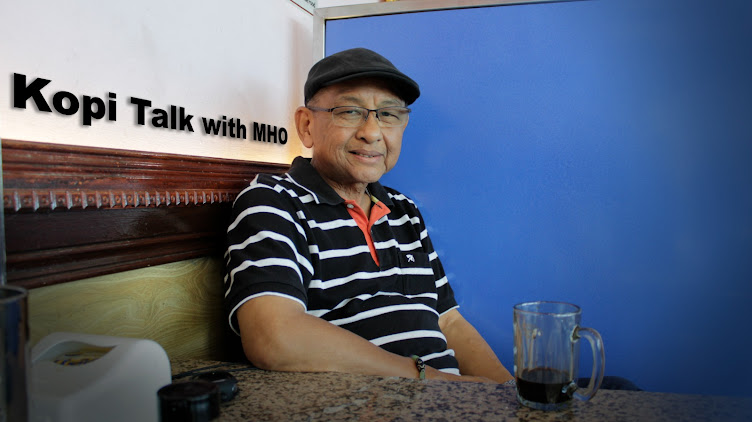
“Was this year’s National Day address simply a tradition — or a quiet call to move faster toward 2035? In this opening piece of a new KopiTalk series, I step beyond the speech to reflect on what it really asks of us — not just to listen, but to act.”

By Malai Hassan Othman | KopiTalk with MHO
Every year, the National Day speech gives us more than just something to clap for. It sparks questions — some we ask out loud, others we just mull over with colleagues, friends, and online, long after it's over. This year felt the same, but with a slight difference: it felt less about where we want to go, and more about how fast we need to get moving.
The speech touched on some big areas — shipping, AI, food, eco-tourism, and our people. Each one felt important, suggesting not just what's a priority, but the direction we're headed as Vision 2035 gets closer. But speeches only give us the highlights. What's left is for us to think about it — and maybe ask ourselves what these goals really mean.
One thing we often wonder after the National Day speech is this: Do we just let it wash over us like it's just a formality — something to hear, clap for, and forget until next year? But a titah is more than just a tradition; it's a guide. If the words show us the way forward, then the best way to show respect isn't just cheering, but really thinking about what needs to happen next. Going forward, the challenge might be less about listening — and more about how each sector, company, and person turns those signals into real action.
So, this KopiTalk series isn't about breaking down policy like a consultant or repeating what's already been said. Instead, we want to take each sector bit by bit, looking at three simple questions: Where are we now? What's in the way? And what do these goals mean for our economy, jobs, and daily lives? We're not trying to judge anything, but to explore the path from dreams to reality — where what people think, what businesses need, and what our institutions can handle all come together.
Over the next few weeks, each article will zoom in on a different area of the speech. One will look at shipping and trade and what it means for our competitiveness and jobs. Another will be on AI and the future of work — something that's really important for young people figuring out the digital world. We'll also cover food, eco-tourism, and how we're developing our people, always asking: Where are we today, and what do we need to do to move forward?
Why do it this way? Because big national changes don't happen overnight. They happen slowly, shaped by the decisions of business owners, teachers, government workers, and everyday people responding to change in their own way. Breaking it down into chunks lets us understand things better — and have a more real conversation — instead of just one big conclusion.
Vision 2035 has always been talked about as a goal way off in the future. But as it gets closer, the conversation naturally changes from dreaming to doing. So, this series is less about explaining the speech and more about watching a journey already underway — one sector, one thought, at a time.
Ultimately, KopiTalk's goal has always been simple: to be a bridge between policy and people, listening to what's said, noticing what's not said, and quietly asking how the nation's direction connects to the lives of those living here. These articles will keep that going — not to predict the future, but to think about how it might be happening right now.
The conversation starts now — beginning with shipping and trade, where the signs of change might already be the clearest. (MHO/02/2026)

.jpeg)
No comments:
Post a Comment