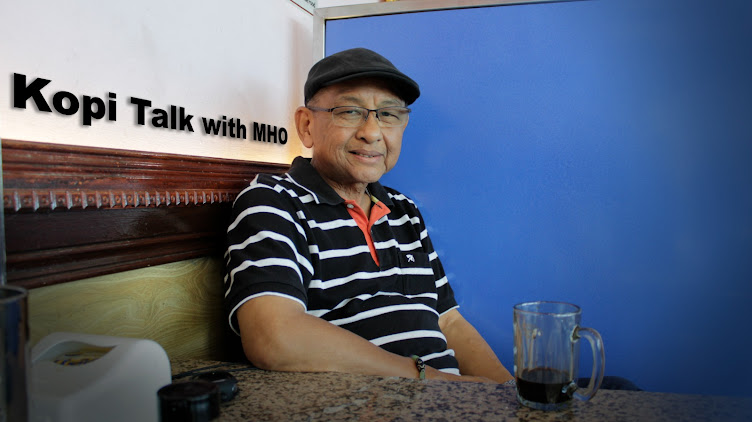

KopiTalk LegCo Tracker · Second Meeting, Day Two — In-Depth from the Hansard · 5 August 2026
By Malai Hassan Othman
A poultry farmer’s two decades inside Brunei’s bureaucratic grey areas became the day’s argument in miniature. After two days and 22 members, Council had produced several remedies. What remains missing is the public contract that says who owns each outcome, how success will be measured and when delivery is due.
Yang Berhormat Pengiran Haji Isa bin Pengiran Haji Aliuddin has spent nearly two decades in the livestock industry. On Wednesday, he described what that has meant in practice: securing land, building poultry infrastructure and navigating licences involving halal certification, vehicle permits, foreign workers and imported raw materials — each handled under different ministries, departments and rules.
His complaint was not that Brunei has no agencies. It was that a problem crossing several agencies can fall into what he called grey areas: overlapping functions, conflicting procedures and uncertainty over who is responsible. Decisions slow down. Business activity and investor confidence pay the price.
But Pengiran Isa did more than diagnose the problem. He proposed a dedicated coordinating platform with a clear mandate to track cross-agency cases, accelerate decisions and secure a resolution within a reasonable period. For businesses, it would become a single point of reference instead of requiring them to pursue the same issue separately through several offices. He also argued that stronger coordination could help curb corruption — a serious claim that deserves attention in its own right.
That intervention captured much of what Council had spent two full days discussing. Usul Bilangan 4/2026 supported His Majesty’s decision to establish three Coordinating Minister posts for national security, economic policies, and social policies and human resources. When the debate concluded, the Speaker said 22 members had taken part and that the motion had received the full support of the Chamber.
The unanimity was significant. So was the distinction between supporting a new structure and defining how its performance will be judged.
Day One had supplied the economic warning. Yang Berhormat Dato Seri Setia Dr. Haji Abdul Manaf bin Haji Metussin said Brunei’s economy had expanded by an annual average of only 0.7 per cent in the decade to 2025 — belum mencukupi dan memadai, not yet sufficient or adequate. Yang Berhormat Awang Haji Salleh Bostaman bin Haji Zainal Abidin had put the delivery problem more plainly: the country does not lack plans, strategies or KPIs. The challenge is execution.
Day Two turned that complaint into several prescriptions.
Yang Berhormat Dr Awang Haji Mahali bin Haji Momin proposed aligning existing ministerial KPIs with shared national outcomes such as economic growth, poverty reduction and food security. He went further than simply calling for another dashboard: he proposed an Integrated National Performance Monitoring System, supported by a single source of truth across ministries, continuous performance assessment, risk analysis and rapid corrective action.
His test was the right one. A poverty programme should not be judged only by how much assistance it distributes, but by whether recipients move out of poverty and become self-reliant. Food security should not be measured merely by the amount held in reserve, but by whether the system can withstand disruption and continue feeding the country.
Yang Berhormat Dayang Hajah Safiah binti Sheikh Haji Abd. Salam gave public visibility to the same accountability principle. She proposed a national Wawasan dashboard setting out the main KPIs, targets, current achievement, lead agencies and corrective measures, updated regularly and accessible to the public. That is more than data presentation. It is an invitation for citizens to see whether national promises are moving.
Two other members carried the argument towards jobs and the grassroots. Yang Berhormat Awang Abdul Aziz bin Haji Hamdan proposed cross-ministry KPIs covering local employment, economic development, investment and household income, alongside village and mukim economic strengths. He also warned that digital growth must be matched by coordinated protection against scams, identity theft and data breaches.
Yang Berhormat Haji Awang Sulaiman bin Haji Nasir proposed developing Satu Kampung Satu Produk into Satu Kampung Satu Ekonomi — One Village One Economy. His model would take communities from an idea to a product, from a product to the domestic market and then to exports, supported by an integrated village socioeconomic plan, economic profiles, clear targets and coordination across the relevant ministries and agencies.
These were not four identical proposals. They were complementary parts of a possible delivery architecture: aligned outcomes, integrated data, public reporting, named leadership, corrective action and an economic chain extending to the village level. Pengiran Isa’s single coordinating platform supplied the practical front door for people and businesses caught between agencies.
The central question is what happens to those proposals now. The motion supported the coordinating structure already established on 4 June. The Hansard records the prescriptions offered from the floor, but not their conversion into a mandatory public framework with agreed owners, baselines, reporting dates and consequences for delay. Full support created political consensus. It did not, by itself, create that delivery contract.
The employment debate showed why such a contract matters. Yang Berhormat Pehin Orang Kaya Indera Pahlawan Dato Seri Setia Awang Haji Suyoi bin Haji Osman returned to unemployment, citing His Majesty’s 15 June Cabinet Meeting call for urgency. He pressed for easier business conditions, stronger foreign direct investment, a larger hiring role for government-linked companies and temporary cross-department placements to move registered jobseekers into work.
Yang Berhormat Awang Mohammad bin Abdullah @ Lim Swee Ann added the connection between training and an actual job. He cited Singapore’s SkillsFuture and Work-Study arrangements and Malaysia’s PERKESO employment-insurance system as models for combining skills development, career guidance, work experience, job matching and employment support. His underlying point was that training numbers alone cannot be the final measure. The destination must be employment.
Question time and ministerial statements also showed that parts of government already work with targets and deadlines. The Visit Brunei Year 2027 strategy set out seven approaches — not six — and said success would be measured through visitor numbers, length of stay, tourist spending, returns to local businesses and wider community benefits. The food-security response included minimum reserves of three months for fertiliser and six months for poultry feed, 100 per cent self-sufficiency in eggs and contingency work arising from conflict in the Middle East.
The health figures were similarly concrete. From January to June 2026, nearly 8,000 BruHealth risk assessments were completed. More than 6,500 people were identified as requiring further screening, and nearly 1,600 screening appointments were booked. BN on the Move recorded 17.55 billion steps, involving between 29,000 and 33,000 active users a month.
The afternoon added a ministerial statement on artificial intelligence in education and detailed infrastructure commitments. Five major dams provide a combined raw-water storage capacity of 180 million cubic metres. Five water-treatment projects were listed, several with 2028 or 2029 completion dates. The non-revenue-water programme carries a target of 25 per cent by 2035, while 51,458 smart meters had been installed and another 77,493 were targeted for completion by December 2027.
Housing came with its own measurable gap: a national home-ownership target of 85 per cent by 2035 against a current rate of 68.1 per cent, with at least 1,606 new units planned under the Twelfth National Development Plan. These commitments matter. They show that government is not operating without figures, targets or dates.
What is still missing is the bridge between sectoral commitments and the national result that opened this debate: an economy averaging 0.7 per cent annual growth over a decade. Which initiatives are expected to move that number? By how much? Who brings ministries together when progress stalls? What corrective action follows, and when does the public get to see it?
That returns the argument to Pengiran Isa and his poultry business. His two decades in the grey areas are what a shortage of coordination looks like outside the Chamber: one permit, one agency boundary and one delayed decision at a time. Yet his speech also showed that Council did not end the debate empty-handed. The prescriptions are now on the parliamentary record.
The next test is whether the new Coordinating Ministers turn those prescriptions into an operating system: one that assigns ownership, publishes the baseline, sets the deadline, tracks the file and intervenes when delivery slips. The structure is in place. The delivery contract now needs to be written.
KopiTalk LegCo Tracker · Second Meeting, Day Two — In a Nutshell · 5 August 2026
Day Two of LegCo, In a Nutshell

.jpeg)
No comments:
Post a Comment