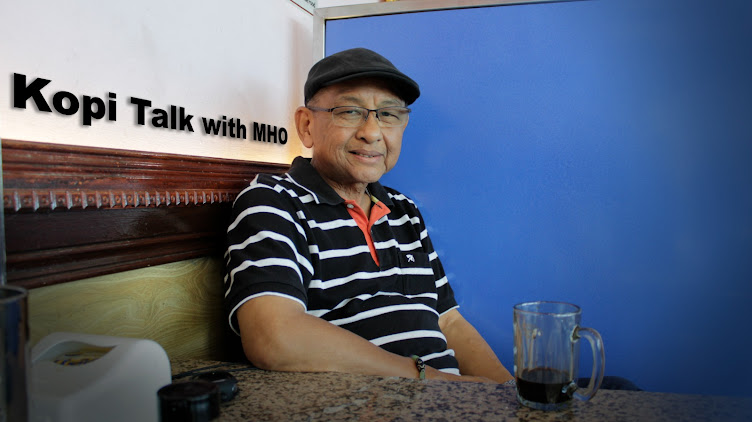
Half of Brunei’s border may now be marked, but the question carrying Limbang’s name remains conspicuously unspoken. What did the unpublished 2009 Exchange of Letters actually settle? As leaders accelerate demarcation, the Al Marhum Begawan Sultan’s recorded position still echoes—demanding clarity, candour and an honest accounting of history for today’s generation.

INVESTIGATIVE REPORT
Sultan–Anwar talks accelerate a 2034 boundary settlement, but a 1970 royal position and the unpublished 2009 agreement leave Limbang’s present status unanswered
By MHO | Bandar Seri Begawan | 24 August 2026
BANDAR SERI BEGAWAN, 24 August 2026 — Brunei and Malaysia have mapped half their land boundary, yet their latest communiqué leaves the most politically charged name off the page: Limbang.
The omission matters because Limbang is not merely another line on Borneo’s map. It separates Brunei’s western districts from Temburong and carries unresolved memories of territorial loss.
The meeting was led by Kebawah Duli Yang Maha Mulia Paduka Seri Baginda Sultan Haji Hassanal Bolkiah Mu’izzaddin Waddaulah ibni Al-Marhum Sultan Haji Omar ’Ali Saifuddien Sa’adul Khairi Waddien.
His Majesty is Sultan dan Yang Di-Pertuan Negara Brunei Darussalam, and the consultation reflected the close institutional relationship between the two governments.
Malaysia was represented by Yang Amat Berhormat Dato Laila Utama Dato’ Seri Anwar Ibrahim, Prime Minister of Malaysia, accompanied by senior federal and Bornean state leaders.
At their 27th Annual Leaders’ Consultation on 22 August, His Majesty and Anwar welcomed progress towards completing the entire 528.45-kilometre boundary by 2034.
The joint statement says 264.791 kilometres have been jointly surveyed and demarcated, approximately 50 per cent of the frontier between Brunei, Sarawak and Sabah.
That statistic signals technical progress. It does not, however, explain whether Limbang’s historical status has been legally settled, politically set aside or absorbed into wider boundary negotiations.
The presence of Sarawak Premier Tan Sri Abang Johari Tun Openg and Sabah Chief Minister Datuk Seri Hajiji Noor underscored that boundary decisions affect communities and administrations beyond both capitals.
Official language emphasised friendship, economic integration and practical solutions. Yet diplomatic warmth cannot substitute for public clarity where history, sovereignty and inherited grievances converge.
What Sector F–G actually means
The negotiations are not being conducted on a blank map. Five existing Brunei–Sarawak land agreements govern covered areas; elsewhere, both countries must negotiate solely through the watershed principle.
The 2026 communiqué unequivocally reaffirms the 2009 Exchange of Letters, the March 2012 boundary memorandum and its Terms of Reference, collectively describing them as binding instruments.
The communiqué directs both sides to resolve Sector F–G solely through the watershed principle, using one jointly determined watershed, before completing survey and demarcation by 31 May 2027.
Sector F–G is understood to cover roughly 6.6 kilometres from Bebuloh towards a point west of Bukit Gadong, near Kampong Limau Manis and the Kuala Lurah–Tedungan crossing.
It lies along the Brunei-Muara–Limbang frontier. It is therefore connected geographically to Limbang, but it should not be carelessly described as the entire Limbang territorial question.
A watershed boundary follows the ridge separating drainage systems. The technical dispute is consequential because competing interpretations of the controlling ridge can shift the legal line across particular parcels.
The instruction to identify a single watershed narrows the negotiating method. It does not disclose the rival alignments, affected acreage, land occupancy or whether private rights require adjustment.
The 2024 communiqué expected that watershed to be determined by 31 May 2025. The 2026 statement still speaks of determining it, without explaining whether that milestone slipped or changed.
It also directs technical work to consider ‘points of convergence’. That diplomatic phrase indicates common ground exists, but equally suggests material differences remain undisclosed.
Those details deserve publication once negotiations permit. People living, farming or owning land near the line should know how a cartographic decision may alter administration and documentation.
The 1970 record that still resonates
Limbang’s continuing emotional force is anchored in an unusually clear official record left by Al-Marhum Sultan Haji Omar ’Ali Saifuddien Sa’adul Khairi Waddien, the Begawan Sultan.
Pelita Brunei’s front page of 14 October 1970 reported that Brunei’s claim over Limbang remained ongoing and, God willing, would continue to be pursued by the Government.
A second front-page report on 21 October said Brunei had undertaken negotiations, but the boundary had never been negotiated, still less agreed, by the State of Brunei.
The same statement described Limbang as Brunei’s right, said it had been taken and maintained that what was taken ought to be returned.
These were not anonymous recollections or modern social-media claims. They were published official statements, broadcast through Radio Brunei and preserved in the national newspaper’s archive.
Their vocabulary belongs to a different diplomatic era, but their meaning continues to shape how many Bruneians interpret later silence: absence of discussion is not necessarily surrender.
That resonance should not be confused with scientific measurement. Brunei has no published contemporary opinion poll establishing how many citizens support, oppose or prioritise a renewed Limbang claim.
Nevertheless, recurring online discussions, family histories and references to the Begawan Sultan show that Limbang remains part of public memory, even when absent from formal communiqués.
How Limbang became the unfinished question
Limbang was historically governed within the Brunei Sultanate and provided revenue, food and river access. Sultan Hashim Jalilul Alam Aqamaddin repeatedly refused to cede it to Sarawak.
Charles Brooke occupied Limbang in March 1890 and raised Sarawak’s flag without Sultan Hashim’s consent. British authorities later accepted the annexation despite Brunei’s continuing objections.
The Sultan rejected proposed annual compensation, refusing to exchange territory for payment. Britain declared the matter closed in 1895, but that administrative decision did not secure Brunei’s agreement.
The episode explains today’s sensitivity: for many Bruneians, Limbang represents not an antiquarian map dispute but the culmination of coercive territorial contraction under colonial protection.
Modern international relations, however, operate through subsequent treaties, conduct and mutual agreements. Historical injustice alone does not answer the present legal status of a boundary.
The 2009 contradiction
The decisive modern document may be the Exchange of Letters signed on 16 March 2009 by His Majesty and then Malaysian prime minister Tun Abdullah Ahmad Badawi.
The signed letters, annexes and maps cannot be found in either government’s accessible treaty records or international repositories. What is public is an eight-paragraph joint press statement summarising them.
That summary identified maritime delimitation, a petroleum Commercial Arrangement Area, land-demarcation modalities and continuing Malaysian maritime access across Brunei’s waters, subject to Brunei law.
It said land boundaries would follow five historical Brunei–Sarawak agreements and, where appropriate, the watershed principle, after which all land-boundary issues would be resolved accordingly.
Tun Abdullah Ahmad Badawi subsequently announced that Brunei had dropped its Limbang claim. Malaysia’s official diplomatic account has continued to repeat that interpretation of the agreement.
Brunei’s then Second Minister of Foreign Affairs and Trade, Pehin Dato Lim Jock Seng, publicly denied that Limbang had been discussed, saying the negotiations concerned boundary demarcation generally.
Those statements cannot both describe the agreement in the same way. Yet the complete Exchange of Letters has not been published for independent scrutiny by the public.
Confidential diplomacy may be necessary during negotiation. Seventeen years later, continuing ambiguity over a nationally sensitive question carries its own cost: speculation fills the space left by official silence.
Both interpretations could technically coexist if the letters fixed surrounding boundaries without naming Limbang. That remains an inference, not a conclusion provable without the authoritative text.
The fair question is not whether current leaders may negotiate. It is when, how and through which publicly explained instrument the 1970 position changed — if it changed at all.
Progress, deadlines and three different clocks
After the consultation, Dato Laila Utama Dato’ Seri Anwar Ibrahim told reporters that he and His Majesty believed the basic parameters of overlapping claims could be resolved before the end of 2026.
That target differs from the Sector F–G watershed deadline of 31 May 2027, and from the 2034 target for completing the entire boundary.
The 2026 deadline concerns the basic parameters of overlapping claims broadly, as Anwar stated, while the 2027 date applies only to Sector F–G.
The 2034 target, meanwhile, governs the completion of surveying and demarcating the entire 528.45-kilometre land boundary shared today by Brunei and Malaysia.
Brunei’s Legislative Council was told in 2025 that priority areas included Sungai Tujoh–Pagalayan, Bebuloh–Bukit Gadong and Bukit Gadong–Kuala Menunggol, with completed stretches remaining tentative pending overall agreement.
The maritime dimension also remains unfinished. Both governments have yet to finalise terms for a joint ad hoc committee implementing maritime matters under the 2009 Exchange of Letters.
Land and sea negotiations therefore remain active on several fronts. Treating every technical sector as proof that Limbang has been settled, or revived, would outrun the available evidence.
A border that people must cross
The communiqué also addresses contraband, information-sharing, cross-border search and rescue, emergency response and a proposed single checkpoint to reduce repeated immigration endorsements.
It links these measures with the Trans-Borneo Highway and other road projects. The frontier is therefore simultaneously a sovereignty line, security responsibility and daily corridor for divided families.
That practical cooperation strengthens, rather than diminishes, the case for clarity. Citizens can support easier movement and close Malaysian relations without abandoning legitimate questions about historical title.
A divided but connected public
The public comments supplied for this report reveal several currents: historical attachment, suspicion of colonial arrangements, uncertainty over 2009, pragmatic acceptance and gratitude for peaceful relations.
Some contributors insist Limbang remains morally Bruneian. Others ask whether Limbang residents themselves would accept Bruneian administration, while many emphasise kinship across a border traversed daily.
These comments are illustrative rather than representative polling and cannot determine sovereignty. They nevertheless reveal a public capable of holding two positions simultaneously.
Bruneians may value close Malaysian relations while still seeking an honest account of their history and legal clarity concerning Limbang’s present status.
What transparency would now require
Neither government needs to inflame nationalism. Both can reduce it by publishing a plain-language account of what the 2009 letters decided and what present negotiations do not cover.
That demand is neither new nor confined to commentary outside government circles. In June 2010, Parti Pembangunan Bangsa’s Fifth Annual Congress passed a formal resolution.
The resolution treated the Limbang claim as separate from wider Brunei–Sarawak boundary demarcation and urged the Government to involve people’s representatives in related negotiations.
It specifically sought consultation before any decision to pursue or relinquish the claim, while requesting greater transparency concerning Limbang and the broader boundary question.
The party’s president repeated that call at its Ninth Annual Congress in 2014, saying the request had remained unanswered since it was first raised in 2008.
They could identify completed sectors, describe remaining disputed segments, explain how the watershed rule affects Sector F–G and clarify whether completed lines are provisional until comprehensive ratification.
Most importantly, Brunei could state whether Limbang remains a separate sovereignty claim, has been formally relinquished, or is regarded as settled through boundary demarcation under the 2009 framework.
Such disclosure would honour, rather than exploit, the Begawan Sultan’s recorded position. It would allow citizens to understand whether continuity, compromise or legal closure followed after 1970.
The Sultan–Anwar consultation demonstrates that patient diplomacy can convert disputed geography into an administered frontier. Its credibility will ultimately depend on whether technical certainty is matched by historical candour.
Half the boundary may now be marked. Until Limbang’s status is named with equal precision, however, the most enduring question on the map will remain publicly unanswered.
Source note
- Joint Statement, 27th Annual Leaders’ Consultation, Brunei Ministry of Foreign Affairs, 22 August 2026
- Joint Press Statement following the signing of the 2009 Exchange of Letters, 16 March 2009
- Brunei Darussalam’s preliminary continental-shelf submission to the United Nations, 12 May 2009
- Pelita Brunei, ‘Brunei Akan Terus Menuntut Limbang’, 14 October 1970
- Pelita Brunei, ‘Sempadan Brunei dan Limbang: Tengku Di-Chabar Memboktikan-Nya’, 21 October 1970
- The Scoop, ‘Brunei, Malaysia aim to settle land border by 2034’, 5 March 2025
- Brunei report on the 2009 Exchange of Letters and Limbang denial, 18 March 2009
- Parti Pembangunan Bangsa (NDP), Usul-Usul Khas, Kongres Agung Tahunan Ke-5, 5 June 2010; and Presidential Address, Kongres Agung Tahunan Ke-9, 14–15 June 2014
- Intan Suhana Che Omar, ‘Malaysia-Brunei sepakat selesai isu tertangguh’, Utusan Malaysia, 22 August 2026
- Malaysia Ministry of Foreign Affairs, ‘New Era in Brunei-Malaysia Bilateral Ties’

.jpeg)
No comments:
Post a Comment