Friday, July 10, 2026

Brunei’s ‘Belacan’ Factor

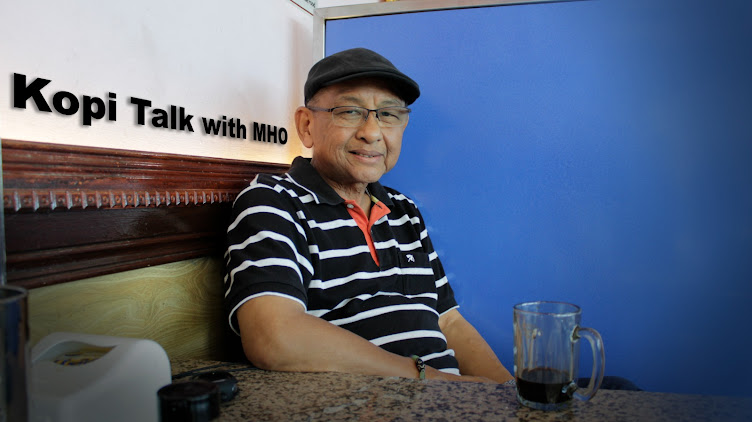
By Malai Hassan Othman  |  KopiTalk, Borneo Bulletin  |  First published: early 2000s


Editor’s note: This piece was written to mark Brunei’s National Day anniversary, when the theme that year focused on national identity and the need to strengthen it. It appeared in KopiTalk in the Borneo Bulletin. References to specific internet technologies have been lightly updated; the argument is reproduced as written. — MHO, July 2026


We in Brunei marked our National Day anniversary that year with a theme focusing on national identity and the need to strengthen it. It was fitting indeed, coming at the start of a new millennium — an era supposed to bring along a glut of great challenges and opportunities.

In this new era, the so-called globalisation process — driven by the rapid evolution of information technology — is slowly stripping down geographical boundaries and merging different nations into a borderless global village. Technology is revolutionising the way we do business, the way we trade, invest and interact with each other.

But with this rush of the IT era sweeping the world, we are also witnessing a revolutionary change in our way of thinking, our mindset, for better or for worse. Never mind all the good things that can happen to us as a result of this rapid IT development and the globalisation process. What clearly worries us, and our leaders, are the adverse effects these developments can have on our society.

We are not just talking about what damages IT and globalisation can do to our business sector. These can be actually addressed effectively by making some financial adjustments. But what worries our nation is the adverse influence of technology on our society. IT development is not only transcending geographical boundaries — it can also strip down the social fabric, erode cultural and religious values of a community.

This is already happening in many developed and developing countries. Brunei is at the crossroads, and the path we are taking leads us towards the mainstream of the globalisation process. So for us in Brunei, as we continue with our march into the new millennium, we must not allow ourselves to stray from our spiritual, cultural and social values and our national identity.

However, to uphold and strengthen our national identity as Bruneians, we also need to understand what it means to be a Bruneian.

But unfortunately, in today’s modern environment, the younger generation in particular tends to mistakenly identify itself with other alien cultures and values. Even some families have misplaced their family pride. Misplaced in a sense that they were overzealously proud of their adoption of alien values dictated by this materialistic world.

As one of my friends in Parliament observed at the time, Bruneians, it seems, have lost their real identity as Bruneian Malays. He said we were living in an era where life begins with ‘e’ — e-commerce, e-style, e-prayer — and we were slowly witnessing the erosion of self-esteem and identity among our younger generations.

“Susah… susah… udang sudah jadi belacan!” he lamented — referring to how some people have lost their self-esteem and identity in this headlong rush of the IT age. He said an udang — a prawn — will always be a prawn, no matter what one does to it, except when it is pounded and reduced to belacan — paste.

“We can fry it, and yet it will be called a fried prawn. We can make curry out of it, and yet it will be called a prawn curry. So you see my point — the identity of the prawn is only lost when we make a ‘belacan’ of it,” he added. Although everyone laughed at the analogy, his message hit home. Everyone agreed that it is indeed important to do something now to ensure that the Bruneians don’t become ‘belacan’ like the ‘udang’.

The other day I became witness — or to be more precise, an ‘e-witness’ — to our young people or to our community e-chatting over in a virtual chat room on our social media platforms. They were chatting satirically about what it means to be a Bruneian. Their definition, or rather their perception of what it means to be a Bruneian, was provocatively revealing in a sense that their positive views on what it takes to be a Bruneian leave much to be desired.

If their aim is to make sure Bruneians erased all the negative traits that distinguish us from other nationalities, then they deserve all the plaudits. At first I found their list of what defined a true-blooded Bruneian rather ludicrous. But on second thought, I believed we should make use of it as a reflection on ourselves and try to mend our ways.

Here are some of the characteristics of a true Bruneian I found in that virtual chat room:

•  You think other Asian countries are poorer than yours

•  Your local McDonald’s serves rice and sambal

•  You have tried passing Malaysian coins in a vending machine or pay phones

•  You have smuggled electronics, CDs and other items into Brunei

•  You do your shopping in Singapore, United Kingdom and Miri

•  You realised that money is everything before you were six

•  You think the Liga Perdana is equal to a Super Bowl

•  You talk loud thinking everyone is deaf, but actually YOU are

•  Your clothing has brand names printed on it that are visible from 50 feet away

•  You have paid more than BND100 to get your own private car license plate

•  Sago (ambuyat) is your staple food and it is a necessity to have loads of it even when staying overseas

•  You act like a rich tycoon in Miri even if your average income is below BND1,000

•  You furnish your home luxuriously even if it means eating rice and kicap for the last two weeks before the end of the month

•  Hutang — debt — is your best friend

•  You make sure that everything you consume at home is halal but eat everything else when you are overseas


If the way young Bruneians identify their countrymen is anything to go by, we can expect the future that our generation is building to end up in a worse state than belacan.

It is not too late. But it is time — well past time — to ask ourselves honestly what kind of Bruneians we are raising, and what kind of Brunei we are building for them to inherit.


These two columns were first published in KopiTalk in the Borneo Bulletin in the early 2000s. They are reproduced here on Substack as part of an ongoing archive series. A new KopiTalk essay engaging with these themes in the context of His Majesty’s Ilal Hijrah 1448 address — ‘Hijrah Penyelamat Aqidah: Faith in the Age of the Algorithm’ — is available in the current issue. — MHO


Malai Hassan Othman is a veteran journalist, political analyst, and Executive Director of Barakah Bioindustries Company. KopiTalk with MHO is published on Substack at kopitalk.substack.com


Teaching Our Children to Be Good, Virtuous Adults

KopiTalk with MHO

From the Archiv


By Malai Hassan Othman  |  KopiTalk, Borneo Bulletin  |  First published: early 2000s


Editor’s note: This column was first published in KopiTalk in the Borneo Bulletin in the early years of this millennium — at the dawn of the internet age in Brunei. It is reproduced here substantially as written, with light updates where specific technology references have dated. The concerns raised then have, if anything, grown more urgent since. — MHO, July 2026


People lamenting over what they see as a serious deterioration of moral values among our young people as we rapidly move forward into this era of globalisation is becoming a familiar refrain. We now often hear sighing with concern over such moral deterioration among the young. It is indeed worrying. A growing number of youths continue to fall into the cauldron of social evils such as drug abuse, housebreaking, theft and illicit sexual behaviour, despite various nationwide efforts to arrest such problems.

I too share their concern. But not so much on the moral degenerations of our young people, but more on our moral standards as adults — as the elder citizens of this society, and as the people with the power to chart the future of this lovely nation and its young generation.

But this does not mean that the problem of falling moral values among the young is less important or does not deserve serious attention. It is indeed a worrying problem that demands our utmost attention.

Whether we like it or not, we have to admit that as individuals, business people, teachers, shopkeepers, executives, clerks or government officers, Bruneian or not, we are all directly or indirectly responsible for the way our young people grow up. As the saying goes, children are the products of the homes that society and the nation build for them through adults.

Like those before them, they too came to this world pure and innocent. The homes, the environment, and the society where they grew up would put colours to them — the good colours or the bad colours. Whatever it is, it would reflect the true colours of our society.

As adults we are well aware of the moral problems afflicting our young people. But are we that well aware of the prevailing moral problems in the adult world — the world where our children, the future caretakers of this very same world, are also living?

We know well that drug abuse, especially among our Muslim youth, teenagers and schoolchildren, is growing at a worrying rate. But have we already put in enough effort — as individuals, as families, and as a community — to help curb the problem?

We have grown such thick skins that we are no longer shocked to hear news about babies born out of illegitimate relationships being abandoned, and in some cases left in rubbish dumps. Cases of rape, theft, and burglary involving youths and teenagers are no longer shocking stories to many of us. But does our strong demeanour still have the soft spots to sense the root cause of many of these problems?

Remember how our society would normally rationalise the unemployment problem? How our community leaders, educators, policymakers and even employers, with their various explanations, usually addressed this problem?

“Ah… our young people are too choosy. They only want to work in the government and offices. They do not have the right qualifications, or they do not have the right attitude towards work,” and so on and so forth.

It seems that when it comes to explaining problems involving our young people, we seem oblivious to our own failure to address the root causes. But have we ever cared to ask ourselves if we have done enough to address these problems — say, by creating more job opportunities for our young people, by ensuring fair and equitable distribution of wealth through our national economic development programmes, by being honest and impartial in carrying out our duty to serve the nation and the people?

Have we really been caring, not selfish, and not self-centred in doing our part in building the nation? This too is the way some of us look at other social problems. We blame and give one reason after another to justify our prejudiced views on youth problems when looking at many of these social issues.

For many of us, it seems the easy way out is to simply blame someone else — parents, schools, the government, or even the world. There was a time when people who seemed troubled by the current state of social problems afflicting our young people had even gone to the extent of questioning the credibility of our MIB framework for nation-building.

Sadly, with our foolishness and our reservation to appreciate our own virtuous culture, religion and system of governance, we still have the audacity to be critical of what we would often shrug off as ‘irrelevant ancient philosophy’ for building a modern nation.

At our own convenience, and of course to fit our narrow perception of what ‘modern’ progress should be, we would often question whether MIB could really provide a conducive atmosphere for modern progress to effectively take place. Perhaps it is now time for us to be truthful and honest with ourselves. We need to look at ourselves before we pass judgement on the state of affairs of our youths.

We need to accept that it is we the adults who corrupt our children. We are the ones who pollute the beautiful world of our young people’s future. It was our self-interest that ruins the future, and our hypocrisy that destroys what our young people are building for themselves and for the nation. In the process we emptied the hearts of our children of the pure and beautiful spirit that longs for true and eternal happiness.

We have created for them a new way of life devoid of real happiness. We thought we were giving them the world but the truth is we have surrendered them to the world. We have gone against the will of God the Almighty that made us His slaves and sent us to this world as His vicegerents — not as slaves of the world and slaves to our lust and greed for money, position and other worldly matters.

We thought the Arabs of the Jahiliyyah — the age of ignorance — were cruel as they buried their baby girls alive. But actually we are even more ignorant and cruel than the Arabs of that era. We lovingly killed the pure and beautiful spirit of our children that longs for true and eternal love and happiness. We teach them that the minute they came into our world, selfishness, money, high position and power are the ultimate goals for achieving happiness in this world.

And what we are seeing now are the consequences of our work.


Tuesday, July 7, 2026

THE UNFINISHED AGENDA

This series ends where national renewal must begin: with conscience. Brunei has studied its future, named its habits and written its plans. But Muraqabah asks a harder question of every leader, parent, professional and citizen: what are we actually sending forward for tomorrow — and is it enough?

Part 5 — Final: Muraqabah — The Nation That Watches Itself

The covenant was made. The effort was questioned. The mirror was held. The habits were named. What remains is the choice that only conscience can make.


By Malai Hassan Othman


This series was never really about the past.


It was always about the future.


For the generation now coming of age in Brunei — the young leaders, the emerging professionals, the future civil servants, the entrepreneurs who have not yet built their enterprises, the policy makers who have not yet made their most consequential decisions.


The generation that will govern this nation when 2035 arrives.


Whatever that year delivers will be determined not by the plans written in the past but by the choices made now, by the people who are young enough to believe that the future is still open.


It is.


But it is not waiting.


يَا أَيُّهَا الَّذينَ آمَنُوا اتَّقُوا اللَّهَ وَلتَنظُرْ نَفْسٌ مَّا قَدَّمَتْ لِغَدٍ وَاتَّقُوا اللَّهَ إَنَّ اللَّهَ خَبيِرٌ بِمَا تَعْمَلُونَ

“O you who believe, be mindful of Allah, and let every soul consider what it has sent forward for tomorrow. And be mindful of Allah — indeed, Allah is All-Aware of what you do.”

Surah Al-Hashr, verse 18.

That ayat is the foundation on which this series was built — even when it was not named.


Every part has been a question about tomorrow. What was promised for it? Whether we strived sincerely toward it. What we saw when we looked honestly at the distance between that promise and today. What habits have prevented us from closing that distance?


The Prophet, peace be upon him, reminded us that a person is at a loss if tomorrow is no better than today — and in ruin if today is worse than yesterday.


The same is true of nations.


Muraqabah is the fifth principle of the 5M framework — Mu’ahadah as covenant, Mujahadah as striving, Muraqabah as awareness, Muhasabah as self-reckoning, and Mu’aqabah as self-correction.


But it is not the last step in a sequence.


It is the condition that makes all the other steps real.


Mu’ahadah can be invoked at a ceremony. Mujahadah can be launched as a programme. Muhasabah can be scheduled as a workshop. Mu’aqabah can be produced as a report.


Muraqabah cannot be scheduled.


It is a state of constant awareness — quiet, interior and beyond regulation — that what we do is always seen. Not only by institutions, the public or history. But by the values we claim to hold and, for those who believe, by Allah SWT, who is All-Aware of what we do.


That awareness, when genuinely present, makes a particular kind of dishonesty impossible.


The dishonesty of the procurement policy designed to deliver 40 per cent to local companies that delivers 3 per cent — and calls itself a step in the right direction.


Muraqabah is the internal standard that makes this self-deception visible — not to anyone else, but to the person making the choice.


That is both its power and its demand.


To the new generation of leaders — those now being prepared to take the helm of this nation’s ministries, agencies and institutions — this series has been, in part, a briefing.


Not on policy. On inheritance.


You are inheriting not only the institutions but the habits that shaped them. The analysis paralysis. The institutional illusion. The compliance without amanah. The Dengar cerita… tunggu data rhythm that has governed the system’s response to its own diagnoses across six decades.

You did not create these habits.


But you will choose whether to reproduce them or break them.


That choice — made quietly, in the early years of your leadership, before the full weight of institutional culture settles around you — is the most consequential one you will make.


Muraqabah asks you to make it honestly.


Not to perform reform. To enact it.


Not to manage the gap between aspiration and reality. To close it.


To the professionals — the architects, engineers, accountants, lawyers and technical experts whose knowledge this economy needs — Muraqabah asks not whether you are competent but what you are building with your competence.


Are you deploying your expertise in the service of genuine enterprise — building firms, training the next generation, taking the commercial risks that genuine economic participation requires? Or are you choosing comfortable employment, leaving the harder work of enterprise to others?


The pioneers of the 1980s chose to build.


Muraqabah asks whether you are willing to make the same choice.


To those in governance and to the decision makers and policy makers — those who run the machinery and those with the authority to change what the system measures and rewards — the question is the most specific.


When you sign off on a contract, does the 3 per cent figure trouble you?


When a programme is completed, the report filed, and the outcome unchanged, does something in you register that?


When a new leader arrives, and the initiative that was gaining traction quietly disappears because no handover protocol was ever written — do you feel the weight of what was lost?


Muraqabah says: You already know the answer.


The awareness is already present.


The question is whether it governs action or merely accompanies inaction.


Amanah — alongside Siddiq, Tabligh and Fatanah — is not the performance of responsibility.


It is the genuine ownership of outcomes.


The three corrections named in Part 4 remain the test: measure outcomes, not outputs; build institutions that outlast the people who run them; and change the signal sent to the next generation.


They have been waiting since 1962 for the decision maker who will treat them as a commitment rather than a suggestion.


Muraqabah asks whether you are that person.


To the community — the families, the parents, the teachers, the neighbours who shape what is valued and what is not — the call is the quietest and perhaps the most important.


When a capable child is steered toward government employment because it is safe, the family is making a choice. When the entrepreneur who succeeds is less celebrated than the official who is promoted, the culture is making a choice.


These choices accumulate into the conditions that determine whether a generation steps forward to build or steps back to wait.


Now consider what this generation is inheriting.


When Brunei gained independence in 1984, the nation faced a shortage of qualified people. The ambition to produce more — more graduates, more professionals, more PhDs — was urgent and correct.


Forty years later, we have produced them.


More degree holders than at any point in the nation’s history. More PhDs. More professionally qualified Bruneians across every discipline.


And a significant number of them are delivering food.


Working freelance on digital platforms. Holding titles that do not match their qualifications. Sitting in roles for which they are vastly overqualified because the enterprise ecosystem that should have received them was never fully built.


The education system did its work.


The economy did not do its.


The gig economy has grown quietly but visibly. Food delivery riders, platform-based freelancers, informal traders, short-term contract workers. These are not unambitious people. They are qualified Bruneians doing what rational people do when the formal economy has not built a proper place for them.


They are filling the empty middle — the commercial space that this series has identified as the gap that should have been occupied by local enterprise.


Underemployment is the quiet companion of the economic sovereignty gap. It is what happens when a nation produces educated people faster than it builds the enterprise ecosystem to receive them.


Maqasid Syariah demands the protection of intellect — the cultivation and deployment of human capability in the service of a just and flourishing society.


A nation that invests in producing PhDs and then has no ecosystem to deploy them is not protecting intellect.


It is producing it and wasting it.


The social indicators say the same thing in a different register.


In 2024, Brunei recorded 672 divorces — part of an elevated trend across the past decade. In the same year, 777 people were arrested for drug-related offences, up from 711 in 2023. Over 40,000 grammes of methamphetamine were confiscated — a tenfold increase from the previous year.


Of those arrested, 393 were unemployed — not merely without work, but now pulled into the criminal justice system, many facing the lasting consequences of incarceration.


Three hundred and ninety-three unemployed Bruneians did not simply appear in a statistic. They moved from economic exclusion into arrest records, court processes and prison cells in a single year.


These are not merely statistics about crime.


They are statistics about exclusion.


Young people who could not find a genuine place in their own economy. Who fell through a gap that was not caused by their failure but by the failure of a system that did not build the conditions for their participation.


The protection of lineage — safeguarding the next generation, their wellbeing and their dignity — is one of the five highest obligations in Islamic governance.


Those 393 represent the human cost of the delivery gap.


Muraqabah asks: Who is accountable for that number?


The honest answer is: all of us who have accepted the system’s habits without breaking them.


This is why Anjakan Paradigma is no longer a slogan.


It is a survival condition.


Not for Brunei’s economy alone. For the social fabric that the economy either sustains or, when it fails, unravels.


Wawasan 2035 is not simply an economic vision. It is the tip of the iceberg. Beneath it lies a much larger obligation — to build a society that upholds the principles of ethical governance, spiritual integrity and genuine economic participation.


A Negara Zikir.


A nation that remembers — permanently, consciously, without needing a crisis to remind it — what it is accountable for and to whom.


A nation does not achieve Negara Zikir by declaration.


It achieves it by the daily, institutional, cultural practice of measuring its actions against its values — and correcting the gap, not explaining it.


The framework for that correction already exists. Islamic Social Capitalism — the model gaining traction in current thinking about Brunei’s economic direction — offers an economy aligned with justice, equity and faith. One in which local enterprise is genuinely supported. In which the PhD has somewhere to build. In which the degree holder has an enterprise ecosystem to enter. In which the gig worker has a pathway to genuine participation rather than a holding pattern.


Botswana’s experience reminds us that natural resources alone do not build prosperous nations. Institutions do. Resource wealth becomes lasting prosperity only when it is converted into human capability and productive enterprise.


Brunei has the values, the accumulated wealth and the philosophical framework — in MIB, in Negara Zikir, in Maqasid Syariah — that most nations can only aspire to.


What it has not yet had, consistently, is the sustained will to translate those values into institutional practice.


That translation is what Muraqabah demands.


Every day. In every decision. By every person with responsibility for any part of the national life.


Nine years remain before 2035.


Nine years for the generation now entering leadership to decide what kind of inheritance they will build for the generation that follows.


That generation is watching now. They are in the schools today. Some of them — the most capable, the most qualified, the most earnest in their desire to serve — will inherit either an economy that has finally built a place for them or one that hands them a gig and calls it opportunity.


What we send forward for tomorrow is already being decided.


In the home. In the school. In the boardroom where a contract is awarded. In the family conversation where a young person’s aspiration is either affirmed or redirected toward safety.


Surah Al-Hashr reminds every soul to consider what it is sending forward.


Not the nation.


Every soul.


This series began with a memory — the confidence of the independence years, the pioneers who built with their own hands, the quiet belief that Bruneians could build their own nation with their own knowledge and their own professional pride.


It ends with a question.


Not about the past. Not about the system. Not about the government or the institutions or the plans already written.


About you.


The reader. The leader. The professional. The parent. The civil servant. The decision maker. The young graduate wondering whether the economy has a place for what you have spent years becoming.


Tomorrow is already being built.


Every contract awarded.


Every young person encouraged — or discouraged.


Every institution strengthened — or allowed to drift.


Every choice becomes part of what we send forward.


The question is no longer whether Brunei knows what must be done.


The record shows that we do.


The question is whether what we are sending forward for tomorrow is enough.


KopiTalk with MHO  •  The Unfinished Agenda  •  Part 5 of 5

The series is complete.


Monday, July 6, 2026

The Journey of the Heart - Part One: The Composition We Could Never Finish

We all wrote Cita-Cita Saya as children, believing we knew what our future would be. Then life quietly edited our compositions. What if the real question was never what we wanted to become—but who we are becoming? A Journey of the Heart inspired by Surah Al-Baqarah, Ayat 27.


KOPITALK JIWA


Reflections on Surah Al-Baqarah, Ayat 27

There was one Bahasa Melayu composition that almost every child of my generation remembers.


Cita-Cita Saya.


I was probably eight or nine years old, in Primary Three. We had only just begun learning how to write short karangan of around a hundred words. Yet our teacher was already asking a question that would take a lifetime to answer.


Apakah cita-cita kamu?


What did we want to become when we grew up?

The answers came easily for many of my classmates.


Saya mahu menjadi doktor.

Saya mahu menjadi guru.

Saya mahu menjadi jurutera.


I admired their certainty.

Mine was different.

It was not that I lacked ambition.

I simply did not know.

My greater challenge was making sure I wrote enough words. So I added another sentence. Then another. Sometimes I repeated the same idea in different ways. Sometimes the composition wandered. As long as I reached the required number of words, I felt I had completed the assignment.


Looking back today, I smile at that little boy.

How could he possibly know what he wanted to become?

He had barely begun to understand life.

The truth is, none of us knew.

We were trying to describe a future that only Allah already knew.

—  —  —

Life, however, has a gentle way of editing the compositions we confidently write as children.

Some who dreamed of becoming doctors became technicians. Some who wanted to teach found themselves running businesses. Others discovered professions that did not even exist when we were sitting in that classroom.

That was not failure.

That was life.

As we grow older, we slowly discover that life is not measured by how closely it follows our plans, but by how faithfully we respond when our plans change.


Perhaps that is why the Qur’an speaks to us in ways we only begin to appreciate with age.

Surah Al-Baqarah, Ayat 27 does not begin by talking about success or failure.

It begins by talking about something much deeper.

It speaks of people who break their covenant with Allah after accepting it, sever the ties that Allah has commanded to be maintained, and spread corruption upon the earth.


At first glance, the verse seems to describe other people.

The corrupt.

The unjust.

The wicked.

Yet tadabbur asks us to pause before pointing outward.

—  —  —

Could this verse also be inviting us to look inward?

Not every broken covenant begins with a dramatic act of rebellion.

Sometimes it begins with a neglected prayer. A promise quietly forgotten. A kindness postponed until tomorrow has no tomorrow.

Rarely do people lose their way overnight.

Like a boat drifting from its course, the movement is often so gradual that it goes unnoticed until the shoreline has disappeared.

—  —  —

Perhaps that is why Allah mentions three things together.

A broken relationship with Him.

Broken relationships with one another.

And finally, corruption upon the earth.


The order is not accidental.

When the heart loses its direction, relationships begin to fracture. When relationships fracture, societies eventually suffer.

The corruption we see around us often begins long before it reaches the streets.

It begins in hearts that slowly forget the promises they once made.

—  —  —

As children, we thought the important question was what we wanted to become.

We filled our compositions with ambition, with certainty borrowed from imagination, with futures we were far too young to understand.

Life edited those compositions quietly, over decades, in ways our Primary Three selves could never have anticipated.


Ayat 27 is not asking what we planned to become.

It is asking what we have allowed ourselves to drift into.

Not through one grand betrayal, but through the slow accumulation of small neglects — promises half-kept, covenants half-remembered, relationships tended less carefully than we intended.


The composition is never truly finished.

It is still being written.

And the Author already knows how it ends.

— KopiTalk Jiwa


Sunday, July 5, 2026

THE UNFINISHED AGENDA

For six decades, Brunei has studied its economic challenges, commissioned reports and refined strategies. Perhaps the greatest obstacle was never a lack of ideas, but a habit of delaying action. At what point does another diagnosis become an excuse? And when do we finally begin the treatment? #KopiTalk


Part 4: The Habit We Must Break

The problem was never the diagnosis. It was always the treatment.

By Malai Hassan Othman


I remember the confidence.


Not the buildings. Not the contracts. Not the ceremonies.


The confidence.


In the years after independence, there was a quality in the air difficult to describe to anyone who did not feel it. A sense that Brunei was finally the author of its own story. That the men and women of this nation — our architects, our engineers, our entrepreneurs — would build what independence had promised. Not just politically. Economically. On our own soil, with our own hands, for our own people.


We were jealous of that aspiration.


Jealous in the right sense. Protective. Fierce about it. Unwilling to let it go.


The pioneers proved it was possible. Arkitek Ibrahim. Arkitek Idris. The engineers and quantity surveyors who walked away from secure government careers because they believed a newly independent nation needed more than capable administrators.


It needed captains of industry.


And for a while, we were building them.


DMAO spent decades watching what happened next.


A former Permanent Secretary who served across the Ministry of Industry and Primary Resources, the Ministry of Development and the Ministry of Communications — and later as Director of the Civil Service Institute — he observed the system from the inside across the very decades this series has been examining. He watched the plans arrive. He watched the recommendations accumulate. He watched the institutions respond.


And recently, in a paper written this year, he gave the pattern its name.


Dengar cerita… tunggu data.

Four words of Malay that say what sixty years of English-language policy documents could not quite land.


We hear the story. We feel the concern. We register the problem.


And then we wait for more data.


Not from bad faith. Not from indifference. But from a habit so deeply embedded in our institutional culture that it feels like prudence — like due diligence — when it is actually avoidance dressed in the language of process.


Dengar cerita… tunggu data.

That phrase will stay with this series because it names, with painful precision, the habit that may have cost us most.


The scale of that cost is measurable.


Economic diversification has been a stated goal of national policy since the Second National Development Plan of 1962 to 1966.


Not 1984. Not Wawasan 2035.


1962.


In 1995, the Manchester Business School produced recommendations. In 1997, the Ministry of Industry and Primary Resources produced its own. In 1999, the Brunei Darussalam Economic Council warned of fundamental problems threatening prosperity and stability. In 2001, the National Development Committee added its voice. In 2003, the Monitor Group was commissioned to examine the same ground again.


Five major studies in eight years.


All well-formulated. All with specific, actionable recommendations. All broadly pointing in the same direction.


In 2004, Haji Razali bin Haji Johari stood before the National Day Majlis Ilmu and called for an Anjakan Paradigma.


In 2007, Manu Bhaskaran of the Centennial Group was commissioned by CSPS to examine why, despite much effort and competent governance, diversification had not succeeded. His finding was precise and uncomfortable.


The problem was not the plans.


The plans were good.


The problem was the enabling environment. The habits. The incentives. The institutional conditions that determined whether good plans became lasting change.


In 2016, the DPPMB 3rd World Café found that only 3 per cent of development project allocations reached genuine local companies, when 40 per cent was the threshold needed for meaningful local business development.


That recommendation is still waiting.


And in 2026, DMAO — who watched much of this from inside the machinery — documented the recurring habits of national execution failure.


Dengar cerita… tunggu data.


The diagnosis has never been the problem.


We are — and have always been — extraordinarily good at diagnoses.


What we have struggled with is treatment.


And Mu’aqabah — genuine self-correction, not regret, not another consultation, not another plan — begins with naming honestly what has resisted treatment for so long.


So let us name it.


The first habit is analysis paralysis.


The system already knows the problems.


Youth unemployment. SME fragility. The procurement gap between what local companies receive and what they need to build genuine enterprise. The commercial space occupied by others because local capacity did not grow fast enough to fill it.


These are not new discoveries. They have been documented, discussed and acknowledged across six decades of national development planning.


Yet the institutional reflex remains familiar: study further, refine the finding, validate again, commission another review before beginning treatment.


There is a difference between caution and avoidance.


Caution is appropriate when the facts are unclear.


When the facts have been established repeatedly across decades, caution becomes something else.


It becomes a habit.


Dengar cerita… tunggu data.


The second habit is the institutional illusion.


A system can run programmes, spend budgets, produce reports — and still fail to change outcomes.


We have agencies. Enterprise development frameworks. Training programmes. Funding schemes. Procurement policies. Strategic plans. We have, by any institutional measure, the architecture of a nation serious about economic development.


And yet the commercial landscape remains substantially familiar.


Ali Baba. Ali Chandran. Ali Bangla.


The same patterns that troubled us twenty years ago trouble us today. The same questions Lord Joe raised in 2004 are being raised again in 2026.


The institutional illusion is the belief that activity is the same as change. That a programme launched is a problem addressed. That a budget spent is an outcome achieved.


It is not.


When we measure success by workshops conducted rather than enterprises that survived, we are measuring the wrong thing. When we report the number of youths trained rather than the number employed and earning a sustainable income, we are confusing motion with progress.


Mu’aqabah does not accept it.


It asks one question only:


What actually changed?


The third habit is compliance without amanah.


In a system that rewards procedure and penalises risk, the rational individual choice is to follow the process, complete the task, submit the report — and leave the outcome to someone else.


Not my scope.


No instruction yet.


This is not always a moral failure. Often, it is a rational response to a system that has not made outcome accountability the condition of professional standing.


But collectively, it is devastating.


When no one owns the outcome — when responsibility is distributed across committees, agencies and leadership transitions — good ideas die quietly. Not because anyone decided to kill them. Because no one was accountable for keeping them alive.


The World Café documented this with uncomfortable clarity. Initiatives stalled not because the ideas lacked merit but because continuity was lost. A new leader arrived. Priorities shifted. Institutional memory faded. The programme that was gaining traction quietly disappeared.


Knowledge without action changes very little.


But action without continuity is little better.


Amanah — genuine, trust-driven accountability for outcomes rather than mere compliance with procedure — is what the system has been missing.


It is not only a management concept.


It is a moral one.


The 5M framework reminds us of this:


Mu’ahadah as covenant,

Mujahadah as striving,

Muraqabah as awareness,

Muhasabah as self-reckoning, and

Mu’aqabah as self-correction.


Mu’aqabah demands more than recognising what went wrong.


It demands correction.


These are not system errors.


They are system habits.


Errors can be corrected by fixing a process.


Habits require something harder — sustained cultural change that persists across leadership transitions, budget cycles and the institutional pressure to return to the comfortable rhythm of diagnoses and delay.


That is what makes Mu’aqabah at the national level so difficult.


And so necessary.


Because the numbers are no longer abstract.


Oil revenue in 2025 stood at BND 2.36 billion — and falling. The fiscal deficit reached BND 3.09 billion. The cushion that made urgency invisible for four decades is thinning in real time.


For a generation, oil wealth funded our civil service, subsidised our living costs and made economic urgency feel optional. Enterprise seemed unnecessary when security was available without it. Risk seemed irrational when comfort was guaranteed without it.


Bhaskaran identified this in 2007: the prevalence of government employment and subsidies creates incentives that do not propel workers to strive, compete and build.


He was not criticising Bruneians.


He was describing the rational response of an intelligent people to the incentive structure that oil wealth created.


But that incentive structure is changing.


The urgency that was invisible in 1990 is now visible whether we choose to see it or not.


This is not yet a crisis.


It is an opportunity.


The moment when Mu’aqabah shifts from morally right to economically necessary.


So what does genuine self-correction look like?


Not a new plan. The plans are not the problem.


Not a new agency. The agencies exist.


Not another consultation. The consultations have been thorough, the recommendations specific, the findings consistent across six decades.


Genuine self-correction means three things.


First, measure outcomes, not outputs.


Every enterprise development programme must be evaluated not by the number of participants but by the number of sustainable businesses it produced. Not by workshops conducted but by income generated. Not by budget spent but by economic sovereignty advanced.


If a procurement policy is designed to deliver 40 per cent of project value to local companies and delivers 3 per cent, that is not partial success.


It is measurable failure.


And it must be named clearly.


Second, build institutions that outlast the people who run them.


Every initiative must have a handover protocol. Every programme must have documented commitments that survive leadership transitions. Every accepted recommendation must have a named owner — not a committee, not a shared responsibility — one person whose accountability is tied to the outcome.


The ecosystem the pioneer generation began — financing, mentorship, procurement discipline, cooperative structures, patient capital — was never completed not because it was impossible, but because institutional continuity was never built around it.


Continuity is not an administrative detail.


It is the difference between a plan and a transformation.


Third, change the signal sent to the next generation.


Every family that steers a capable child toward government employment rather than enterprise is making a choice. Every school that produces administrators rather than builders is making a choice. Every institution that honours the graduate who joins the civil service but not the one who risks everything to build a business is making a choice.


Mu’aqabah asks for a different choice.


Not because government employment is wrong.


But because a nation that channels all its talent into administration and too little into enterprise will always find that the commercial life of its towns belongs to someone else.


The signal sent to the next generation may be the most important reform available.


It costs nothing to change.


And everything follows from it.


The pioneers of the 1980s did not wait for the enabling environment to be perfect.


They stepped forward and helped build it themselves.


They understood something that six decades of studies, consultations and strategic plans have documented but not yet delivered at scale — that economic sovereignty is not merely a policy outcome.


It is a cultural achievement.


Built enterprise by enterprise, family by family, generation by generation, by people who have decided that the economy of their nation belongs to them in practice, not only in principle.


Mu’aqabah does not ask whether we understand this.


The record — from 1962 to 2026 — shows that we do.


It asks whether we are finally prepared to act on it.


Not another study.


Not another plan.


Not another consultation whose recommendations wait nine more years beside the ones that came before.


For sixty years, Brunei has studied the road ahead.


We have commissioned reports.


We have gathered experts.


We have written strategies.


We have diagnosed the illness with remarkable consistency.


Mu’aqabah asks only one question.


When do we finally begin the treatment?


KopiTalk with MHO  •  The Unfinished Agenda  •  Part 4 of 5

Read here for:

Part 1: Twenty-Two Years Later

Part 2: Anjakan Paradigma

Part 3: The Mirror We Must Face


Friday, July 3, 2026

THE UNFINISHED AGENDA

Political independence gave us a nation. Economic sovereignty requires something more: builders, institutions and the courage to produce each new generation. Before asking who occupies our economy today, perhaps we should first ask ourselves what we stopped building yesterday. #KopiTalk


Part 3: The Mirror We Must Face

We once produced builders. The harder question is whether we built enough successors.

(Read here for Part1: The Unfinished Agenda and Part 2: Anjakan Paradigma

By Malai Hassan Othman


There was a time when Brunei spoke confidently about producing Bumiputera entrepreneurs as captains of industry.


It was more than a slogan.


It was a national aspiration.


The idea appeared in our development planning and reflected the optimism of a young nation that had just reclaimed full independence. Political sovereignty had been achieved. The next ambition was equally clear — Bruneians would become the architects, engineers, contractors and business leaders responsible for building their own country’s future.


For a while, that ambition seemed well within reach.


Many of the pioneers came from government service.


Architects left the Public Works Department. Engineers, quantity surveyors, land surveyors and technical officers walked away from secure careers that most people would have been reluctant to leave. They exchanged certainty for risk because they believed a newly independent nation needed more than a capable government.


It needed capable local enterprises too.


The emergence of firms such as Arkitek Ibrahim, Arkitek Idris and other pioneering Bumiputera professional practices was not an accident. They became part of a generation that helped design the buildings, roads, housing estates and public infrastructure that still serve this country today.


They demonstrated that Bruneians were capable not only of administering development, but of leading it.


As a young draftsman, I had the privilege of seeing part of that generation from close quarters. What impressed me most was not the buildings themselves.


It was the confidence.


There was a quiet belief that Bruneians could build their own nation with their own hands, their own knowledge and their own professional pride.


That confidence deserves to be remembered.


Not because the past was perfect.


But because it proved something important.


Brunei has never lacked talent.


And then?


That is where the mirror begins.


The story of Brunei’s economic life since independence is not only a story of what was built. It is also a story of what was not built — the spaces left open, the arrangements that became normalised, the gap between political sovereignty and economic dignity that has remained more visible than many would like to admit.


We know the names.


Ali Baba. Ali Chandran. Ali Bangla.


They are not really about ethnicity. They describe three structural patterns that have quietly shaped our commercial landscape across four decades. And muhasabah requires that we look at each one honestly — not to assign blame, but because patterns that are never named cannot be corrected.


Ali Baba is the arrangement most Bruneians recognise but few discuss openly.


The licence is Bruneian. The letterhead is Bruneian. The name on the contract is Bruneian.


But the capital, the expertise, the day-to-day operation and — in many cases — the profit belong elsewhere. The Bruneian name provides access. The foreign partner provides much of what is required to execute the work.


The consequence is measurable.


The DPPMB 3rd World Café — held in 2016, the third in a series of national consultations — found that under the Ministry of Development’s procurement structure, only 3 per cent of development project allocations reached Class I, II and III Bruneian companies. The recommended threshold for meaningful local business development was 40 per cent.


That was nine years ago.


The recommendation is still waiting.


The contract goes out.


The Bruneian name is on it.


Three per cent arrives.


That number does not describe foreigners taking what is ours.


It describes a system we built — one that too often rewards access over ability, connections over competence, and the appearance of local ownership over its substance.


Ali Chandran requires a different kind of honesty.


Walk through the commercial districts of Bandar Seri Begawan. Through Kiulap. Through Gadong. Through the older shophouse rows that have served this city for generations.


Look at who opens early.


Who closes last.


Who has built, patiently and quietly over decades, a commercial presence that is now structural — in retail, provision, small manufacturing and the daily economic texture of every neighbourhood.


South Asian enterprise has occupied a commercial middle ground that local enterprise largely left available.


This is not said in resentment.


These are people who identified opportunity, accepted risk, managed costs and remained disciplined through difficult years.


They did what entrepreneurs do.


The question muhasabah asks is not about them.


It asks about the space they occupy.


Brunei’s retail sector alone was valued at around BND 448 million in the first quarter of 2024. It touches every Bruneian family every single day. Yet local ownership and genuine local operation remain, by most honest assessments, the exception rather than the norm.


Part of the explanation is structural. Private domestic consumption contributes only around 17 per cent of Brunei’s GDP — compared to approximately 50 per cent in larger economies such as China. Our economy has long been sustained by government expenditure and hydrocarbon revenue. The commercial middle ground did not fill itself.


It was left open.


And others, to their credit, filled it.


The mirror does not ask why they came.


It asks why we left the space.


Ali Bangla completes the picture at the ground level.


Industry data has consistently shown that construction, logistics, retail support and domestic services remain heavily dependent on migrant labour.


The familiar response is that Bruneians do not want these jobs.


That may be partly true.


But it is not the whole answer.


And muhasabah does not accept half-answers.


The private-sector wage structure often makes these roles genuinely unattractive. Government employment offers greater security and, in a small society where failure is highly visible, represents the rational choice for many young Bruneians.


The migrant worker did not displace the Bruneian worker.


The conditions that would have made those roles attractive and sustainable for Bruneians were never sufficiently built.


Taken together, these three patterns tell a single story.


Not a story about foreigners.


A story about choices.


Choices made by individuals, institutions and a culture that — perhaps understandably, cushioned by oil wealth — did not always treat commercial discipline and economic ownership as urgent national priorities.


And choices made by governments that sometimes allowed good ideas to lose momentum when leadership changed.


The same DPPMB World Café highlighted another uncomfortable reality: initiatives often stalled not because the ideas lacked merit, but because continuity was lost. Leadership changed. Priorities shifted. Institutional memory faded. Programmes that had begun to gain traction quietly disappeared.


Knowledge without action changes very little.


But action without continuity is little better.


This is where the dignity argument becomes impossible to avoid.


When a Bruneian entrepreneur cannot secure a primary contract without another party carrying much of the commercial capability — what does that say about the maturity of our own ecosystem?


When a young Bruneian walks through the commercial heart of his own city and quietly feels that the most economically visible participants are not his own people — what does that do to his belief in what is possible?


These are not rhetorical questions.


They are questions a nation serious about economic sovereignty must be willing to ask — not in anger, not in self-pity, but with the honesty that muhasabah demands.


The pioneers understood that.


They did not wait for the ecosystem to be perfect.


They stepped forward and helped build parts of it themselves.


What muhasabah reveals is not that we lack their ability.


It reveals that, over four decades, we made choices that did not always put that ability to work in our own long-term economic interest.


The ecosystem they began — financing, mentorship, procurement discipline, cooperatives, patient capital and institutional continuity — was never fully completed.


An ecosystem that remains incomplete cannot fully deliver the economic sovereignty that political independence envisioned.


That remains the unfinished work.


Economic sovereignty is not achieved by declaration.


It is built through people.


One architect.


One engineer.


One contractor.


One shop owner.


One cooperative.


One institution.


One generation willing to prepare the next.


The mirror does not lie.


It shows us an economy that is politically ours but not yet fully shaped by our own economic strength.


It shows us a commercial landscape shaped as much by what we failed to build as by what others patiently built for themselves.


It shows us the distance between the nation we declared ourselves to be in 1984 and the economic capability we still need to deepen today.


That distance is not fixed.


It is not permanent.


It is not beyond correction.


But it cannot be corrected until it is honestly seen.


That is what this mirror is for.


KopiTalk with MHO  •  The Unfinished Agenda  •  Part 3 of 5